Biryani Fragrance: What Makes It So Irresistible and How to Capture It
When you walk into a kitchen where biryani fragrance, the deep, layered aroma of slow-cooked rice, saffron, and whole spices that defines South Indian and Hyderabadi biryani. It’s not just smell—it’s memory, tradition, and patience in the air. This isn’t something you get from a packet. It’s the result of toasted whole spices, soaked saffron, and meat or vegetables simmered for hours until every particle of flavor rises into the steam. The biryani spices, a carefully balanced mix of cardamom, cloves, cinnamon, bay leaves, and star anise are the soul. They don’t just flavor the dish—they transform the whole kitchen into a temple of scent.
Many people think biryani is about heat, but the real magic is in the aromatic biryani, a dish where fragrance carries more weight than spice level. Think of it like perfume: top notes from lemon peel and mint, heart notes from fried onions and saffron, and base notes from slow-cooked meat and cumin. That’s why your grandmother’s biryani smells different from the restaurant version—she used fresh, whole spices, toasted them just right, and let the steam do the work. The spice blend, a regional signature passed down through generations is never rushed. It’s layered, not dumped. Even the water you use to soak the rice matters—some swear by rosewater, others by a pinch of salt to lift the aroma.
What you’re chasing isn’t just a dish. It’s the feeling you get when the lid comes off and the steam hits your face—warm, rich, and deeply comforting. That’s the power of real biryani fragrance. In the posts below, you’ll find real, tested ways to make that scent happen in your kitchen. No shortcuts. No fake extracts. Just the kind of tips that come from kitchens where biryani isn’t made once a year—it’s made because someone’s coming home.
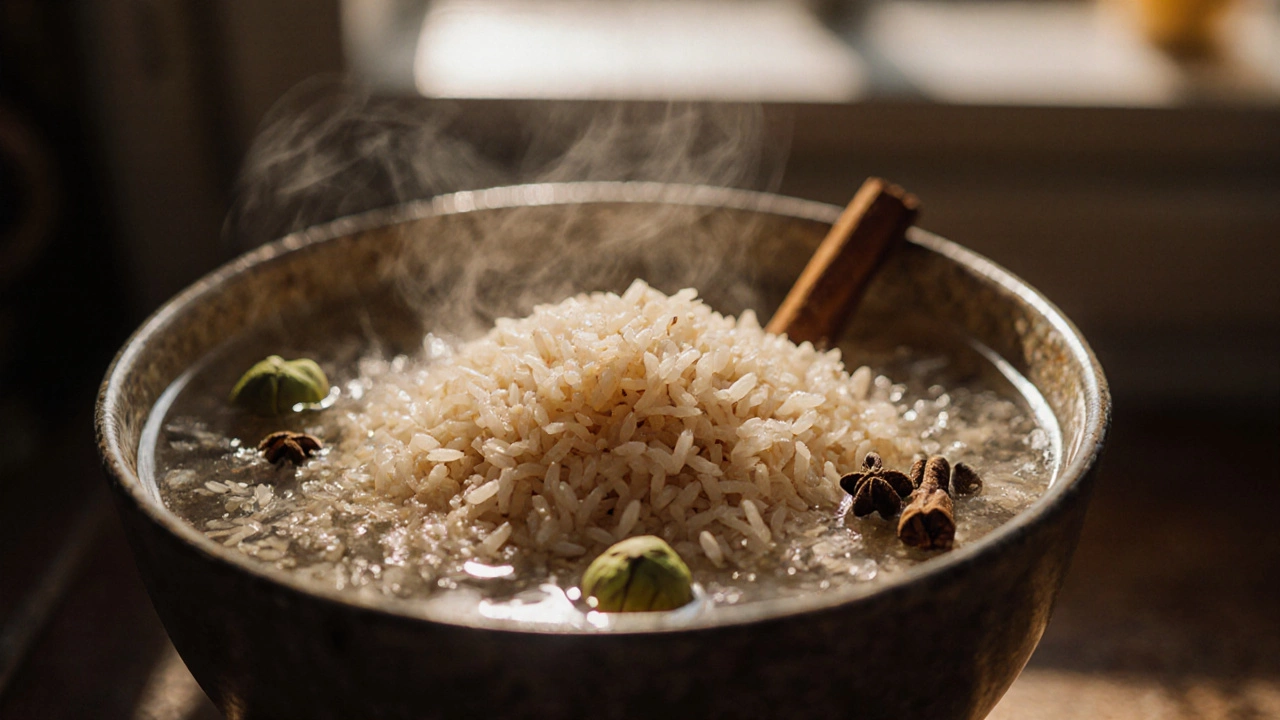
What Gives Good Smell to Biryani? The Secret Ingredients Behind the Aroma
Discover the real ingredients and techniques that give biryani its unforgettable aroma-from soaked Basmati rice to saffron, rose water, and slow dum cooking. No fluff, just proven tricks from traditional kitchens.