Best Oil for Dosa: What Works, What Doesn’t, and Why It Matters
When you’re making dosa cooking oil, the fat used to fry or cook dosas that directly affects crispness, flavor, and authenticity. Also known as dosa frying oil, it’s not just a background ingredient—it’s the silent hero that turns a flat batter into a golden, crackling crisp. Most people think any oil will do, but that’s where things go wrong. Use the wrong one, and your dosa turns soggy, greasy, or bland. Use the right one, and it snaps when you bite into it, carries the subtle nuttiness of the batter, and holds up to chutneys and sambar without falling apart.
The refined coconut oil, a neutral-tasting, high-smoke-point oil made from dried coconut meat, commonly used in South Indian kitchens isn’t just traditional—it’s the gold standard. It’s what you’ll find in home kitchens from Kerala to Tamil Nadu, and for good reason. It crisps the outer layer fast without smoking, adds a faint sweetness that balances the tang of fermented batter, and doesn’t leave that heavy, oily aftertaste. Other oils like sunflower or canola might seem like good substitutes, but they often lack the structure to hold crispness over time. Olive oil? Too low in smoke point and too strong in flavor. Butter? Too rich and burns fast. Even ghee, while delicious, can make dosas too soft and sticky if used alone.
dosa batter, a fermented mix of rice and urad dal that forms the base of dosas and other South Indian pancakes is sensitive. It needs oil that doesn’t interfere with its natural fermentation flavors. That’s why refined coconut oil wins—it’s clean. It doesn’t mask the subtle sourness from fermentation or the earthiness of urad dal. Plus, it’s the only oil that gives you that signature crackle when you flip the dosa on the tawa. You’ll find this in nearly every top-performing recipe in our collection, from classic masala dosa to thin, paper-thin neer dosa.
Some folks try peanut oil for its nutty kick, but it can overpower the delicate balance. Others use vegetable oil blends, thinking they’re healthier, but those often contain additives that change how the oil behaves at high heat. The real secret isn’t just the oil—it’s how you use it. A thin, even layer, heated just until it shimmers, then poured in a circular motion from the outside in. Too much oil, and your dosa turns into a fry. Too little, and it sticks and tears. It’s a small detail, but it makes all the difference.
What you’ll find below are real-tested methods from kitchens that make dosas daily. You’ll see why some swear by coconut oil alone, others mix it with a splash of sesame for depth, and why some avoid certain oils altogether. You’ll also learn what happens when you use expired oil, how temperature affects crispness, and why the type of tawa matters just as much as the oil. No fluff. No theory. Just what works—and what doesn’t—when you’re trying to get that perfect, crunchy, authentic dosa every single time.
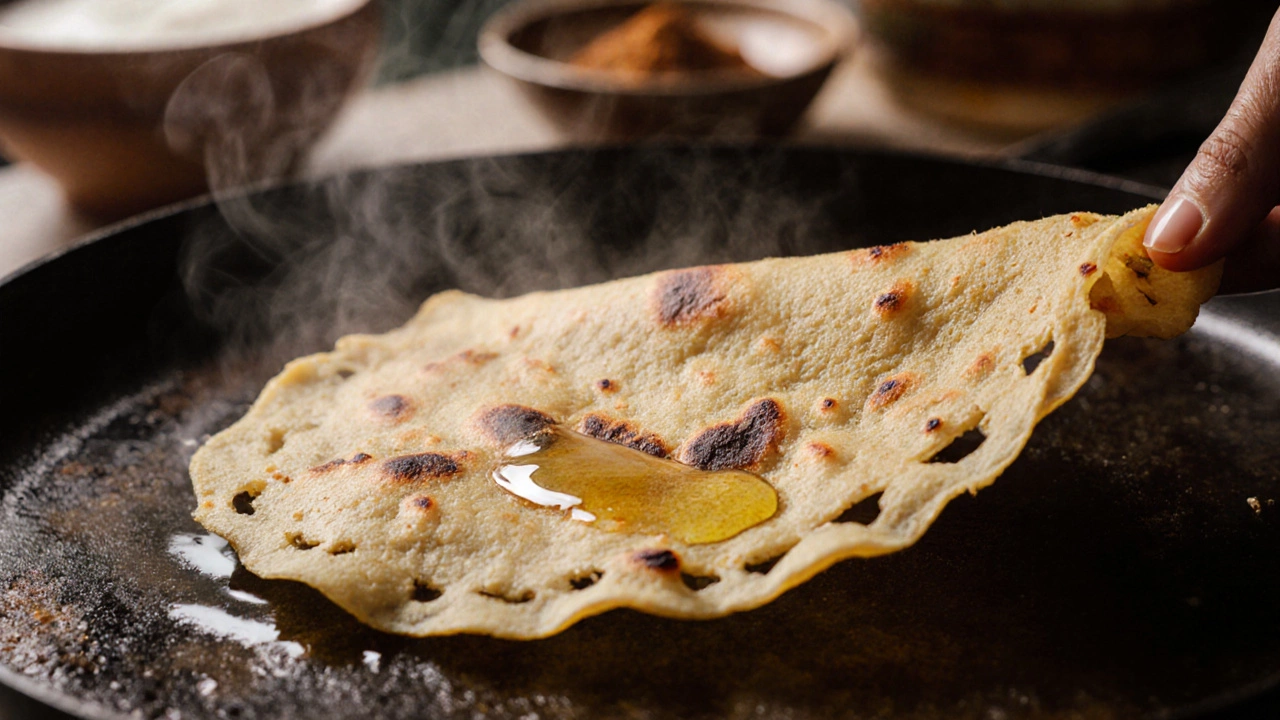
Best Oil for Dosa: Which One Gives You Crispy, Golden Results Every Time
Discover the best oil for dosa to achieve crispy, golden results every time. Learn why coconut and groundnut oil win over olive oil and butter, plus pro tips on heat, quantity, and storage.