Indian Flatbread Nutrition: What You Need to Know
When exploring Indian flatbread nutrition, the study of calories, carbs, protein, and fiber in breads like roti, naan, and paratha. Also known as flatbread health info, it helps home cooks decide which flour and cooking method work best for a balanced meal. Understanding Indian flatbread nutrition can change the way you plan meals, especially if you want steady energy and better digestion.
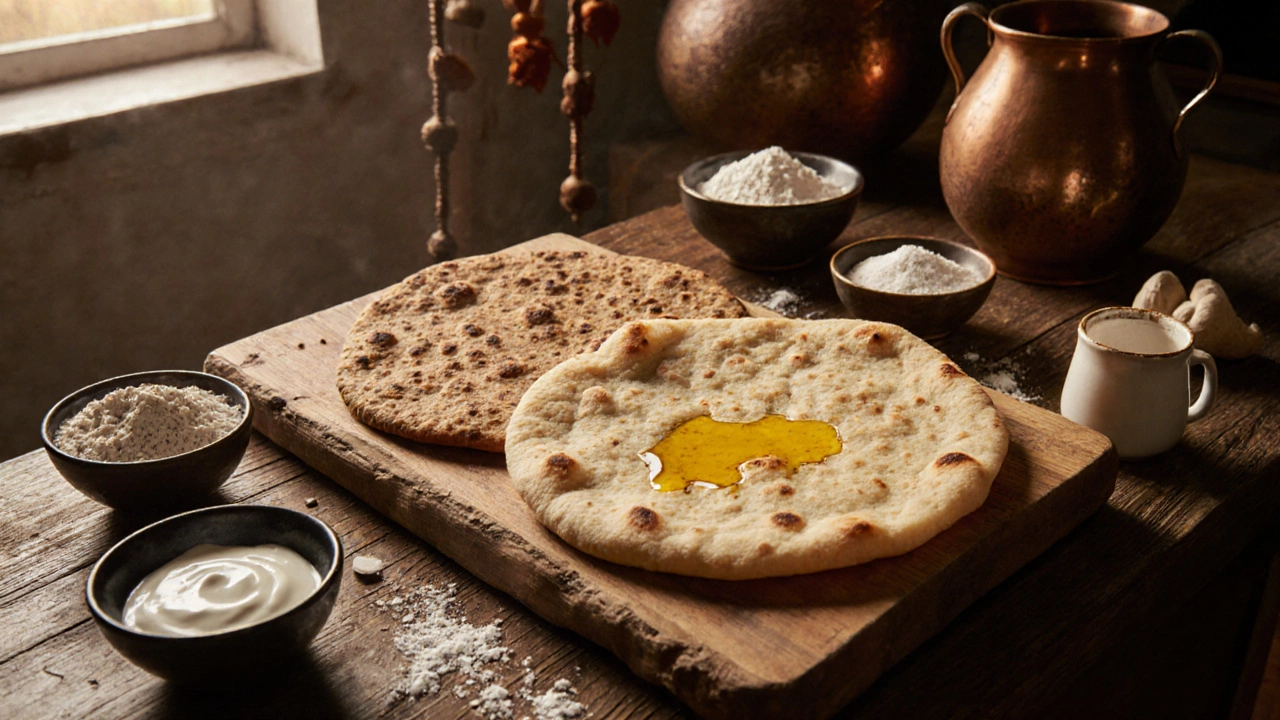
One major player is roti, a thin whole‑wheat flatbread cooked on a hot tawa. Roti’s low‑fat profile and high fiber make it a go‑to for many Indian families. Another staple, naan, a leavened bread often baked in a tandoor and brushed with butter or ghee, brings more calories and protein because of the added yogurt and oil. Knowing the difference lets you match the bread to your nutritional goals.
Key Nutritional Factors
Whole wheat flour is the cornerstone of a healthy flatbread. Whole wheat flour, provides complex carbs, fiber, and micronutrients like iron and B‑vitamins. Replacing refined flour with whole wheat cuts the glycemic index and adds about 3‑4 g of fiber per serving. If you swap in millet or sorghum flours, you boost protein and keep the carb load steady, which is great for blood‑sugar control.
Cooking technique also shapes nutrition. A dry tawa roast keeps roti light, while adding oil or ghee creates a richer naan but adds extra saturated fat. Using a non‑stick pan or a moderate heat reduces the need for extra fat, preserving the bread’s natural nutrients. The right balance of heat and time ensures the starches gelatinize without burning, which keeps the texture soft and the calories in check.
Flatbread size matters, too. A typical 6‑inch roti contains about 120 kcal, 3 g protein, and 3 g fiber. An oversized naan can double those numbers, pushing you over daily calorie limits if you’re not careful. Portion control paired with a protein‑rich side like dal or grilled paneer makes the meal more satisfying and nutritionally complete.
Pairings amplify benefits. Dip roti in lentil‑based dal for a complete amino‑acid profile, or enjoy naan with a vegetable curry that adds vitamins and antioxidants. The combination of high‑fiber bread and fiber‑rich veggies helps regulate digestion and keeps you full longer, reducing snacking between meals.
For those watching weight, consider adding seeds like flax or chia to the dough. These tiny powerhouses increase omega‑3 fatty acids and further boost fiber without changing flavor dramatically. A pinch of turmeric not only adds color but also offers anti‑inflammatory properties, making your flatbread a functional food.
Finally, storage tricks preserve nutrition. Keep cooked flatbreads in a breathable cloth rather than airtight plastic; this prevents sogginess while maintaining the crumb structure. When reheating, a quick flash on a hot skillet restores crispness without needing extra oil.
All these tips weave together a clear picture: Indian flatbread nutrition isn’t just about counting calories—it’s about choosing the right flour, mastering cooking methods, and pairing wisely. Below you’ll find articles that dive deeper into each aspect, from keeping roti crisp to boosting protein in naan, giving you practical ways to enjoy delicious breads while staying healthy.
Roti vs Naan: Which Is Healthier?
Discover which Indian flatbread-roti or naan-is healthier. Compare ingredients, nutrition, and smart cooking tips to make the best choice for your diet.