Overcooked Chicken Curry: How to Fix It and Avoid It Next Time
When you bite into a overcooked chicken curry, a dish where chicken loses its juiciness and absorbs too much heat, leaving it rubbery and bland. It’s not just about time—it’s about heat, timing, and how you handle the spices. Many people think longer cooking means deeper flavor, but with chicken, that’s the opposite of true. Chicken thighs and breasts don’t need hours. They need gentle, controlled heat and the right sequence of steps to stay tender and soak up flavor without turning to chewy rubber.
Why does this happen? Usually, it’s because the chicken was added too early and simmered for too long, or the curry was left on high heat after the sauce thickened. chicken, a lean protein that dries out fast under prolonged heat doesn’t have the fat or connective tissue of beef or goat to protect it. curry base, the blend of onions, tomatoes, garlic, and spices that builds flavor needs time to caramelize and meld—but the chicken? It should go in later, when the sauce is ready to embrace it. Add it too soon, and you’re asking for trouble.
And it’s not just the chicken. spice blend, the mix of turmeric, cumin, coriander, and chili that defines Indian curries can burn if the pan’s too hot or the oil’s too little. Burnt spices don’t just taste bitter—they ruin the whole dish. That’s why many home cooks skip the step of blooming spices in oil properly, or rush the onion frying. You need patience. Let the onions turn golden. Let the oil separate from the masala. Only then should you add the chicken.
But here’s the good news: overcooked chicken curry isn’t a lost cause. If it’s dry, stir in a splash of coconut milk, yogurt, or even cold water with a spoon of sugar. Let it simmer gently for 5 minutes—it’ll rehydrate and soften. Add a spoon of butter or ghee at the end for richness. You can also shred the chicken and mix it into a fresh batch of sauce. It’s not the same as making it right the first time, but it’s a quick fix that saves dinner.
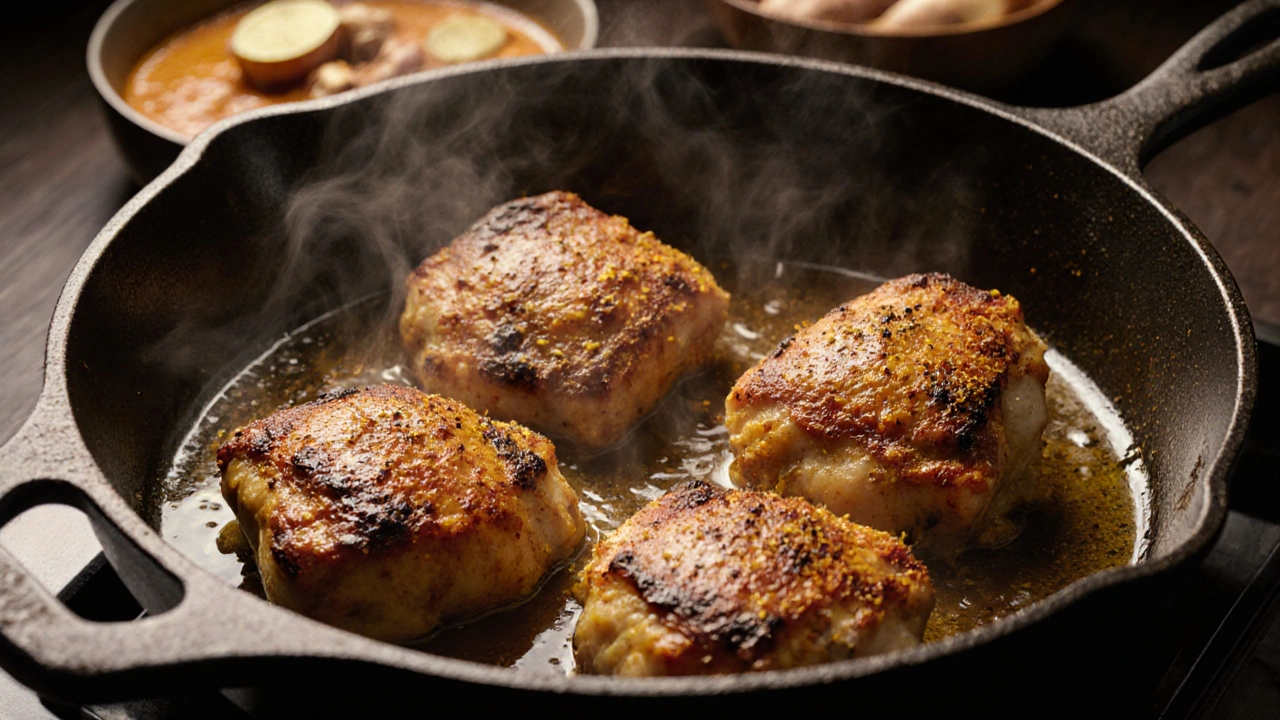
And next time? Cook smarter. Brown the chicken quickly on high heat, then remove it. Build your sauce. When it’s thick and fragrant, return the chicken and let it warm through for just 8–10 minutes. That’s it. No stirring nonstop. No boiling hard. Just enough time for the flavors to kiss the meat. You’ll get tender, juicy chicken that holds its shape and soaks up every bit of spice. No more rubbery bites. No more wasted ingredients. Just real, flavorful curry that tastes like it came from a kitchen that knows what it’s doing.
Below, you’ll find real posts from cooks who’ve been there—troubleshooting dry curry, fixing spice burns, and sharing the exact steps that make chicken curry juicy, not tough. These aren’t theory. These are tested fixes from people who’ve burned the pot and learned the hard way.
Why Is the Chicken in My Curry So Tough? Here's the Real Reason
Tough chicken in curry? It's not the spices-it's the cut, cooking time, or prep. Learn why chicken thighs beat breasts, how long to simmer, and the one step most recipes skip.