Roti Nutrition: How to Keep Your Flatbread Healthy and Delicious
When you think about Roti Nutrition, the balance of nutrients, texture, and shelf‑life in Indian flatbread. Also known as flatbread health, it lets you enjoy a staple without sacrificing flavor or energy. It roti nutrition starts with the grain, so Whole Wheat Flour, high‑fiber, protein‑rich flour becomes the foundation. From there, the cooking surface – the Tawa, a flat skillet traditionally used for roti – shapes texture, while proper Storage, cool, dry keeping methods protects nutrients and prevents sogginess. In short, Roti Nutrition encompasses ingredient quality, cooking technique, and post‑cook handling.
Key Factors for Nutritious Roti
The first factor is the grain. Switching from refined atta to whole wheat flour adds dietary fiber, B‑vitamins, and minerals like iron and magnesium. A typical 40‑gram roti made with 100% whole wheat delivers around 120 calories, 4 g protein, and 3 g fiber – a solid base for a balanced meal. The second factor is the cooking method. A hot tawa creates a quick puff, sealing moisture inside while forming a lightly crisp exterior. If the heat is too low, the roti stays soft and absorbs extra oil; too high, it burns and loses nutrients. Aim for medium‑high heat, press gently, and flip within 20–30 seconds to lock in nutrients.
Third, the dough’s hydration matters. A dough that’s 45‑50 % water yields a softer bite without extra fat. Adding a pinch of salt not only boosts taste but also improves gluten development, giving the roti structure that resists sogginess later. Fourth, the post‑cook routine decides whether the roti stays fresh or turns mushy. Immediately stacking hot rotis in a clean cloth traps steam, keeping them soft yet not wet. For longer storage, let them cool completely, then wrap in paper or a breathable bag before sealing in a container. This storage step preserves the fiber content and prevents microbial growth.
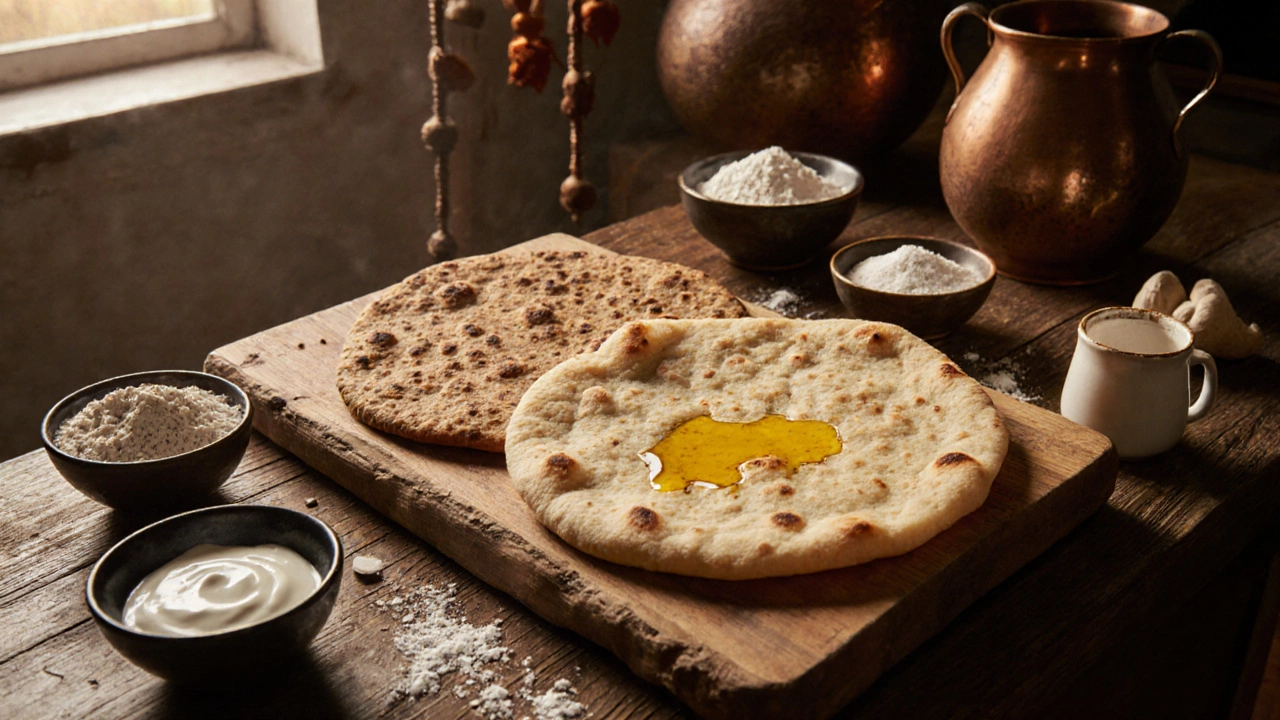
Finally, serving combos affect overall nutrition. Pairing roti with a protein‑rich dal, low‑fat yogurt, or vegetable sabzi balances the meal’s macronutrients. Adding a drizzle of ghee adds flavor and fat‑soluble vitamins, but keep it modest – a teaspoon per roti is enough to stay heart‑friendly.
All these pieces – grain choice, tawa heat, dough hydration, storage method, and side dishes – link together in the ecosystem of roti nutrition. When one element improves, the whole flatbread experience gets healthier. Below you’ll find articles that dig deeper into each aspect, from keeping roti crisp to choosing the right flour, so you can put these tips into practice right away.
Roti vs Naan: Which Is Healthier?
Discover which Indian flatbread-roti or naan-is healthier. Compare ingredients, nutrition, and smart cooking tips to make the best choice for your diet.