
28 Nov 2025
- 0 Comments
Indian Breakfast Finder
Choose Your Region
South Indian Idli & Dosa
Most PopularLight, fermented rice and lentil cakes served with sambar and chutney
Prep Time: 10-15 minutes
Rich in plant protein and gut-friendly probiotics from fermentation
Ask someone what they eat for breakfast in India, and you’ll get a different answer depending on whether they’re from Delhi, Chennai, or Kolkata. There’s no single ‘typical’ Indian breakfast-there are dozens, shaped by region, season, and family tradition. But if you want to know what millions of Indians actually eat on a weekday morning, you don’t need to look far beyond the kitchen counter, the street vendor’s cart, or the steaming idli stand down the road.
South India: Idli, Dosa, and Sambar
In Tamil Nadu, Karnataka, Andhra Pradesh, and Kerala, breakfast isn’t just a meal-it’s a ritual. The most common start to the day is idli, soft, steamed rice and lentil cakes, served with coconut chutney and a tangy sambar made from lentils, tamarind, and vegetables like drumstick and pumpkin. It’s light, digestible, and packed with plant-based protein. Alongside it, you’ll often find dosa, a crispy fermented crepe made from the same batter as idli but spread thin and fried until golden. Masala dosa, stuffed with spiced potatoes, is the breakfast superstar. People eat these with their hands, tearing off pieces to dip into the sambar or chutney. It’s messy, satisfying, and done in under 15 minutes if you’ve got leftover batter from the night before.
North India: Paratha, Chana, and Tea
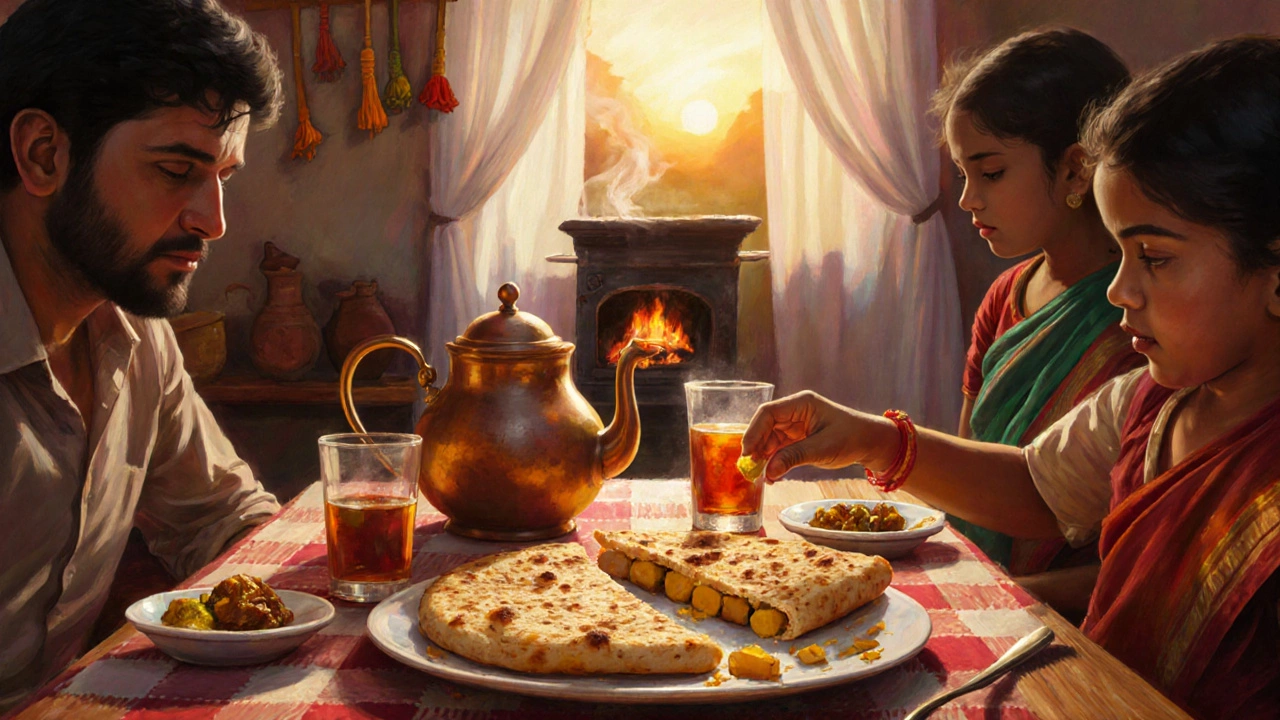
Up north, breakfast leans heavier. In Punjab, Haryana, and Uttar Pradesh, paratha is king. These are whole wheat flatbreads, stuffed with spiced potatoes (aloo paratha), cauliflower (gobi paratha), or even paneer, then cooked on a griddle with ghee or oil. They’re served hot with yogurt, pickle, and a side of chana masala-spicy chickpeas simmered with tomatoes and cumin. Tea is non-negotiable. Chai here isn’t just a drink-it’s a ritual. Made with milk, sugar, cardamom, and sometimes ginger, it’s brewed strong and sipped slowly while the family gathers. Many people eat paratha with their eyes closed, just to savor the warmth and the crunch of the crust.
West India: Poha and Upma
In Maharashtra and Gujarat, breakfast is quick, colorful, and rarely requires a stove. Poha-flattened rice flakes-is the go-to. It’s cooked with mustard seeds, curry leaves, turmeric, peanuts, and sometimes diced potatoes or peas. It takes less than 10 minutes to make, tastes savory-sweet, and leaves you full without feeling heavy. In Rajasthan and parts of Gujarat, upma is the alternative: semolina cooked with vegetables, green chilies, and a sprinkle of curry leaves. Both are served with a side of lemon wedges and a spoonful of yogurt. Street vendors sell poha in paper cones, hot and fresh, for under 20 rupees. It’s the breakfast of students, office workers, and rickshaw drivers alike.
East India: Luchi and Alur Dom
In West Bengal and Odisha, breakfast is richer, often fried. Luchi are deep-fried puffed breads made from refined flour, similar to puri but softer. They’re paired with alur dom, a slow-cooked potato curry with a touch of mustard oil and fenugreek. It’s not a light meal-it’s a weekend treat, often eaten on Sundays or holidays. In Assam, people eat chira (flattened rice) mixed with jaggery, yogurt, and banana. In Bihar, litti chokha is common: baked wheat balls stuffed with spiced sattu (roasted gram flour), served with mashed eggplant and tomato. These dishes aren’t daily staples for everyone, but they’re deeply rooted in tradition.
Why These Meals Work
Indian breakfasts aren’t random. They’re designed for energy, digestion, and climate. Fermented foods like idli and dosa are easier to digest and boost gut health. Rice and lentils provide slow-release carbs and plant protein-perfect for a long day of work or school. Spices like turmeric, cumin, and ginger aren’t just for flavor-they help with inflammation and metabolism. And tea? It’s not caffeine addiction-it’s a cultural anchor. In a country where many start work before sunrise, breakfast is the first warm, filling moment of the day.
Quick Breakfasts for Busy Mornings
If you’re in a rush, India has you covered. Many households keep pre-cooked idli or dosa batter in the fridge. Just steam or fry, and you’re done. Poha and upma can be made in under 10 minutes with pantry staples. Even in cities, you’ll find chai-wallahs selling tea with a side of vada pav (a fried potato fritter in a bun) or bhel puri (puffed rice with tamarind and sev). These aren’t snacks-they’re breakfasts. In Mumbai, it’s common to grab a misal pav-spicy sprouted lentils with bread-on the way to work. No fork needed. Just eat with your hands, wash it down with chai, and you’re ready.
What’s Missing From Western Breakfasts
Western breakfasts often focus on sugar-cereal, pancakes, toast with jam. Indian breakfasts rarely include sugar unless it’s natural, like jaggery in chira or banana in upma. They’re savory, spicy, and balanced. You won’t find buttered toast or syrup-drenched waffles in a typical Indian home. Instead, you’ll find spices that wake you up, proteins that keep you full, and textures that make you want to eat more. There’s no need for a multivitamin when your breakfast includes turmeric, lentils, fermented rice, and fresh herbs.
Breakfast Across the Seasons
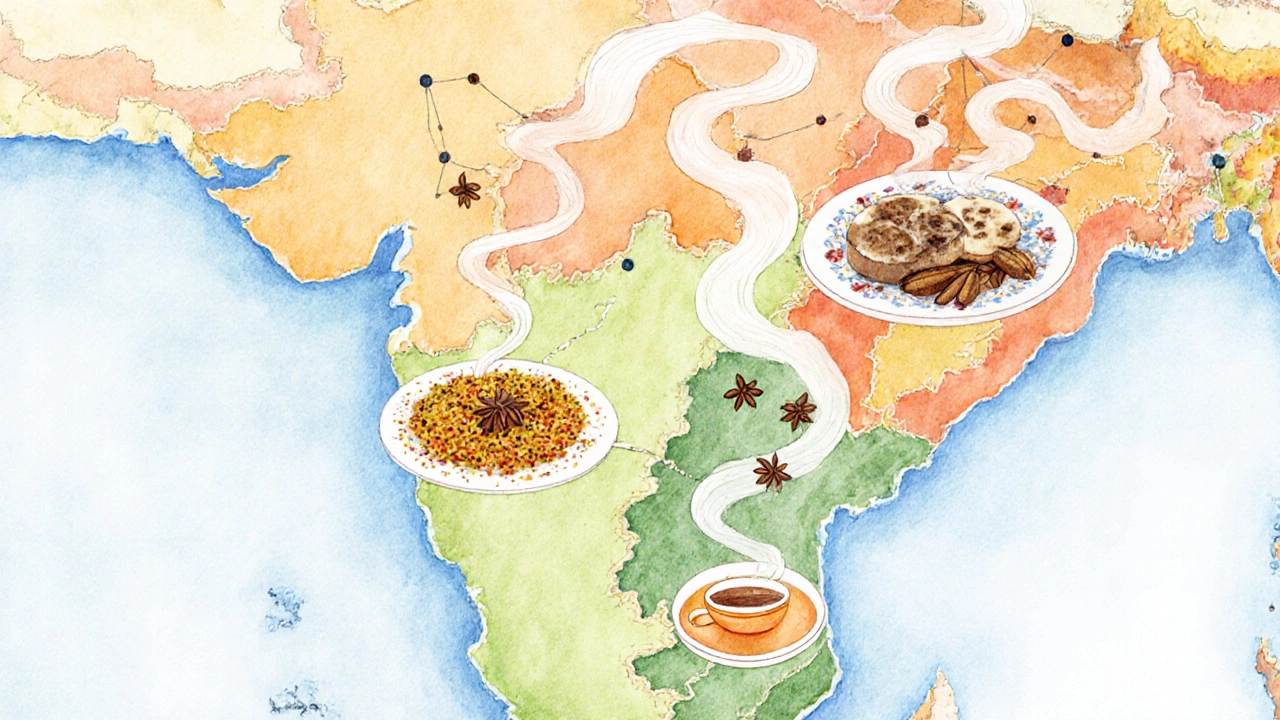
What you eat changes with the weather. In winter, people in the north crave warm parathas and hot chai. In summer, cooling foods like poha, yogurt, and buttermilk take over. In Kerala, coconut-based dishes dominate year-round. In the Himalayas, people eat thukpa-a noodle soup with vegetables and sometimes meat-because it’s warming and filling. Even in the same family, breakfast shifts with the season. It’s not about convenience-it’s about harmony with nature.
How to Try an Indian Breakfast at Home
You don’t need a special kitchen. Start simple. Buy pre-made idli batter from an Indian grocery store-steam it in a rice cooker or steamer. Make poha by sautéing mustard seeds, adding flattened rice, turmeric, and a handful of peanuts. Serve with lemon and chutney. For a quick north Indian option, toast whole wheat bread and top it with spiced mashed potatoes and a dollop of yogurt. Add a cup of chai made with milk, a pinch of cardamom, and a teaspoon of sugar. That’s it. You’ve had a real Indian breakfast.
Common Misconceptions
Some think Indian breakfasts are all spicy. They’re not-many are mild, especially in the south. Others assume they’re vegetarian-only. While most are, in coastal areas like Kerala and West Bengal, fish and egg dishes are common too. And no, you don’t need to spend hours cooking. Many meals take less than 15 minutes if you prep the night before. The real secret? It’s not the ingredients-it’s the rhythm. Eating breakfast with your family, sitting down, not rushing. That’s what makes it feel like home.
Is Indian breakfast healthy?
Yes, most traditional Indian breakfasts are healthy. They rely on whole grains like rice, lentils, and whole wheat, fermented foods that aid digestion, and vegetables cooked with minimal oil. Spices like turmeric, ginger, and cumin have anti-inflammatory properties. Unlike sugary Western cereals, Indian breakfasts are low in refined sugar and high in fiber and plant-based protein. That’s why many Indians stay energized all morning without midday crashes.
Can I make Indian breakfast without a stove?
Absolutely. Poha and upma can be made with just a microwave or even hot water. Pre-steamed idli can be reheated in a microwave for 1 minute. Many Indian grocery stores sell ready-to-eat dosas and parathas that just need warming. In cities, street vendors offer fresh breakfasts you can grab on the go. Even in an apartment with no stove, you can have a real Indian breakfast.
What’s the most popular Indian breakfast nationwide?
Idli and dosa are probably the most widely eaten across India, especially in urban areas. They’re sold everywhere-from street carts to five-star hotels. Poha is a close second, especially in western and central India. In North India, paratha is the daily staple. But there’s no single winner-India’s breakfasts are too diverse for one dish to dominate.
Do Indians eat fruit for breakfast?
Fruit is common, but rarely as the main meal. Banana, papaya, or seasonal mangoes are often eaten alongside idli or paratha-not instead of. In some homes, a glass of buttermilk with a slice of mango is the only thing consumed in summer. But fruit alone isn’t considered a full breakfast. Indians want something filling, usually savory, to start the day.
Is Indian breakfast expensive to make?
Not at all. The core ingredients-rice, lentils, wheat, peanuts, spices-are cheap and shelf-stable. A batch of idli batter costs less than 50 rupees (under 60 cents) and makes 15-20 servings. Poha and upma use ingredients you probably already have. Even in a city, you can eat a full Indian breakfast for under $1.50. That’s why it’s the go-to for millions.