Curdle Milk Without Lemon: Natural Ways to Sour Milk for Cooking
When you need to curdle milk without lemon, a traditional method of separating milk into curds and whey using natural acids or heat. Also known as souring milk, it’s a kitchen skill used for making paneer, dahi, and even some regional desserts—without relying on citrus. Many recipes call for this step, but lemon isn’t the only way. In fact, in parts of South India, people have been curdling milk for centuries using yogurt, buttermilk, or even warm temperatures alone.
Why does this matter? Because yogurt, a fermented dairy product rich in lactic acid bacteria is often the real secret behind creamy, clean-tasting curds. Unlike lemon, which can leave a sharp tang, yogurt gives you a milder, more rounded flavor—perfect for dishes like paneer tikka or rasam. Similarly, buttermilk, the liquid left after churning butter, works wonders. It’s naturally acidic, readily available in Indian homes, and adds a subtle depth that lemon never can. These aren’t just substitutes—they’re upgrades.
Temperature plays a role too. If you leave fresh milk out overnight in a warm kitchen, it’ll naturally sour thanks to wild bacteria. This is how traditional households made dahi before refrigerators. It’s slow, but it’s pure. No additives. No artificial souring agents. Just milk, time, and climate. This method isn’t just old-school—it’s science-backed. The lactic acid produced during fermentation not only curdles the milk but also improves digestibility and boosts probiotics.
You might wonder, why avoid lemon entirely? Because in some recipes, like sweet payasam or savory kadhi, lemon’s acidity clashes with the delicate balance of spices and sugars. Using yogurt or buttermilk keeps the flavor profile intact. Plus, lemon can make paneer grainy if used in excess. A teaspoon of yogurt, gently stirred into warm milk, gives you smooth, firm curds every time.
And here’s something most guides skip: the milk’s fat content matters. Whole milk curdles better than skim. Pasteurized milk works fine, but avoid ultra-pasteurized—it’s been heated too high and won’t separate cleanly. If your milk isn’t curdling, it’s not the method—it’s the milk.
What you’ll find in the posts below are real, tested techniques from Indian kitchens. From how to make paneer using only warm milk and a cloth, to why some families keep a bit of last night’s dahi as a starter, to what happens when you heat milk slowly with a pinch of salt. These aren’t tricks. They’re traditions passed down because they work. No gimmicks. No fancy tools. Just understanding how milk behaves when you treat it right.
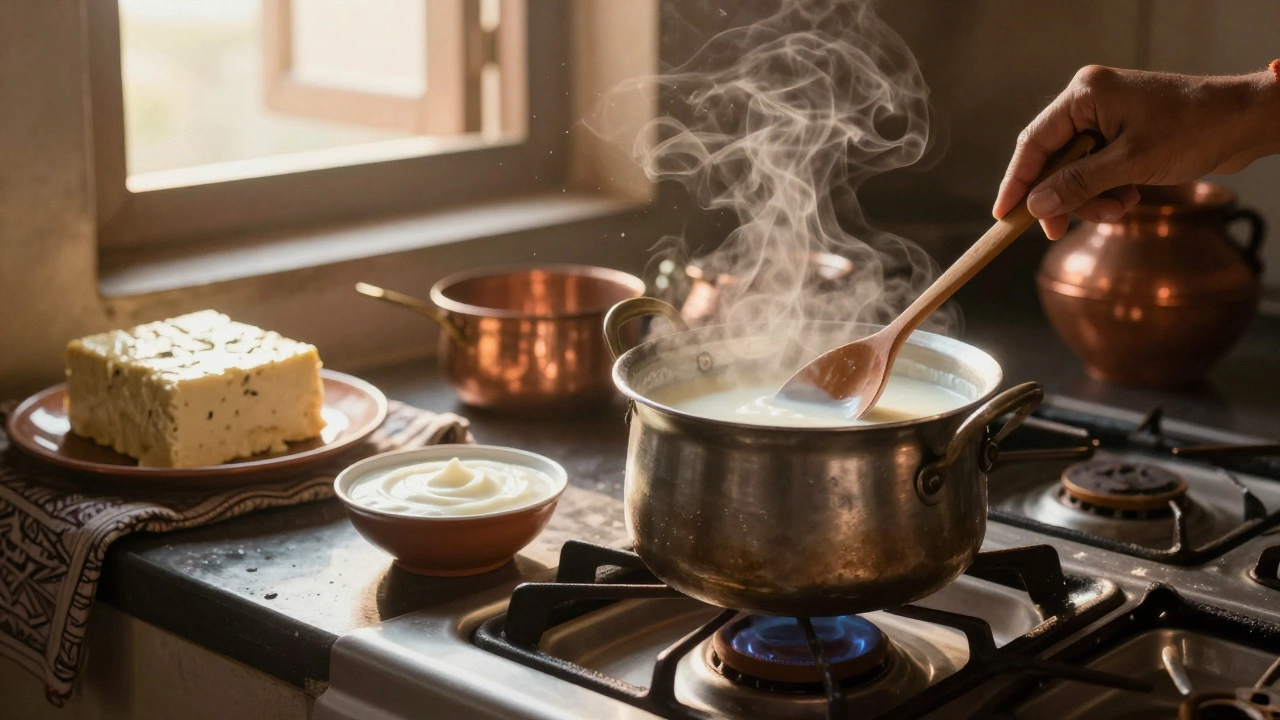
How to Curdle Milk Without Lemon and Vinegar for Homemade Paneer
Learn how to make fresh paneer at home without lemon or vinegar using yogurt, buttermilk, or naturally soured milk. Discover the best alternatives, common mistakes, and how to store your homemade cheese.