Garam Masala: The Spice Blend That Defines South Indian Flavors
When you think of garam masala, a warm, aromatic spice blend central to Indian cooking, especially in South India. Also known as hot spice mix, it’s not just a seasoning—it’s the final punch that turns a good curry into something unforgettable. Unlike pre-ground store-bought versions that lose their edge, authentic garam masala is toasted whole spices ground fresh—cinnamon, cardamom, cloves, black pepper, cumin, and coriander—each chosen for how they wake up your taste buds, not just add heat.
This blend doesn’t just flavor food; it changes how food behaves. cumin, a foundational spice in Indian kitchens, often toasted before grinding to unlock its earthy depth balances the sweetness of cardamom, a fragrant pod that adds floral lift to meat dishes and rice. Meanwhile, black pepper, the original Indian spice that made global trade possible, gives garam masala its quiet kick. These aren’t random ingredients—they’re a team. Each one plays a role: some build body, some add brightness, and some linger just long enough to make you reach for another bite.
South Indian kitchens use garam masala differently than North Indian ones. In Tamil Nadu or Kerala, it’s often added at the end of cooking, not fried in oil at the start. That’s because the volatile oils in these spices vanish with too much heat. A pinch stirred into a simmering chicken curry right before serving? That’s when the aroma explodes. It’s why your homemade curry never tastes like the restaurant version—you’re adding it too early.
You’ll find garam masala hiding in plain sight across the posts here: in chicken curry recipes that crack the code on depth, in biryanis that smell like a monsoon night, even in dosa batter where a whisper of it enhances fermentation. It’s the secret behind why some dals feel comforting instead of bland. It’s not magic. It’s technique. And once you understand how to use it—not just dump it—you’ll stop guessing why your food falls flat.
There’s no single recipe. Every family has their own. Some add nutmeg. Others throw in star anise. Some skip cinnamon entirely. But they all agree on one thing: if your garam masala doesn’t smell good when you open the jar, it’s already dead. The real stuff smells like a spice market in Cochin at sunrise—warm, spicy, sweet, and alive. Below, you’ll find real guides on how to make it, when to use it, and how to fix bland dishes with nothing but a well-placed pinch of this one blend.
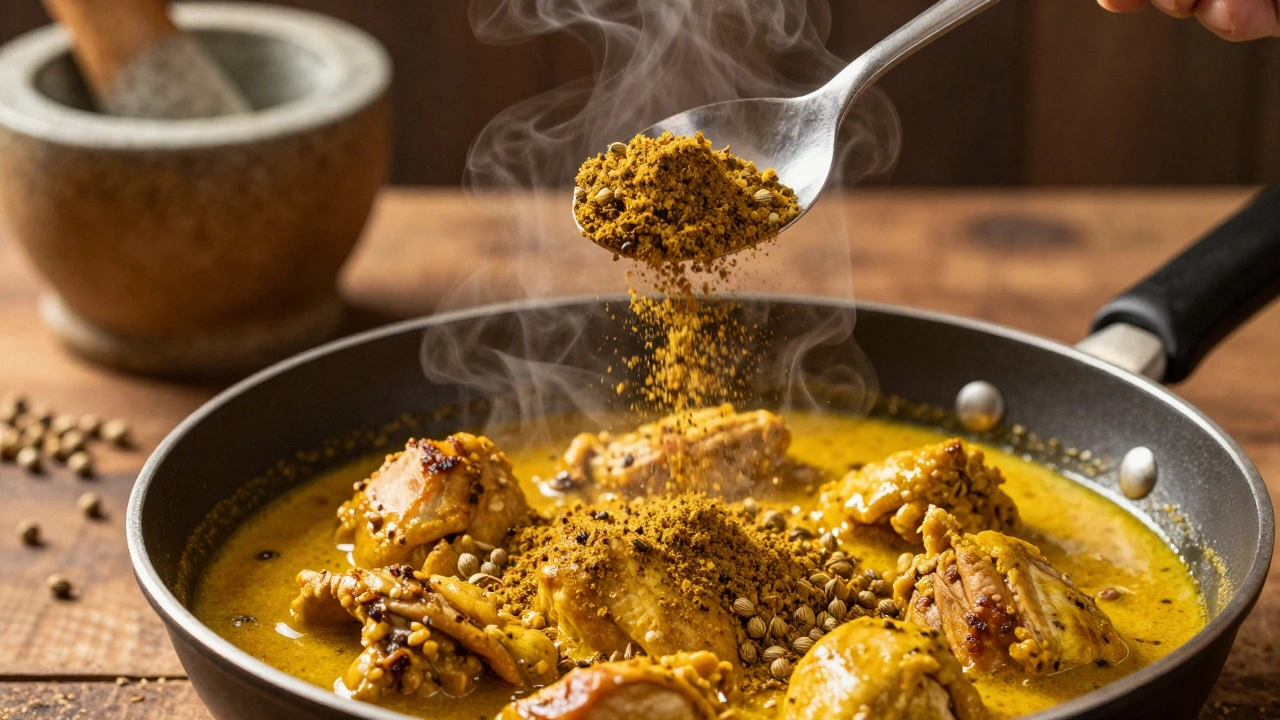
What Is the Most Important Spice in Chicken Curry?
Coriander powder is the essential spice in chicken curry, providing balance and depth that other spices rely on. Learn why it's the foundation and how to use it right.