5 Dec 2025
- 0 Comments
Coriander Powder Calculator for Chicken Curry
Coriander powder is the backbone of authentic chicken curry. This calculator helps you determine the perfect amount based on servings to avoid flat flavor.
Recommended Coriander Powder
For 4 servings, use 2 tbsp of coriander powder
This matches the article's recommendation for optimal flavor balance
Pro Tip from the Article
"Add coriander powder after onions soften and before tomatoes. Cook for 1-2 minutes to unlock oils and remove raw taste."
When you think of chicken curry, what comes to mind? The rich, golden sauce? The tender meat? The smell that fills your kitchen? None of that matters if the spice blend is off. The truth is, there’s no single spice that makes a chicken curry. But if you had to pick one that holds the whole thing together, it’s coriander.
Why Coriander Is the Backbone of Chicken Curry
Coriander seeds-ground into powder-are the quiet hero of most Indian-style chicken curries. It’s not the hottest spice. It’s not the brightest yellow. But without it, the flavor falls flat. Coriander adds a citrusy, earthy base that lets other spices shine without overpowering them. Think of it like the rhythm section in a band: you don’t notice it until it’s gone.
In home kitchens across India, from Punjab to Kerala, coriander powder is the one spice almost everyone uses, no matter the recipe. It’s in the base of butter chicken, rogan josh, and even simple weeknight curries. Why? Because it balances heat, adds depth, and softens the sharpness of cumin and chili. It doesn’t dominate. It connects.
Compare that to turmeric, which gives color but little flavor on its own, or cumin, which can be bitter if overused. Coriander powder is forgiving. Even if you add a little too much, it doesn’t ruin the dish. It just makes it more rounded. That’s why professional chefs and grandmothers alike reach for it first.
What Other Spices Play a Role?
Coriander doesn’t work alone. Chicken curry is a team sport. Here’s what else matters:
- Cumin - Adds smoky warmth. Used whole or ground, it’s the second most common spice after coriander. Too much and it tastes like dirt. Just right, and it grounds the dish.
- Turmeric - Gives the yellow hue and a faint bitterness. It’s more about color and health than flavor. A teaspoon is enough for a pot of curry.
- Red chili powder - Controls heat. Kashmiri chili powder gives color without burning your tongue. If you’re using cayenne, go easy.
- Garam masala - Added at the end. It’s a blend, often including cinnamon, cardamom, cloves, and black pepper. It’s the finishing touch, not the foundation.
- Fenugreek - A tiny pinch adds complexity. Too much and it tastes like maple syrup gone wrong.
Here’s the catch: every region uses these differently. In North India, you’ll get more garam masala and cream. In South India, curry leaves, mustard seeds, and tamarind take over. But even there, coriander powder is still in the mix.
The Myth of Garam Masala as the Star
You’ve probably heard that garam masala is the most important spice in curry. That’s a myth. Garam masala is like a garnish. It’s added at the end, right before serving. It’s meant to lift the dish, not build it.
If you skip coriander powder and only use garam masala, your curry will taste like a spice blend on its own-fragmented, sharp, and unbalanced. It won’t feel like a curry. It’ll feel like a spice rack spilled into a pot.
Try this: make two batches of chicken curry. One with coriander powder. One without. Use the same chicken, onions, garlic, ginger, and tomatoes. Add garam masala to both. Taste them side by side. The one with coriander will taste whole. The one without will taste like something’s missing-even if you can’t name it.
How to Use Coriander Powder Right
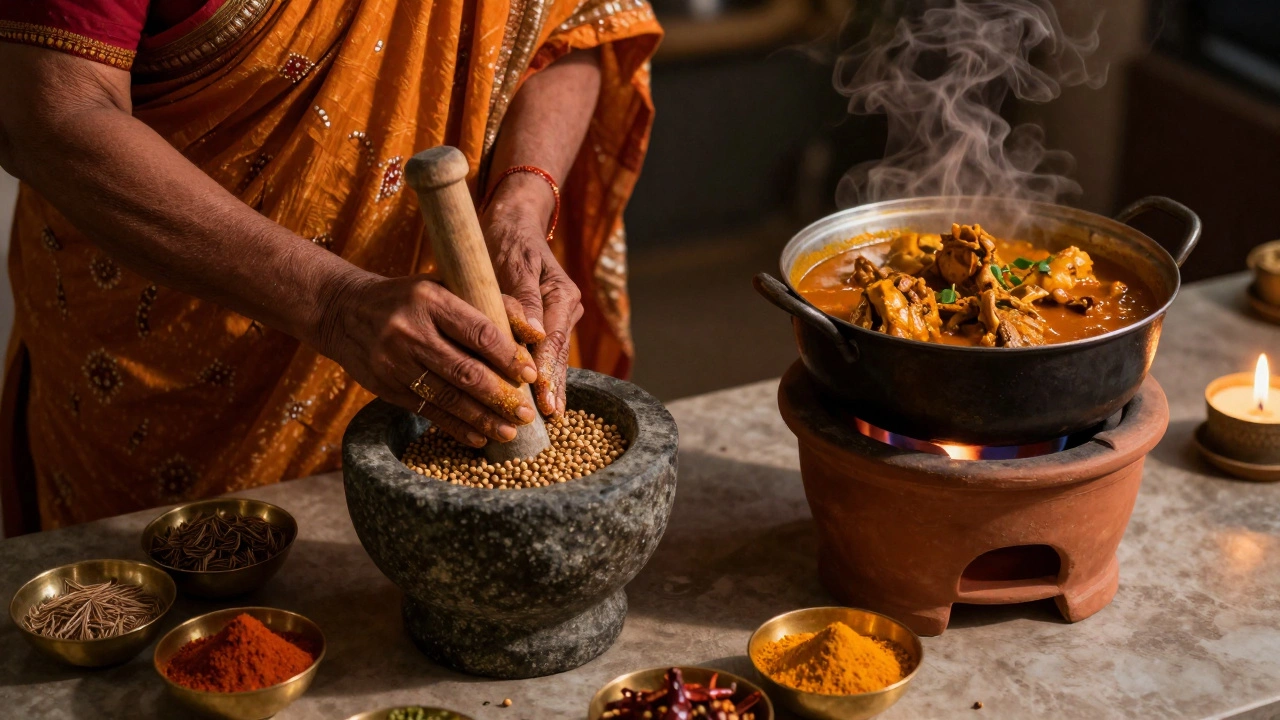
Buying good coriander powder matters. Pre-ground spice loses flavor fast. Buy whole seeds and toast them lightly in a dry pan, then grind them yourself. Store in a dark jar. Use within three months.
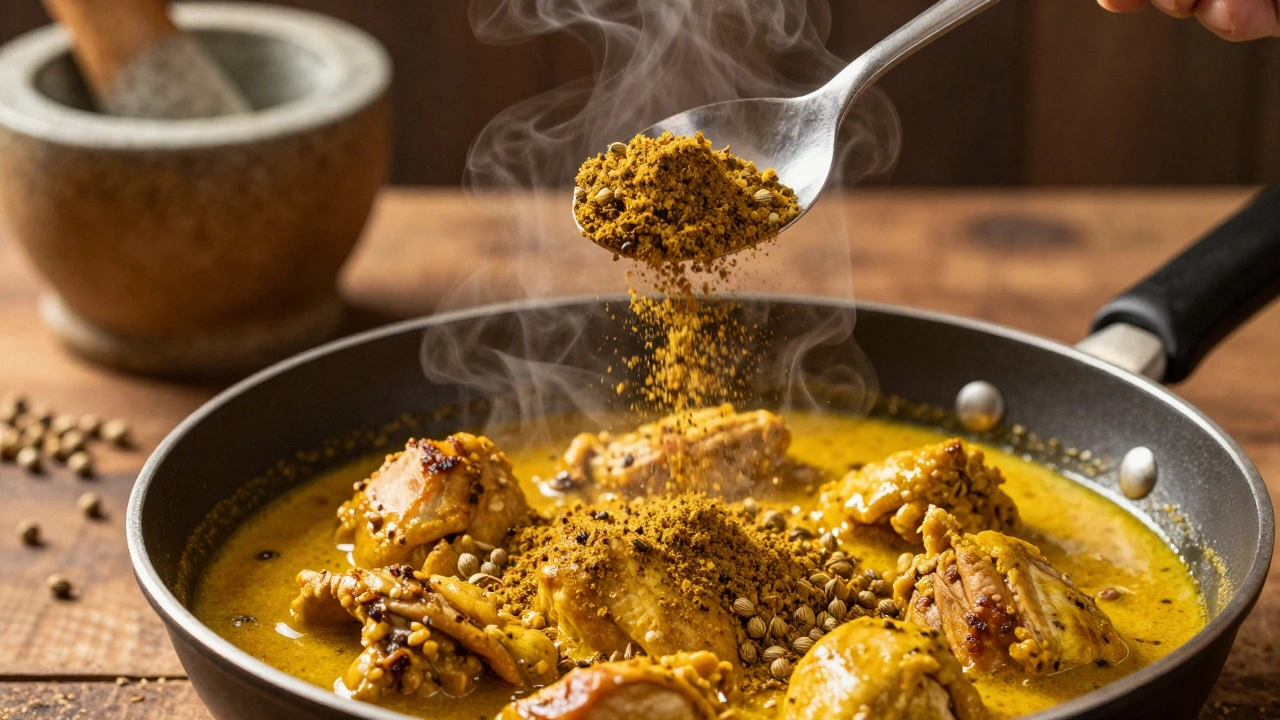
When cooking, add coriander powder after the onions soften and before you add tomatoes. Let it cook for a minute or two with the oil. This unlocks its oils and removes the raw, grassy taste. Don’t just sprinkle it in at the end. Cook it. That’s the secret most home cooks miss.
For a standard chicken curry (serves 4), use 2 tablespoons of coriander powder. Adjust based on your taste, but don’t go below 1.5. That’s the minimum to hold the flavor together.
What If You Don’t Have Coriander?
It’s not ideal, but if you’re out, here’s what you can do:
- Use 1 part cumin + 1 part ground fennel. It won’t be the same, but it’ll give you some citrusy warmth.
- Add a pinch of dried mint or lemon zest at the end to mimic the brightness.
- Use a pinch of caraway seeds-similar flavor profile, but stronger. Use half the amount.
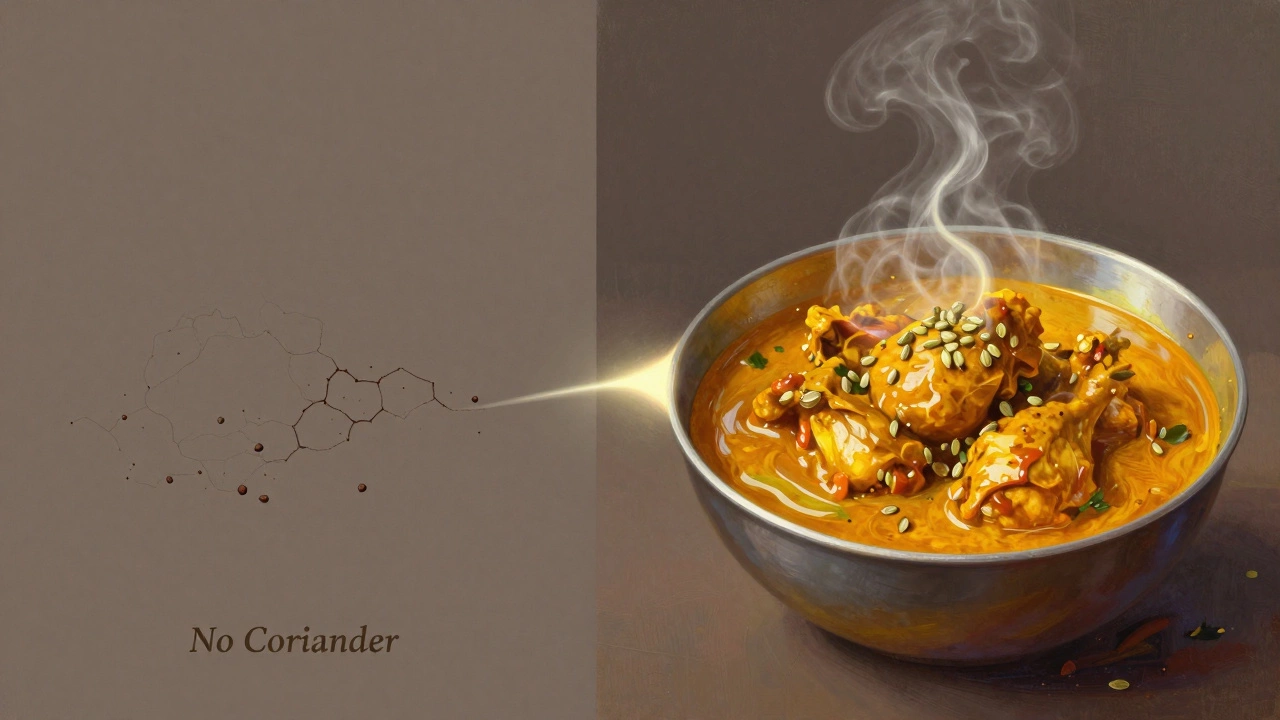
None of these are replacements. They’re workarounds. Coriander is irreplaceable in a true chicken curry. If you’re serious about the dish, keep it on hand.
Real-World Example: A Sydney Kitchen
I live in Sydney, where Indian groceries are easy to find, but many people still buy pre-made curry pastes. They’re convenient, but they often skip coriander or use low-quality powder. The result? A one-note curry that tastes like chili and coconut milk.
One of my neighbors, a retired teacher from Mumbai, makes chicken curry every Sunday. She grinds her own coriander seeds. She says, “If the coriander is fresh, the curry breathes. If it’s old, it just sits there.”
She doesn’t use fancy ingredients. Just chicken, onions, tomatoes, garlic, ginger, coriander, cumin, turmeric, and a little chili. That’s it. And it’s the best curry I’ve ever had.
Final Thought: It’s Not About One Spice
Coriander isn’t the only spice that matters. But it’s the one that makes chicken curry taste like curry, not just spiced chicken. It’s the glue. The bridge. The quiet force holding everything together.
Master the balance. Use fresh coriander powder. Cook it in oil. Let it bloom. Then build on it with cumin, turmeric, and chili. Add garam masala at the end. That’s how you get a curry that doesn’t just taste good-it tastes real.
Is turmeric the most important spice in chicken curry?
No. Turmeric gives color and a mild bitterness, but it doesn’t provide the foundational flavor. Coriander powder is what makes the curry taste balanced and complete. Turmeric is important for appearance and health benefits, but not for flavor structure.
Can I use pre-ground coriander powder from the supermarket?
You can, but it won’t be as good. Pre-ground spices lose their oils and aroma within weeks. For the best flavor, buy whole coriander seeds, toast them lightly, and grind them fresh. It takes two minutes and makes a huge difference.
Why does my chicken curry taste flat even with lots of spices?
You’re probably skipping the step of cooking the spices in oil. Coriander, cumin, and other powders need to be fried for 30-60 seconds after the onions soften. This releases their oils and removes raw flavors. Skipping this step leaves your curry tasting dusty and dull.
Is garam masala the same as curry powder?
No. Curry powder is a British invention that tries to mimic Indian flavors with a fixed blend. Garam masala is an Indian spice mix added at the end for aroma. It usually includes cinnamon, cardamom, cloves, and black pepper. It’s not a substitute for coriander or cumin-it’s a finishing touch.
What’s the best way to store coriander seeds?
Keep them in an airtight glass jar in a cool, dark place like a pantry. Avoid sunlight and moisture. Whole seeds stay fresh for up to a year. Ground coriander lasts only 2-3 months before it starts tasting stale.