4 Mar 2026
- 0 Comments
Many people assume that all Indian religions follow the same food rules - but that’s not true. Sikhism, one of the world’s major faiths with over 25 million followers, has its own clear, practical approach to eating. If you’ve ever wondered what Sikhs avoid, why, or whether it’s about vegetarianism or something deeper, the answer isn’t what you might expect.
There’s No Strict Vegetarian Rule in Sikhism
A common misunderstanding is that Sikhs must be vegetarian. They’re not. The Sikh faith doesn’t ban meat outright. The Rehit Maryada, the official code of conduct for Sikhs, doesn’t list meat as forbidden. Many Sikhs eat meat, including chicken, goat, and even beef in some communities. What matters isn’t the type of meat - it’s how it’s prepared.
The real line is drawn at kutha meat. That’s meat from an animal killed slowly, in a ritualistic way - like halal or kosher slaughter. Sikhs are forbidden from eating any meat that comes from ritual slaughter. Why? Because Sikhism rejects religious rituals that claim to purify or sanctify food through specific prayers or methods. The belief is simple: God is in everything, and no ritual can make food more or less holy. So, if an animal is killed quickly and humanely - without prayers, chants, or ceremonies - it’s acceptable.
What About Alcohol and Drugs?
This is one of the clearest dietary restrictions in Sikhism. All forms of intoxicants are strictly forbidden. That includes alcohol, recreational drugs, tobacco, and even marijuana. This rule applies to everyone who has taken Amrit - the initiation ceremony that makes someone Amritdhari, or a baptized Sikh. But even non-baptized Sikhs are strongly encouraged to avoid them.
The reasoning is spiritual and practical. Sikhism teaches that the body is a temple, and the mind must stay clear to connect with the Divine. Intoxicants cloud judgment, weaken self-control, and distract from daily spiritual practice. Guru Granth Sahib, the Sikh holy book, says directly: “Intoxication is the root of all evils.” It’s not about punishment - it’s about freedom. Freedom from addiction, from dependency, from losing touch with your true self.
Why No Ritual Slaughter? It’s About Equality
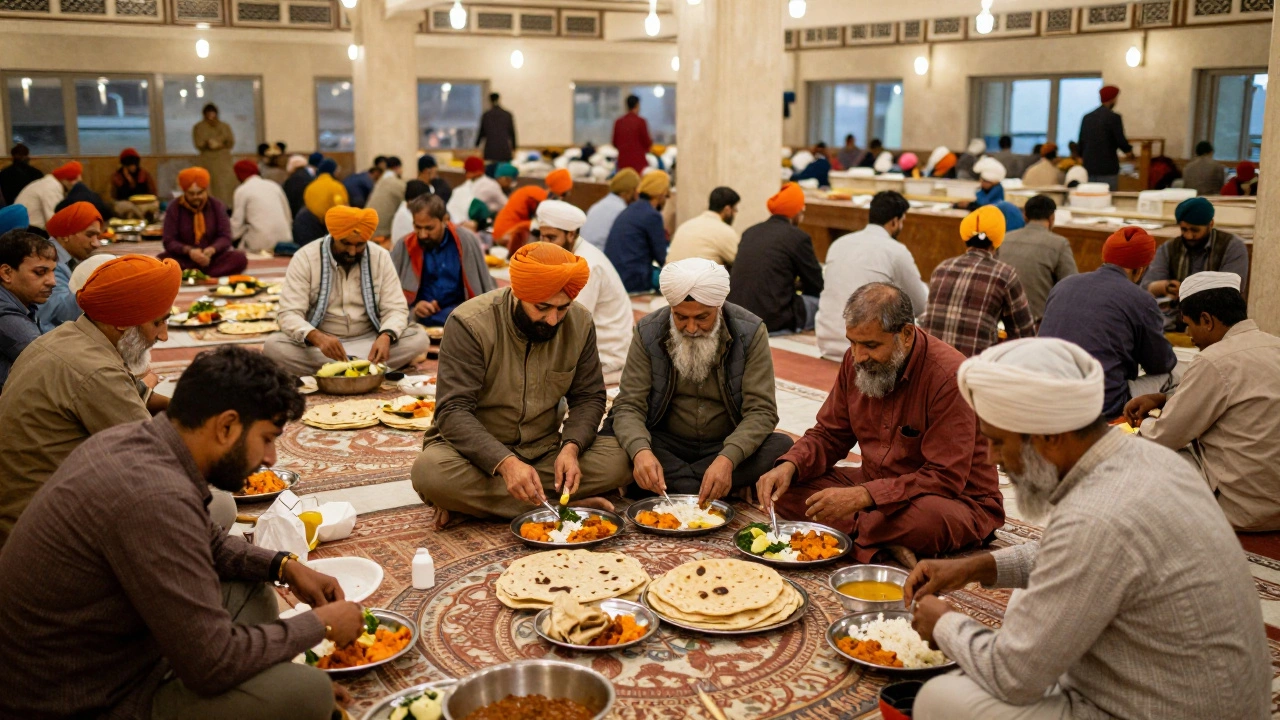
The rejection of ritual slaughter isn’t just about avoiding religious customs. It’s tied to a deeper Sikh principle: equality. In traditional societies, ritual slaughter was often controlled by priests or religious leaders - making food access dependent on who you were or what caste you belonged to. Sikhism, founded in 15th-century Punjab, directly challenged caste hierarchy. The langar - the community kitchen found in every gurdwara - serves free meals to everyone, regardless of religion, caste, gender, or background. If one group’s food was considered ‘pure’ and another’s ‘impure’ because of how it was slaughtered, that would break the core value of equality.
So, when Sikhs eat meat, it’s usually from animals slaughtered in the same way most modern butchers do - quickly, without ceremony. In fact, many gurdwaras serve only vegetarian food in langar, not because meat is forbidden, but to make sure everyone feels welcome. It’s a practical choice, not a religious one.
What About Eggs?
Eggs are another area where confusion exists. There’s no official rule against eggs in Sikhism. Many Sikhs eat eggs without hesitation. Others avoid them because they see eggs as potential life - but that’s a personal choice, not a religious requirement. Some Amritdhari Sikhs eat eggs daily; others don’t. It’s not a test of faith. The only thing that matters is whether the egg comes from a source that treats animals ethically. Sikhism encourages compassion, not rigid rules.
Food in the Langar: The Ultimate Test of Belief
The langar is more than just a free meal. It’s the living heart of Sikh practice. Every day, millions of meals are served in gurdwaras around the world - from small villages in Punjab to big cities like London, Toronto, and Sydney. Everyone sits on the floor. Everyone eats the same food. No one is served first. No one is turned away.
Because of this, langar food is always vegetarian. Not because Sikhism says so - but because it’s the only way to ensure no one feels excluded. A Muslim won’t feel uncomfortable if there’s no halal meat. A Hindu won’t be upset if there’s no beef. A vegan won’t be left out. The langar serves simple, wholesome food: roti, dal, rice, vegetables, and sometimes sweet halwa. It’s not fancy. It’s not ritualized. It’s just food, shared equally.
What’s the Real Rule? Mindfulness Over Restrictions
Sikhism doesn’t have a long list of forbidden foods. It doesn’t say ‘don’t eat this’ or ‘you must eat that.’ Instead, it asks: Are you eating with awareness? Are you eating to fuel your body and serve others? Or are you eating for pleasure, greed, or habit?
The emphasis is on moderation, gratitude, and intention. Guru Nanak, the founder of Sikhism, lived as a householder. He ate, worked, and raised a family. He didn’t preach fasting or extreme diets. He preached balance. Eat what you need. Share what you have. Don’t waste. Don’t harm.
If you’re a Sikh, your diet isn’t defined by what you avoid - it’s defined by how you live. Are you honest? Are you humble? Are you helping others? Those questions matter more than whether you had chicken or tofu for breakfast.
Common Myths About Sikh Diets
- Myth: All Sikhs are vegetarian. Truth: Many are, but not all. Ritual slaughter is the only meat restriction.
- Myth: Sikhs can’t eat beef. Truth: Beef isn’t specifically banned. But because many Sikhs live in India where cows are culturally sacred, some avoid it out of respect - not religion.
- Myth: Sikhism has fasting days. Truth: No. Fasting for religious reasons is discouraged. Sikhs are told to eat regularly and stay strong to serve.
- Myth: Sugar or spices are forbidden. Truth: None are. Sweet foods are common in Sikh celebrations. The only rule is: don’t use food to show off or to hurt others.
What Do Sikhs Actually Eat for Breakfast?
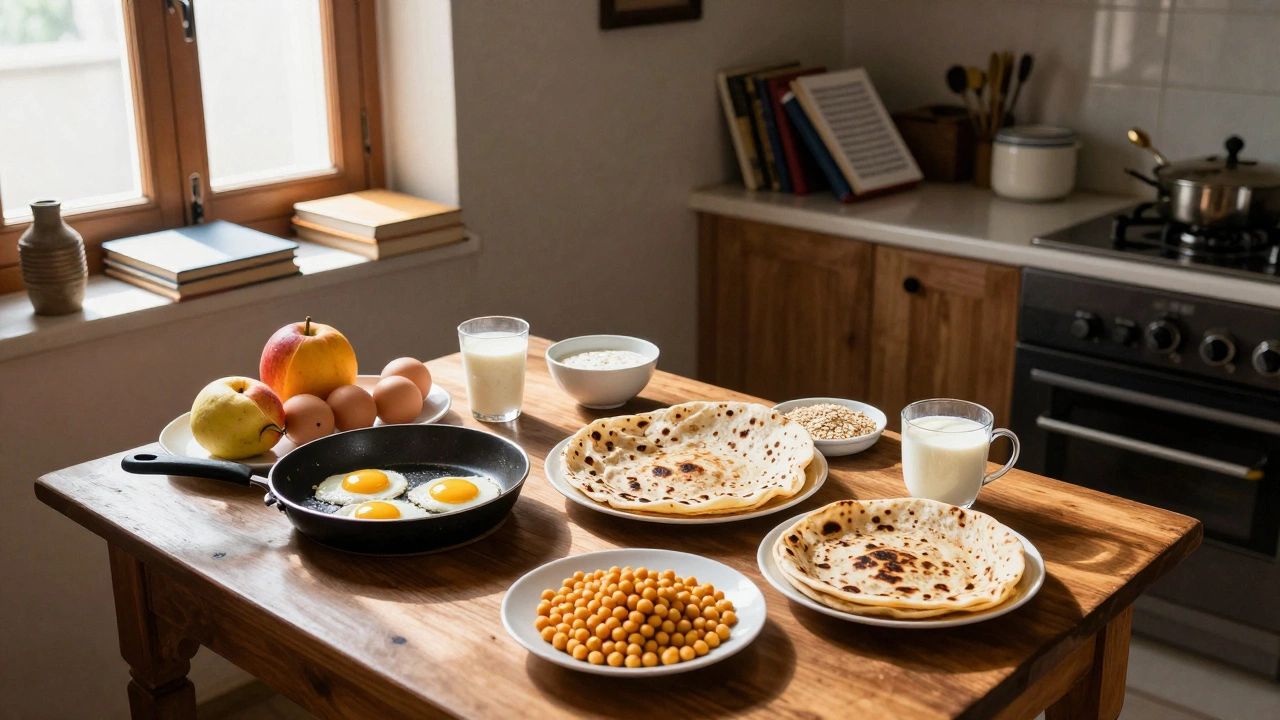
If you visit a Sikh home in the morning, you’ll likely find simple, hearty food: paratha with butter, chana (chickpeas) cooked with spices, lassi (yogurt drink), or makki di roti with sarson ka saag. Many eat eggs with toast. Others have oatmeal or fruit. Breakfast isn’t about rules - it’s about energy. It’s about starting the day ready to work, serve, and pray.
One thing you won’t find: processed snacks or sugary cereals. Sikhism values natural, unprocessed food. It’s not because it’s ‘holy’ - it’s because it’s healthier. And a healthy body helps you serve better.
Is meat completely forbidden in Sikhism?
No, meat is not forbidden. Sikhs can eat meat as long as it’s not killed in a ritual way (like halal or kosher). The only restriction is on kutha meat - meat from animals slaughtered with religious ceremonies. Many Sikhs choose to be vegetarian, but it’s a personal decision, not a religious rule.
Can Sikhs drink alcohol?
No. Alcohol and all intoxicants are strictly forbidden for baptized Sikhs (Amritdhari). Even for non-baptized Sikhs, drinking is strongly discouraged. Sikh teachings say intoxicants cloud the mind and prevent a person from connecting with God. The body is seen as a temple, and keeping it clear is part of spiritual discipline.
Why do gurdwaras only serve vegetarian food?
Gurdwaras serve vegetarian food in the langar to ensure everyone feels welcome, no matter their religion, culture, or dietary restrictions. It’s not because meat is forbidden - it’s because Sikhism values equality above all. Serving only vegetarian meals removes any possible offense or discomfort, making the meal truly universal.
Do Sikhs have to eat only from the langar?
No. Sikhs are not required to eat only from the langar. The langar is a voluntary community service, not a religious obligation. Sikhs eat at home, in restaurants, or anywhere else - as long as their food follows the two main rules: no ritual slaughter and no intoxicants.
Are eggs allowed in Sikhism?
Yes, eggs are allowed. There’s no official rule against them. Some Sikhs avoid eggs because they believe they represent potential life, but others eat them regularly. It’s a personal choice, not a religious requirement. What matters is how the eggs are sourced - ethically, without cruelty.
Final Thought: It’s Not About What You Eat - It’s Why You Eat
Sikhism doesn’t give you a checklist of forbidden foods. It gives you a mindset. Eat simply. Eat honestly. Eat to live, not to impress. Share your food. Respect all life. Avoid anything that dulls your mind or separates you from others.
If you’re looking for a diet plan based on Sikh rules, you won’t find one. But if you’re looking for a way to eat with more awareness, more compassion, and more humility - that’s exactly what Sikhism offers. And that’s more valuable than any list of dos and don’ts.