27 Jan 2026
- 0 Comments
Dosa Fermentation Time Calculator
Calculate Fermentation Time
Enter your fermentation environment temperature to see estimated fermentation time and quality advice.
Enter temperature to see results
Temperature outside optimal range may affect fermentation results.
Key Facts
- Optimal Range: 28-35°C
- Minimum: 20°C (very slow)
- Maximum: 40°C (kills microbes)
- Best Time: 8-12 hours at 30°C
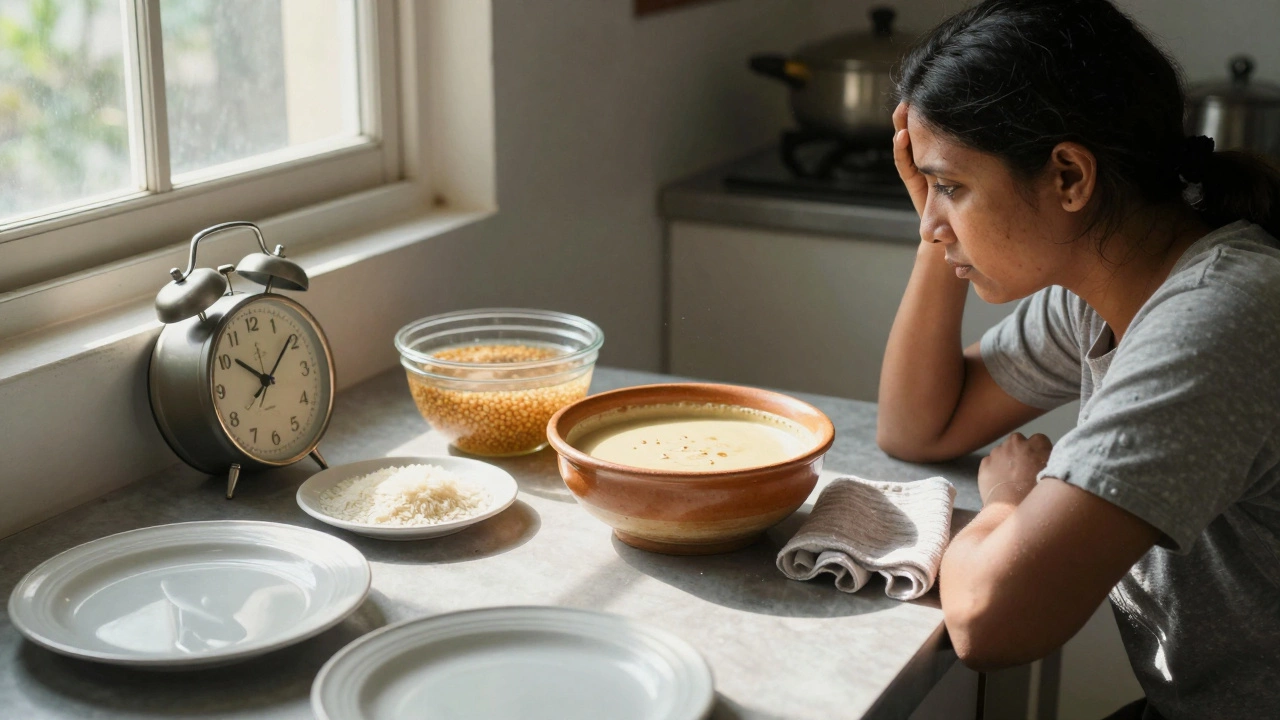
Everyone’s been there: you wake up craving crispy, golden dosas for breakfast, but you realize you forgot to soak the rice and lentils the night before. You look at the clock-7:30 a.m. and your kids are already asking for food. Can you really make dosa batter ferment in just one hour? The short answer: no, not properly. But you can get something close enough to serve if you know the tricks.
Why Fermentation Takes Time
Fermentation isn’t magic. It’s biology. Dosa batter relies on wild yeast and lactic acid bacteria naturally present in rice and urad dal. These microbes eat sugars, release carbon dioxide (which makes the batter puff up), and produce lactic acid (which gives dosa its tangy flavor). This process doesn’t rush.
At room temperature (25-30°C), full fermentation takes 8-12 hours. In colder climates-like Sydney in winter-it can take up to 16 hours. Even in tropical Chennai, where dosa originated, people don’t skip the wait. Why? Because rushed fermentation means flat, bland, gummy dosas. The texture and flavor come from slow, natural activity. No shortcut replaces that.
What Happens If You Try to Speed It Up
Some blogs suggest adding yeast, baking soda, or warm water to force fermentation. Here’s what actually happens:
- Instant yeast: Adds bubbles, but no tang. Your dosa tastes like plain pancake-missing the signature sour note.
- Baking soda: Makes the batter rise temporarily, but it’s a chemical reaction, not fermentation. The batter collapses after 20 minutes and leaves a soapy aftertaste.
- Warm oven or microwave: If you heat the batter above 40°C, you kill the good bacteria. You’ll get no rise at all.
There’s a reason traditional recipes use a warm corner of the kitchen, not the oven. The microbes need steady, gentle warmth-not a blast of heat.
Can You Get a Workaround in One Hour?
Yes-but only if you accept compromises. Here’s how to make something edible in 60 minutes:
- Use pre-soaked, pre-ground batter from the fridge (store-bought or saved from last time). Freshly ground batter won’t work.
- Let it sit in a sealed container inside a warm spot-near a radiator, on top of a running oven, or in a microwave with a cup of hot water (not turned on).
- Add 1/4 teaspoon of active dry yeast mixed with 1 tablespoon of warm water (not hot) and stir into the batter. This adds bubbles but won’t replicate real fermentation.
- Wait 45-60 minutes. You’ll see slight puffing, maybe 20-30% volume increase.
- Cook immediately. Don’t wait longer-the batter will deflate.
The result? Dosa that’s edible, slightly fluffy, and warm-but lacks depth. It won’t be the same as a properly fermented batch. Think of it as a backup plan, not a replacement.
What Really Works: The 3-Hour Method
If you’re serious about speed without sacrificing quality, try this tested 3-hour method:
- Soak 1 cup raw rice and 1/2 cup urad dal in warm water (40°C) for 1 hour.
- Grind the rice and dal separately. Rice should be coarse; urad dal should be fluffy and whipped like meringue.
- Mix them together. Add salt.
- Place the batter in a pre-warmed ceramic bowl. Cover with a damp cloth.
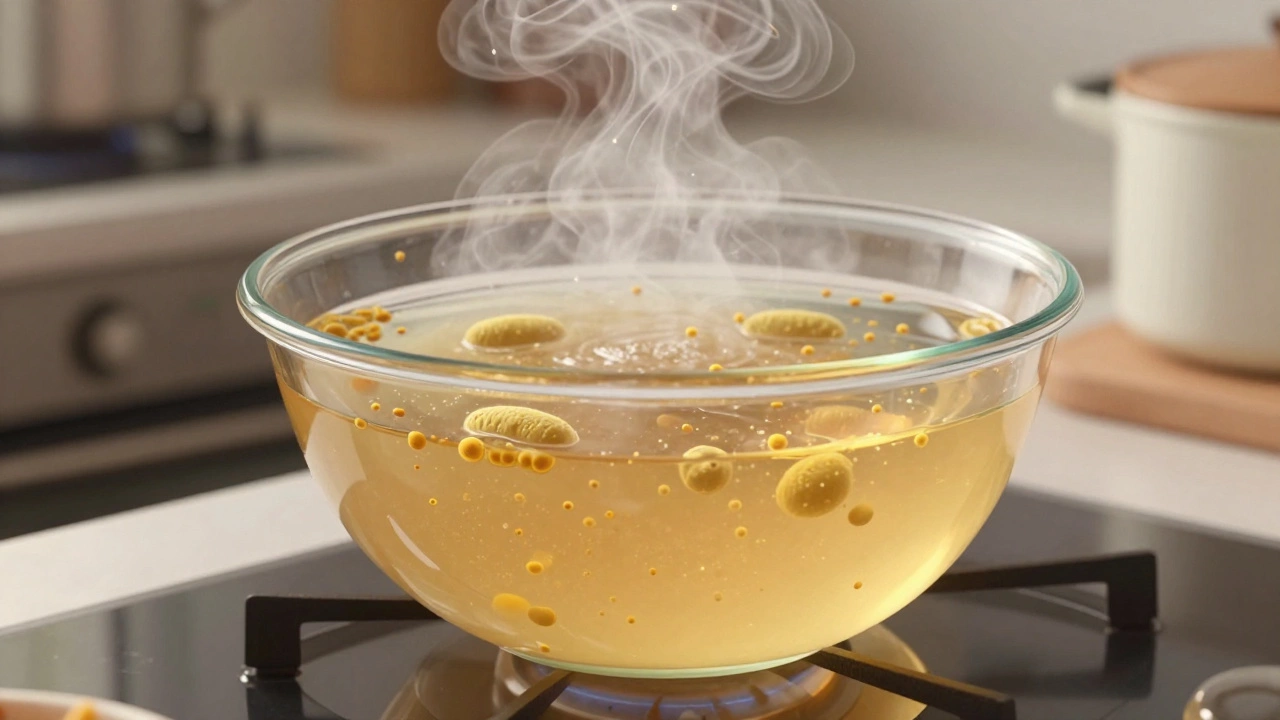
- Put the bowl inside a turned-off oven with a pot of boiling water on the bottom rack. The steam will keep the air around 30-35°C.
- After 3 hours, you’ll have 100% rise, a bubbly texture, and a clean sour aroma.
This is how many South Indian homes do it during winter. No yeast. No shortcuts. Just smart temperature control.
Why Temperature Is Everything
Microbes work best between 28°C and 35°C. Below 20°C, they barely move. Above 40°C, they die. That’s why:
- Leaving batter on the counter in winter = no rise.
- Putting it near a heater = uneven, smelly batter.
- Using a yogurt maker set to 30°C = perfect.
If you live in a cold climate, invest in a small yogurt maker or use a thermal food container. Fill it with warm water (not boiling), place your batter inside, seal it, and walk away. The heat stays for hours. It’s cheap, safe, and effective.
What to Do When You’re Out of Time
If you absolutely can’t wait and your batter hasn’t fermented, here’s your rescue plan:
- Make adai instead: Add 1/4 cup cooked lentils, chopped onions, and green chilies. Fry as thick pancakes. No fermentation needed.
- Try pancake dosa: Mix 1 cup ready-made dosa batter (store-bought) with 1 egg and a splash of milk. Cook like a thick pancake. It’s not traditional, but it’s fast and satisfying.
- Use fermented idli batter if you have it. It’s the same base as dosa batter-just grind it thinner and add water to make it pourable.
These aren’t dosas. But they’re tasty, quick, and use the same ingredients. Better than skipping breakfast.
Pro Tips for Consistent Fermentation
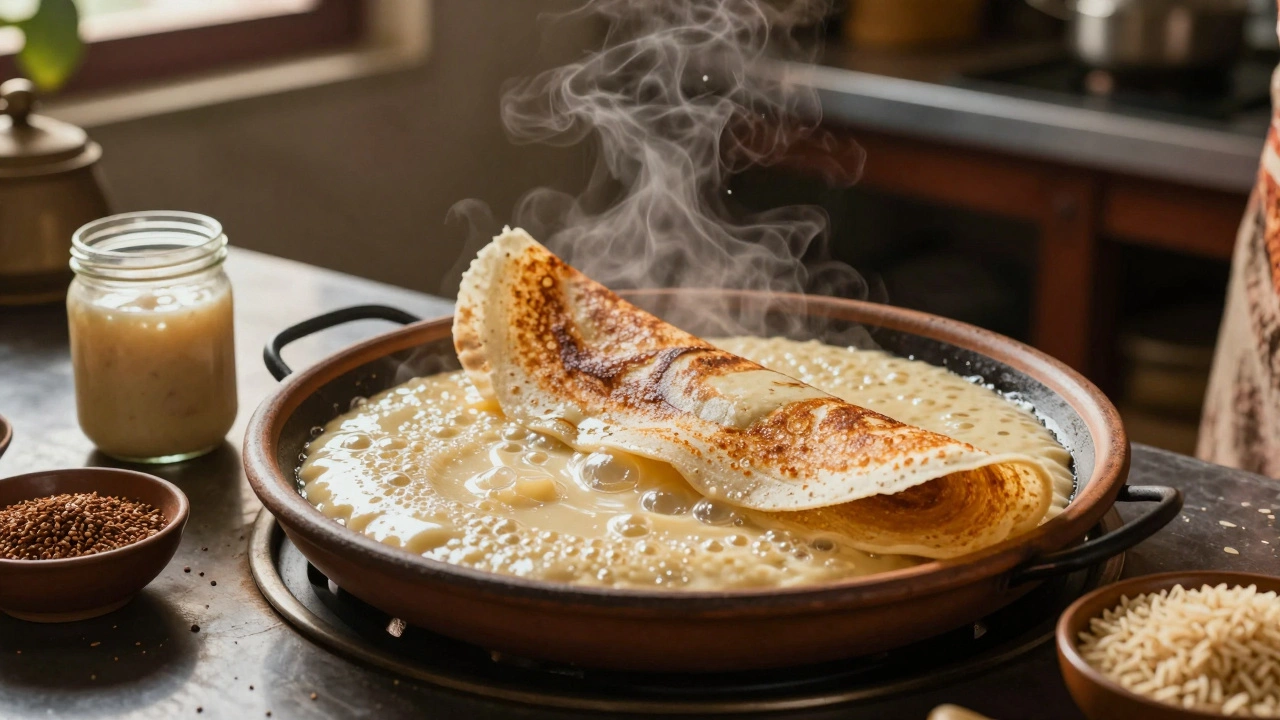
- Use aged rice: Rice stored for 6-12 months ferments better than fresh rice.
- Grind urad dal until it’s light and airy. If it’s dense, the batter won’t rise well.
- Don’t overmix after combining rice and dal. Fold gently to preserve air bubbles.
- Always cover with a damp cloth, not plastic. Plastic traps moisture and causes souring without rising.
- Keep a small jar of fermented batter from your last batch. Add a tablespoon to your next one-it’s like a starter culture.
When Fermentation Fails
Why didn’t your batter rise? Here are the top 3 reasons:
- Water too cold: Soaking or grinding with icy water slows microbes. Use lukewarm water.
- Too much salt added early: Salt kills bacteria. Add it only after grinding and mixing.
- Old or low-quality urad dal: If the dal looks dull or smells off, it won’t ferment. Buy fresh, whole, unbroken dal.
If your batter smells alcoholic or rotten, toss it. That’s over-fermentation or contamination. Don’t risk it.
Final Verdict: Can You Ferment Dosa Batter in 1 Hour?
No, you can’t get true, traditional dosa batter fermentation in 60 minutes. The flavor, texture, and health benefits come from slow microbial activity. But you can make a decent, quick substitute if you’re desperate.
For the best results: plan ahead. Soak the night before. Or use the 3-hour warm method if you’re short on time. Save the yeast and baking soda tricks for emergencies. Real dosa deserves patience.
And if you’re making dosa for the first time? Don’t rush. Let it sit overnight. The next morning, you’ll taste the difference-and your family will thank you.
Can I use baking soda to make dosa batter rise faster?
No. Baking soda creates a quick chemical rise, but it doesn’t ferment the batter. It leaves a bitter, soapy aftertaste and the batter collapses within minutes. It’s a temporary fix that ruins flavor and texture.
Why does my dosa batter smell sour but not rise?
This usually means the batter is over-fermented or contaminated. The sour smell comes from lactic acid, but if the batter doesn’t puff up, the yeast isn’t active. This can happen if the batter was left too long, or if the urad dal was old or poorly ground. Discard it and start fresh.
Can I ferment dosa batter in the refrigerator?
No. Refrigeration (below 5°C) stops fermentation completely. You can store fermented batter in the fridge for up to 5 days, but you can’t start fermentation there. Always ferment at room temperature or warmer.
Does adding fenugreek seeds help fermentation?
Yes. A teaspoon of fenugreek seeds soaked with the urad dal helps fermentation. It releases compounds that feed the yeast and improves texture. It’s traditional, not optional.
Can I use a pressure cooker to ferment dosa batter?
Only if you turn it off. Place the batter inside the closed cooker with a cup of warm water on the bottom. The trapped heat creates a steady 30-35°C environment. Never turn the cooker on-heat will kill the microbes.
What’s the best time to grind dosa batter?
Grind the rice and urad dal right after soaking-don’t wait. The grains are most hydrated and softest right after soaking. If you wait hours, they dry slightly and grind poorly, leading to dense batter.