10 Mar 2026
- 0 Comments
Chutney Sugar & Calorie Calculator
How much chutney are you eating?
Results
Chutney is one of those things you might not think twice about-just a little side of flavor on your plate. But if you eat it regularly, especially with meals like dosas, samosas, or even grilled meats, you should ask: is chutney good or bad for you? The answer isn’t black and white. It depends on what’s in it, how much you use, and how your body reacts.
What’s Actually in Chutney?
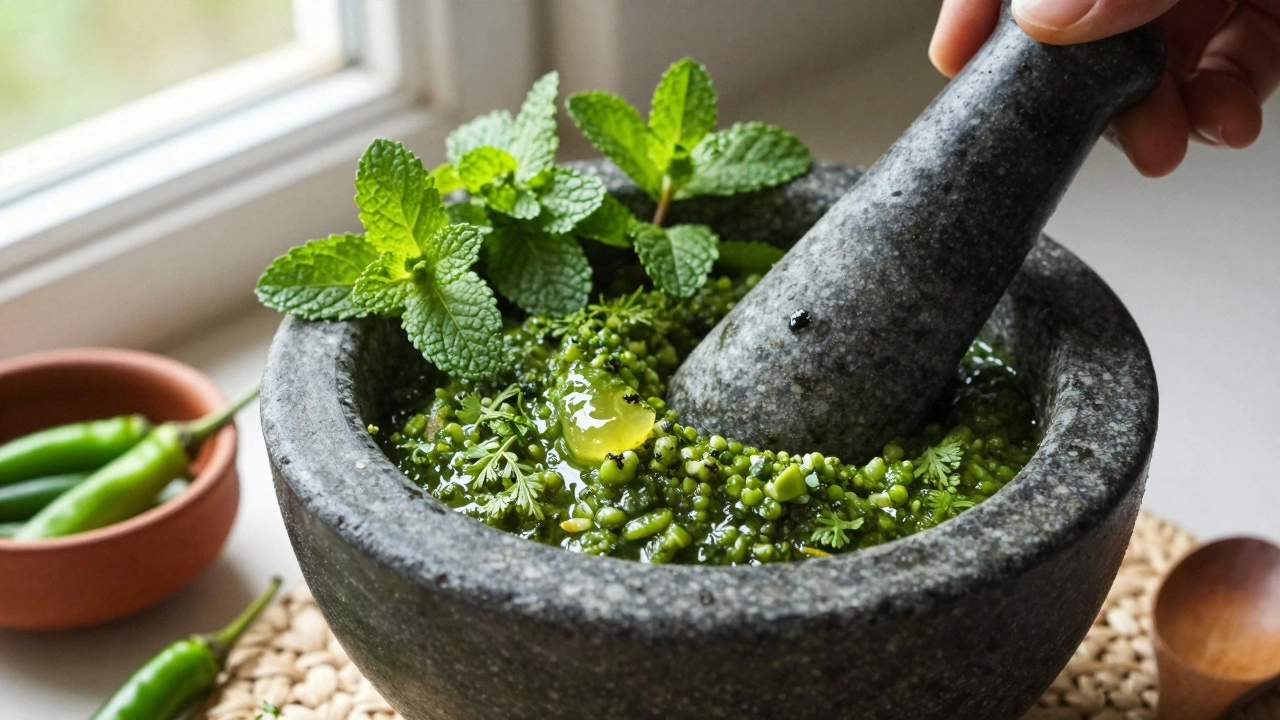
Most traditional chutneys are made from fresh ingredients: tomatoes, tamarind, mint, coriander, coconut, green chilies, garlic, ginger, and sometimes fruit like mango or apple. These aren’t just flavor boosters-they’re packed with nutrients. Mint has antioxidants. Tamarind is rich in vitamin C and fiber. Coconut provides healthy fats. Even garlic and ginger have anti-inflammatory properties.
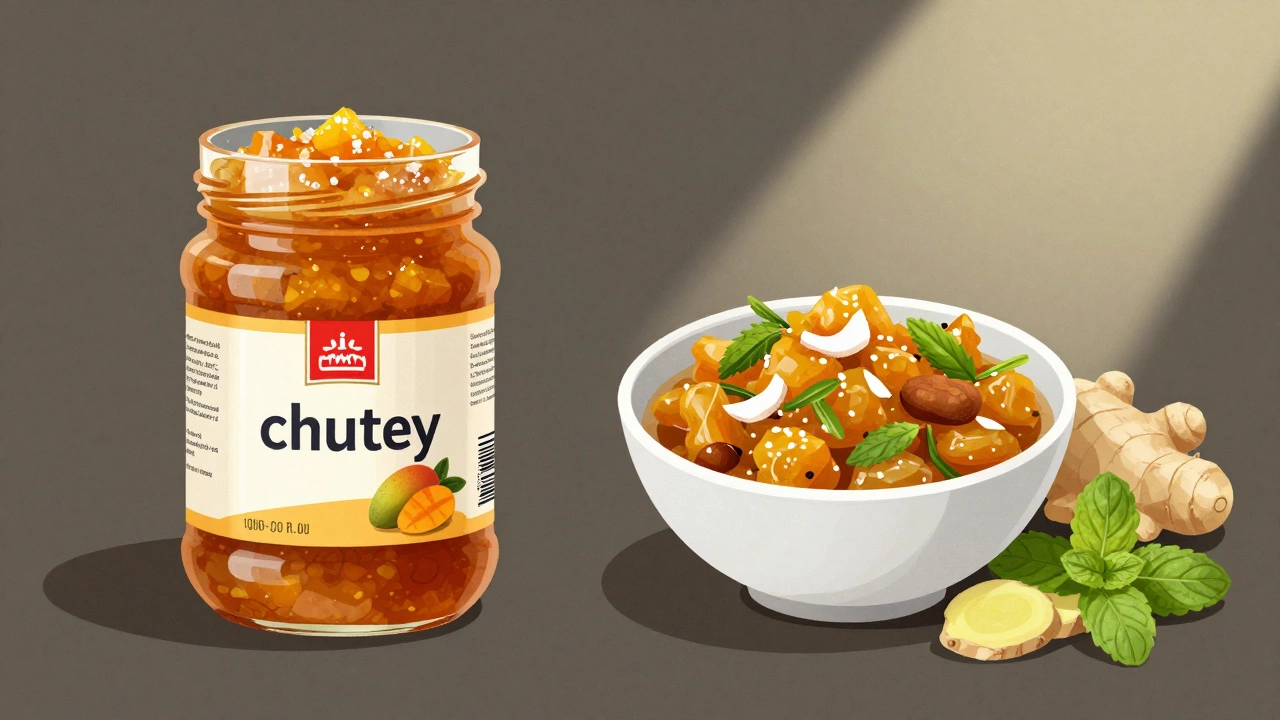
But here’s the catch: store-bought chutneys? They often have added sugar, vinegar, preservatives, and sometimes even high-fructose corn syrup. A single tablespoon of some commercial mango chutneys can contain over 6 grams of sugar-that’s nearly two teaspoons. And if you’re using a couple of tablespoons on your snack? You’re adding more sugar than you’d find in a small cookie.
The Good: Health Benefits You Might Not Know
Homemade chutney, made with fresh ingredients and minimal added sugar, can be a nutritional win. Here’s what it can do for you:
- Supports digestion-Tamarind and ginger stimulate digestive enzymes, helping break down food more efficiently. Many people in India eat chutney with meals not just for taste, but because it aids digestion.
- Boosts immunity-Fresh herbs like cilantro and mint are loaded with vitamin A and C. Garlic has allicin, a compound linked to immune support.
- Provides antioxidants-Tomatoes and green chilies contain lycopene and capsaicin, which help fight oxidative stress in the body.
- Low in calories (if made right)-A homemade mint chutney made with yogurt, lime, and herbs can be under 30 calories per tablespoon.
One 2023 study from the Indian Journal of Nutrition looked at 200 regular chutney consumers and found those who ate homemade versions had better gut health markers than those who relied on packaged ones. The key difference? Sugar and additives.
The Bad: Hidden Risks
Not all chutneys are created equal. The biggest concerns come from processed versions:
- High sugar content-Many brands add sugar to balance the sourness of tamarind or lime. One jar of sweet mango chutney can have 15-20 grams of sugar per 100 grams. That’s close to the WHO’s recommended daily limit for added sugars in a single serving.
- Excess sodium-Some chutneys use salt as a preservative. If you already have high blood pressure, that’s a red flag.
- Artificial preservatives-Sodium benzoate and potassium sorbate are common in shelf-stable chutneys. While approved by regulators, long-term daily intake isn’t well studied, especially in sensitive individuals.
- Oil-heavy recipes-Some regional chutneys, like coconut chutney in South India, use roasted coconut and lots of oil. If you’re watching fat intake, this can add up fast.
There’s also the issue of portion size. People think of chutney as a condiment, so they use it generously. But a little goes a long way. Two tablespoons of sugary chutney can add 120+ calories and 12 grams of sugar to your meal-without you even realizing it.
Chutney and Blood Sugar: What You Need to Know
If you have prediabetes or diabetes, chutney can be a hidden trap. Tamarind and fruit-based chutneys naturally contain sugars, but when combined with added sugar and eaten without fiber-rich foods, they can spike blood glucose.
A small 2024 trial in Bangalore tested 50 people with type 2 diabetes who ate the same meal with either homemade mint chutney or store-bought mango chutney. The group with homemade chutney had a 28% lower blood sugar spike two hours after eating. Why? Less sugar, more fiber from fresh herbs and less processing.
The takeaway? It’s not chutney itself that’s the problem-it’s how it’s made.
How to Make Chutney That’s Actually Good for You
Here’s how to enjoy chutney without the downsides:
- Make it yourself-Use fresh ingredients. No need to cook it for hours. Blend mint, coriander, green chili, lemon juice, and a pinch of salt. Done in 5 minutes.
- Go easy on sugar-If you want sweetness, use ripe fruit like mango or apple. Skip the white sugar entirely. A little honey or jaggery (if you prefer) is better than refined sugar.
- Watch the oil-For coconut or peanut chutney, use 1 teaspoon of oil max. Roast nuts lightly instead of frying them.
- Store smart-Homemade chutney lasts 5-7 days in the fridge. Freeze in ice cube trays for longer storage. No preservatives needed.
- Pair it right-Eat chutney with whole grains, lentils, or vegetables. The fiber slows sugar absorption.

Chutney vs. Other Condiments
Let’s put chutney in perspective:
| Condiment | Calories | Sugar (g) | Sodium (mg) | Added Preservatives |
|---|---|---|---|---|
| Homemade Mint Chutney | 25 | 1 | 80 | None |
| Store-Bought Mango Chutney | 70 | 14 | 110 | Yes |
| Ketchup | 15 | 4 | 120 | Yes |
| Mayonnaise | 90 | 0 | 85 | Yes |
| Yogurt-Based Raita | 20 | 2 | 60 | None |
As you can see, homemade chutney beats most store-bought condiments on sugar and additives. Even ketchup, which people think is “bad,” has less sugar per tablespoon than sweet mango chutney. But it’s also far less nutritious.
Who Should Avoid Chutney?
Not everyone should eat chutney without caution:
- People with acid reflux-Tamarind and citrus can trigger heartburn. Try coconut or cilantro chutney instead.
- Those with kidney issues-High sodium and oxalates (in spinach-based chutneys) can be risky. Stick to low-salt versions.
- People with IBS-Garlic and onion in chutney can cause bloating. Use garlic-infused oil instead of raw garlic.
- Young children-Spicy chutneys can be too intense. Offer mild versions with no chili.
Final Verdict: Good or Bad?
Is chutney good or bad for you? It’s neither. It’s a tool. Like salt or oil, it’s about how you use it.
If you make it fresh, skip the sugar, and use it in small amounts, chutney can be one of the healthiest parts of your meal. It adds flavor without calories, boosts nutrients, and supports digestion.
If you reach for the jar from the supermarket and slather it on everything? Then yes-it’s adding sugar, salt, and chemicals you don’t need.
The real question isn’t whether chutney is good or bad. It’s whether you’re choosing the right kind. And if you’re eating it daily, it’s worth making your own.
Is chutney high in sugar?
Store-bought chutneys, especially mango and sweet tamarind varieties, can be very high in sugar-sometimes over 14 grams per tablespoon. Homemade versions, made without added sugar, typically have less than 2 grams. Always check labels and opt for brands with no sugar listed as one of the first three ingredients.
Can chutney help with digestion?
Yes, especially if it contains ginger, tamarind, or mint. These ingredients stimulate digestive enzymes and bile production. Many traditional Indian meals include chutney not just for taste, but to aid digestion after heavy meals. The fiber from fresh herbs also supports gut bacteria.
Is homemade chutney healthier than store-bought?
Almost always. Homemade chutney lets you control the ingredients: no preservatives, no added sugar, no artificial flavors. You get fresh herbs, real spices, and natural acidity from lime or tamarind. Store-bought versions are often processed for shelf life, not nutrition.
How long does homemade chutney last?
In the fridge, most homemade chutneys last 5-7 days. If you freeze them in ice cube trays, they can last up to 3 months. Always use a clean spoon to scoop it out, and keep it in an airtight container. No need for preservatives-freshness is your best defense.
Can chutney be part of a weight-loss diet?
Absolutely-if you make it right. A tablespoon of mint or coriander chutney adds flavor and volume without many calories. It can help you feel satisfied with smaller portions of carbs or fats. Avoid sugary versions, and pair it with protein and fiber-rich foods for best results.
Are all chutneys spicy?
No. While many contain chilies, you can make mild versions by reducing or omitting them. Coconut chutney, tomato chutney, and yogurt-based chutneys are often mild. You can also use roasted red peppers or sweet paprika for flavor without heat.