6 Mar 2026
- 0 Comments
Turmeric Quantity Calculator
How Much Turmeric Do You Need?
Turmeric is the golden backbone of curry. Use this calculator to find the right amount for authentic flavor and color.
Recommended Amount:
0.0 tspThis is the amount needed for authentic curry color and flavor. Use fresh turmeric root for more vibrant results.
Cooking Tips
Calculate your recipe to see cooking tips.
Ever open a jar of curry powder and wonder what gives it that deep, earthy golden color? It’s not just one spice-it’s a blend. But if you had to pick the one ingredient that makes curry look like sunshine in a bowl, it’s turmeric is a rhizome from the ginger family, dried and ground into a bright yellow powder that forms the backbone of most Indian curries. Also known as haldi, it’s been used for over 4,000 years in South Asia-not just for flavor, but for color, preservation, and traditional medicine.
Why Turmeric Is the Heart of Every Curry
If you’ve ever made a chicken curry and skipped the turmeric, you probably noticed something missing. Not heat. Not spice. Not even aroma. It’s the color. That rich, warm yellow isn’t just for looks-it’s the signature of a real curry. Turmeric doesn’t dominate the taste like chili or cumin. Instead, it layers in a subtle earthiness, a whisper of bitterness that balances the sweetness of onions and the richness of coconut milk or yogurt.
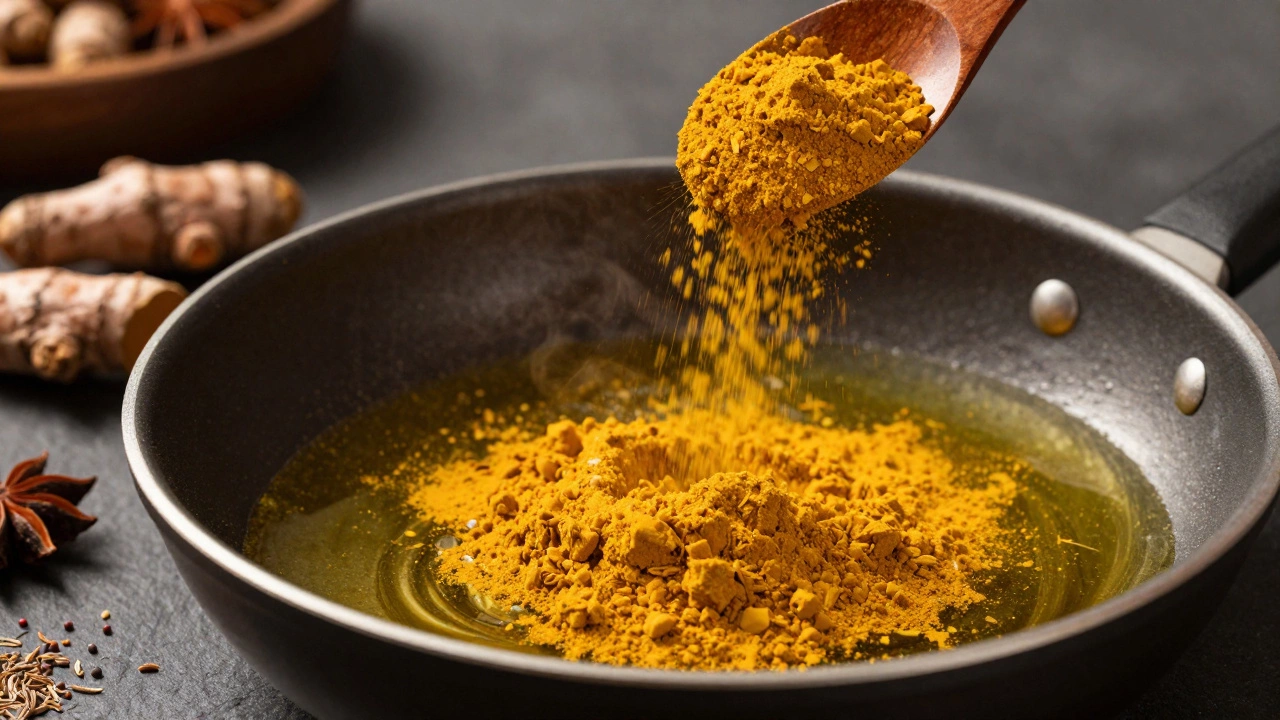
Most home cooks think curry powder is a single spice. It’s not. It’s a mix, often including coriander, cumin, fenugreek, and chili. But turmeric is in nearly every version. Even in regions where curry is made from scratch, like in Tamil Nadu or Kerala, turmeric is added early-often with mustard seeds-to bloom its flavor in hot oil. This step isn’t optional. Skip it, and your curry will taste flat, pale, and strangely incomplete.
How Much Should You Use?
A typical chicken curry recipe calls for 1 to 2 teaspoons of turmeric powder per serving. That’s not a lot, but it’s enough to stain your fingers yellow and turn your rice golden. Too little, and you lose the signature hue. Too much, and you get a bitter, medicinal aftertaste. The trick is balance.
Some recipes use fresh turmeric root instead. It’s more pungent, more vibrant, and packs more antioxidants. One inch of peeled fresh root equals about 1 teaspoon of dried powder. If you’ve ever seen a vendor grating bright orange roots in a Mumbai market, that’s fresh turmeric. It’s harder to find outside India, but worth seeking out if you want deeper flavor.
Turmeric vs. Saffron: What’s the Difference?
You might hear people say saffron gives curry its color. That’s a myth. Saffron is expensive-over $5,000 per kilogram-and used in tiny amounts for a floral note, not color. It’s found in luxury biryanis or Kashmiri curries, but rarely in everyday chicken curry. Turmeric, on the other hand, costs pennies per gram and is used in nearly every household.
The color difference is obvious: saffron gives a soft orange-red tint, while turmeric gives a strong, electric yellow. If your curry looks like a sunset, it’s probably turmeric. If it’s more like amber honey, you might have a touch of saffron. But 95% of the time, it’s turmeric doing the heavy lifting.

How to Use Turmeric Right
Just tossing turmeric into your curry won’t give you the best flavor. Here’s how professionals do it:
- Heat oil or ghee in a pan until it shimmers.
- Add turmeric powder and stir for 5-10 seconds. You’ll smell it bloom-earthy, almost nutty.
- Immediately add onions or garlic. This stops the turmeric from burning.
- Let it cook with the other spices for a minute before adding liquid.
This blooming step unlocks the compound curcumin, which gives turmeric its color and health benefits. If you add it at the end, it tastes raw and chalky. If you burn it, it turns bitter. Timing matters.
Why Turmeric Stains Everything
Anyone who’s spilled turmeric on a white shirt knows: it’s stubborn. That’s because curcumin, the main pigment, binds tightly to fabric and skin. It’s not a flaw-it’s a feature. In Indian culture, turmeric paste is used in wedding rituals to purify and brighten the skin. The stain? A badge of honor.
For cleaning, use lemon juice or baking soda. Vinegar works too. But don’t scrub too hard-the color sinks in fast. Better yet, wear an apron. You’ll thank yourself later.

Is Turmeric Just for Curries?
No. Turmeric shows up in rice dishes like pulao, in lentil stews (dal), in pickles, and even in milk-golden milk, a warm drink made with turmeric, ginger, and honey. It’s used in Ayurvedic remedies for inflammation, digestion, and immunity. Modern science backs some of this: curcumin has strong anti-inflammatory properties, though you’d need to consume it with black pepper (which contains piperine) to absorb it properly.
But you don’t need a medical reason to use it. In Indian kitchens, turmeric is used because it works. It colors, it preserves, it deepens flavor, and it turns a simple chicken stew into something that looks like it came from a temple feast.
What If You Don’t Have Turmeric?
There’s no perfect substitute. Paprika adds color but not depth. Saffron adds luxury but not earthiness. Annatto seeds give yellow but taste like grass. If you’re out of turmeric, you can skip it-but your curry won’t taste right. It’ll still be tasty, sure. But it won’t be a curry.
That’s why turmeric isn’t just an ingredient. It’s a cultural anchor. In every spice rack from Delhi to Detroit, it’s the one spice that says, "This is Indian food."
Is turmeric the same as curry powder?
No. Turmeric is a single spice. Curry powder is a blend that usually includes turmeric, along with cumin, coriander, fenugreek, and chili. Think of turmeric as the base color and flavor, while curry powder is the full orchestra.
Can I use turmeric in non-Indian dishes?
Absolutely. Turmeric adds warmth and color to soups, roasted vegetables, scrambled eggs, and even rice bowls. It pairs well with garlic, ginger, and coconut milk. You don’t need to make curry to use turmeric-it’s a versatile spice.
Does turmeric make food taste spicy?
Not really. Turmeric has a mild, earthy, slightly bitter flavor-not heat. The spiciness in curries comes from chili peppers or black pepper. Turmeric’s job is to deepen flavor and color, not burn your tongue.
How long does turmeric last?
Ground turmeric stays fresh for about 2-3 years if stored in a cool, dark place. Fresh turmeric root lasts 2-3 weeks in the fridge. If it smells musty or loses its bright color, it’s past its prime. Don’t use it-it won’t harm you, but it won’t taste good either.
Why does turmeric turn my curry yellow and not orange?
Turmeric’s pigment is curcumin, which is a strong yellow. If your curry looks orange, you might have added tomato, paprika, or saffron. Pure turmeric gives a vivid, clean yellow. The orange tint in restaurant curries often comes from added food coloring or annatto-not natural turmeric.