13 Mar 2026
- 0 Comments
Street Food Temperature Checker
Check if street food is at a safe temperature to eat with your hands based on Indian street food safety standards.
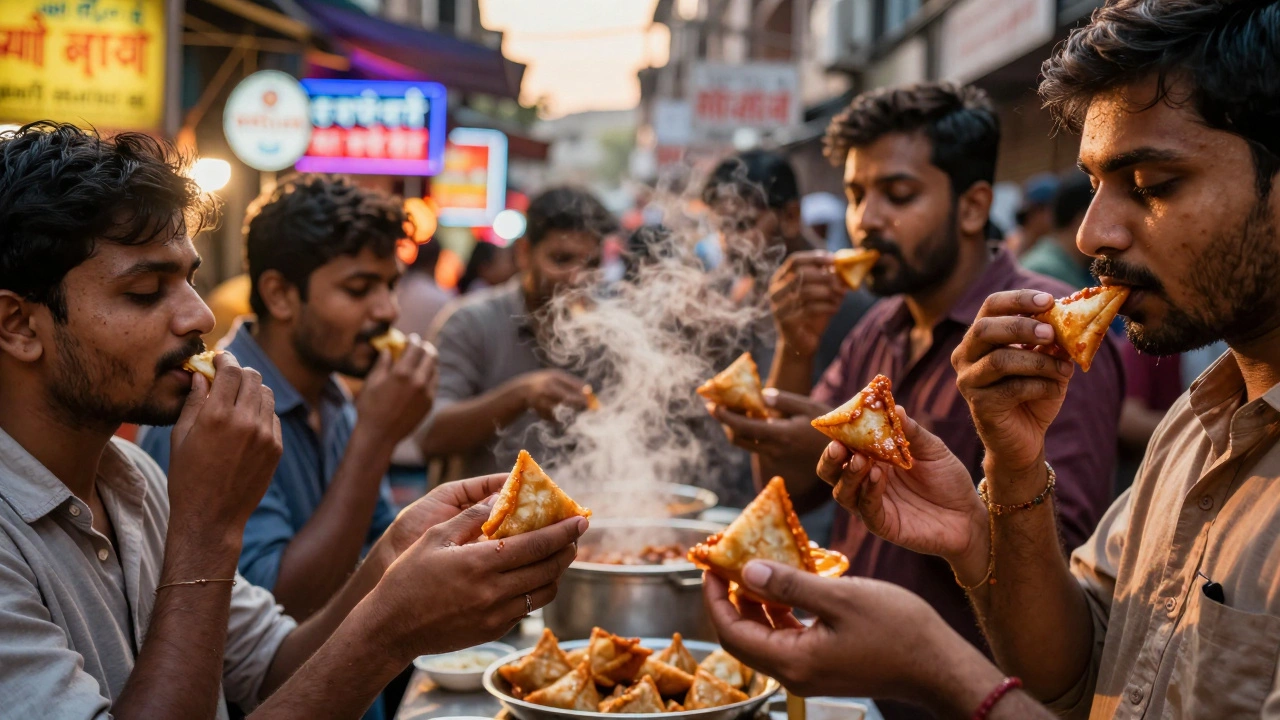
Walk through any busy street in Delhi, Mumbai, or Kolkata at dusk, and you’ll see something simple but powerful: people eating hot, spicy, messy food with their fingers. No forks. No spoons. Just bare hands. If you’ve ever watched someone in India eat a piping hot samosa, a pile of pani puri, or a warm plate of bhel puri with their fingers, you might have wondered - why? Why not use utensils? Why hands?
It’s Not Just Tradition - It’s Sensory Experience
Using your hands to eat isn’t about lacking tools. It’s about adding another layer to the experience. When you pick up a chaat with your fingers, you feel the heat of the food, the crunch of the sev, the softness of the bread, the stickiness of the chutney. Your skin becomes part of the meal. Studies in food psychology show that tactile feedback increases enjoyment. People who eat with their hands report higher satisfaction, especially with foods that are textured, warm, or messy - which describes most Indian street food.
Think about pani puri. You hold the hollow puri in your fingers, dip it into the spiced water, add tamarind chutney and potatoes, then pop it whole into your mouth. Try doing that with a fork. It falls apart. The water spills. The flavor doesn’t mix right. Your hands? They hold it together. They let you control the mix. They let you adjust the spice level, the texture, the temperature - right as you eat.
Temperature Tells You What to Do
Indian street food is often served fresh, hot off the griddle or fryer. Your fingers are better than a spoon at sensing heat. If a vada pav is too hot, you’ll instinctively shift it between fingers or let it cool for a second. A spoon won’t tell you that. Your skin does. This isn’t just instinct - it’s survival. People who eat with their hands naturally avoid burning themselves because they feel the heat before it hits their mouth.
And let’s be honest - most street food isn’t meant to be elegant. It’s meant to be eaten fast, while standing, with one hand on your wallet and the other on your snack. A fork would slow you down. A napkin? You’ll need three. Your hand? It’s always there.
Clean Hands, Clean Ritual
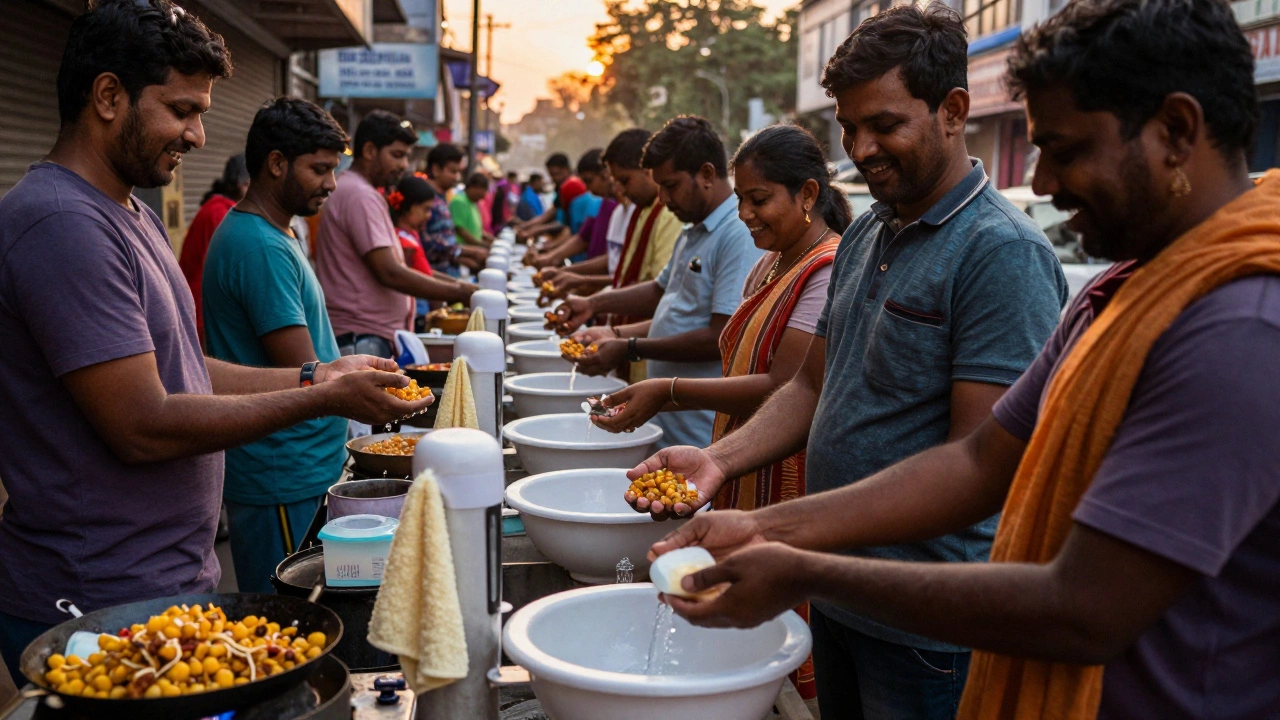
You might think, “But isn’t that unhygienic?” The answer is: not if you do it right. Before eating, vendors and customers alike wash their hands with soap and water - often right at the stall. Many street food spots have a small basin and towel hanging nearby. In fact, in cities like Jaipur and Ahmedabad, local governments have installed handwashing stations specifically for street food customers. It’s not an afterthought - it’s part of the culture.
And here’s the thing: your hands are cleaner than you think. Skin has natural oils and bacteria that protect against harmful microbes. Plus, when you eat with your hands, you’re not touching anything else - no shared utensils, no plastic forks that sit in a bucket of warm water all day. Your hands are your own.
Religion, Ritual, and Respect
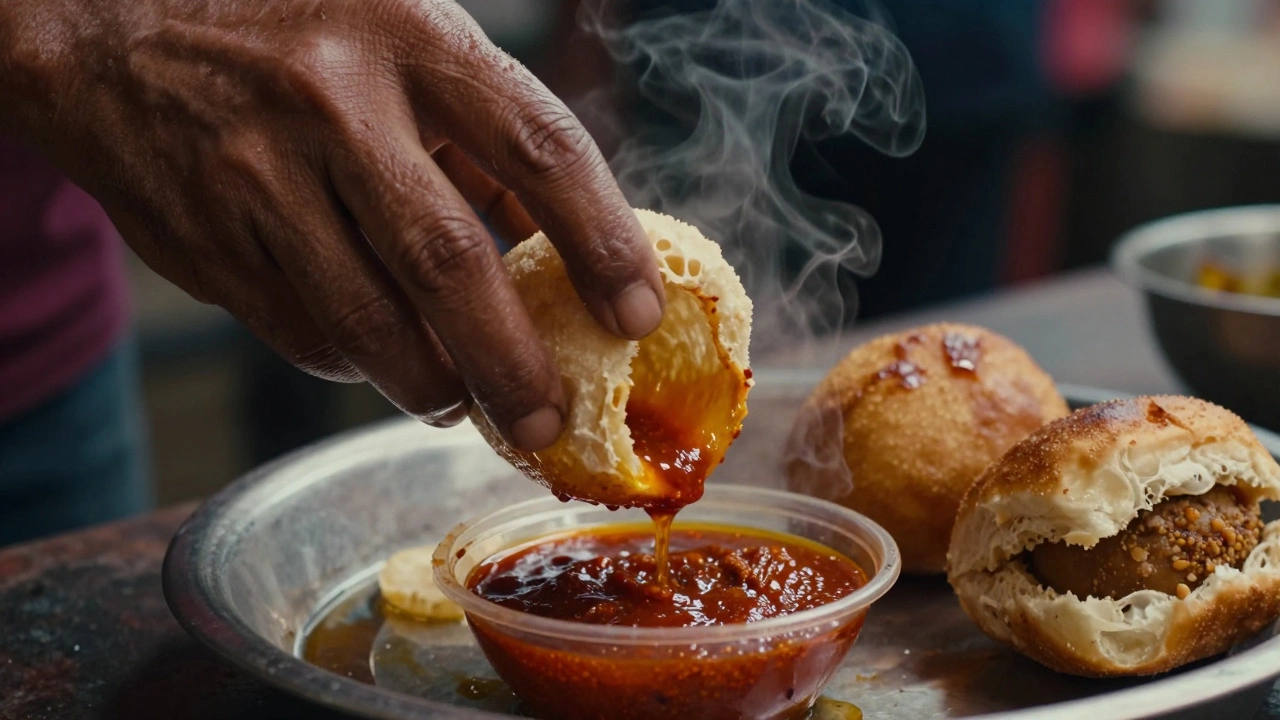
In many parts of India, eating with your hands is tied to deeper beliefs. In Hindu tradition, the right hand is considered pure. The left is used for cleaning. So, you eat only with your right hand. This isn’t just about hygiene - it’s about intention. When you bring food to your mouth with your right hand, you’re not just feeding yourself. You’re honoring the food.
There’s also a belief that food carries energy. Your fingers are connected to nerve endings that link to your brain and digestive system. Touching food with your hands is thought to stimulate digestion. While science hasn’t fully proven this, many people swear by it. They say food tastes better when eaten by hand - and their bodies digest it easier.
It’s About Community
Street food isn’t just food. It’s a social event. You’re often standing shoulder to shoulder with strangers, sharing a bench, laughing over spicy chutney. When everyone eats with their hands, it breaks down barriers. No one’s fumbling with chopsticks or dropping a fork. No one’s waiting for someone to pass a spoon. Everyone eats at the same pace. It’s equal. It’s intimate.
Try eating a plate of pav bhaji with a fork in a crowded Mumbai stall. You’ll feel out of place. But with your hands? You’re one of them. You’re part of the rhythm.
Why This Still Works Today
Modern India has forks, spoons, and even fast-food chains. But street food with hands? It’s growing. In 2024, a survey by the Indian Street Food Association found that 89% of regular street food eaters still prefer using their hands. Even younger people - those born after 2000 - are choosing hands over utensils. Why? Because they’ve grown up with it. It’s not nostalgia. It’s preference.
Food influencers on Instagram show videos of themselves eating dahi bhalla with their fingers. TikTok trends feature slow-motion shots of chutney dripping from fingers onto parathas. The hashtag #HandEatenIndia has over 2 million posts. People aren’t just eating. They’re celebrating.
What You Lose If You Don’t Use Your Hands
If you try to eat a plate of bhutta (grilled corn) with a fork, you’ll miss the charred bits that stick to the cob. You’ll lose the texture of the butter melting into the kernels. If you use a spoon for pani puri, you’ll never feel the burst of flavor in your mouth the way you do when you press it gently with your thumb and index finger.
It’s not about being primitive. It’s about being present. When you eat with your hands, you slow down. You notice the heat. The smell. The texture. The way the spices cling to your skin. You taste more because you feel more.
How to Try It Yourself - Without the Guilt
Want to eat Indian street food like a local? Here’s how:
- Wash your hands well before eating. Most stalls provide water and soap - use it.
- Use only your right hand. It’s respectful, even if you’re not Indian.
- Don’t overthink it. It’s messy. That’s the point.
- Start with easy foods: samosas, bhel puri, or a warm roti with chutney.
- Don’t use napkins like a shield. Let the food stick. It’s part of the experience.
Some people say, “I can’t eat with my hands - it’s too weird.” But weird is just unfamiliar. The first time you eat a hot, spicy, juicy panipuri with your fingers, you’ll realize something: it’s not strange. It’s perfect.
Is it really safe to eat Indian street food with your hands?
Yes, if you follow basic hygiene. Most street vendors provide handwashing stations, and people wash before eating. Your skin has natural defenses, and using your own hands means no shared utensils - which can be more hygienic than forks that sit in dirty water all day. In fact, cities like Chennai and Pune have seen lower foodborne illness rates among hand-eaters because of strict handwashing norms.
Do all Indians eat street food with their hands?
Almost all do - especially when eating street food. In homes, utensils are common. But on the street, hands are the norm. Even in metro cities like Bangalore and Hyderabad, where people use forks at restaurants, they switch to hands when eating pav bhaji, kachori, or jalebi from a roadside vendor. It’s a cultural switch - like putting on sandals in a temple.
Why not use banana leaves or paper plates instead?
Banana leaves and paper plates are used - but they’re for serving, not eating. The food is placed on them, but you still use your hands to pick it up. The leaf or plate is just a base. Using hands to eat is about connection, not convenience. A leaf doesn’t help you feel the heat or control the spice. Your fingers do.
Can tourists get in trouble for eating with their hands?
No - in fact, locals often appreciate it. Many vendors will smile and say, “Acha hai!” (Good!). Some even teach you how to eat properly. If you’re hesitant, just wash your hands first and use your right hand. That’s all it takes. No one judges - they’re just happy you’re trying it.
Is eating with hands only for Indian food?
No. In Ethiopia, people eat injera with their hands. In parts of Africa and Southeast Asia, it’s common too. But in India, it’s especially tied to the texture and heat of street food. It’s not a rule - it’s a sensory upgrade. Once you try it, you’ll understand why it’s stayed around for centuries.