Milk Curdling Alternatives: Natural Ways to Thicken and Acidify Without Vinegar or Lemon
When you need to milk curdling alternatives, methods to safely and naturally separate milk into curds and whey without using vinegar or lemon juice. Also known as natural dairy coagulation, it’s the foundation of homemade paneer, chenna, and traditional yogurt-based dishes. Most recipes push you toward lemon juice or vinegar, but those aren’t the only—or even the best—ways to get clean, firm curds. In Indian kitchens, especially in South India, people have used gentler, more flavorful methods for generations.
One of the most common yogurt as curdling agent, using plain, active-culture yogurt to gently acidify milk for curdling works beautifully. Just mix a tablespoon of thick, homemade yogurt into warm milk and let it sit overnight. The natural lactic acid slowly breaks down the milk proteins, giving you soft, creamy curds perfect for desserts or paneer. It’s milder than vinegar, adds a subtle tang, and keeps the texture smooth. Another powerful option is buttermilk, the leftover liquid after churning butter, rich in lactic acid and perfect for gentle curdling. Use it like yogurt—warm the milk slightly, stir in a quarter cup of buttermilk, cover, and wait. You’ll get consistent results without the sharp bite of citrus or vinegar.
Then there’s rennet, a natural enzyme from calf stomachs or plant-based sources used in cheese-making. While it sounds fancy, plant-based rennet from fig leaves or papaya seeds has been used in rural India for centuries. A small pinch of dried papaya peel steeped in warm water can curdle a liter of milk in under an hour. It’s not as fast as vinegar, but the curds are cleaner, less acidic, and ideal for sweets like rasgulla or sandesh. Even fermented rice water, the cloudy liquid left after soaking rice overnight, rich in natural acids and enzymes works in a pinch—especially in Kerala and Tamil Nadu households. It adds a faint sweetness and helps preserve the milk’s natural flavor.
Why does this matter? Because vinegar and lemon juice don’t just curdle milk—they overpower it. They leave a sour aftertaste that ruins delicate desserts and makes paneer taste artificial. The alternatives give you control. You decide how firm the curds get, how mild the flavor stays, and whether the final product works for savory curries or sweet puddings. You’re not just replacing an ingredient—you’re choosing a technique that honors traditional methods and gives you better texture, aroma, and control.
These methods aren’t just old-school tricks—they’re science-backed. Lactic acid bacteria ferment sugars slowly, creating a steady pH drop that lets casein proteins bind evenly. Vinegar dumps acid all at once, causing uneven clumping and watery whey. That’s why homemade paneer made with yogurt or buttermilk holds its shape better when grilled or fried. It’s firmer, less crumbly, and absorbs spices more evenly.
Below, you’ll find real kitchen stories and tested fixes from people who’ve tried every method—from lemon juice disasters to perfect paneer made with nothing but yogurt and time. Whether you’re making cheese, fixing a failed batch, or just curious about how Indian grandmothers got it right, these posts show you how to skip the vinegar and still get results that taste like home.
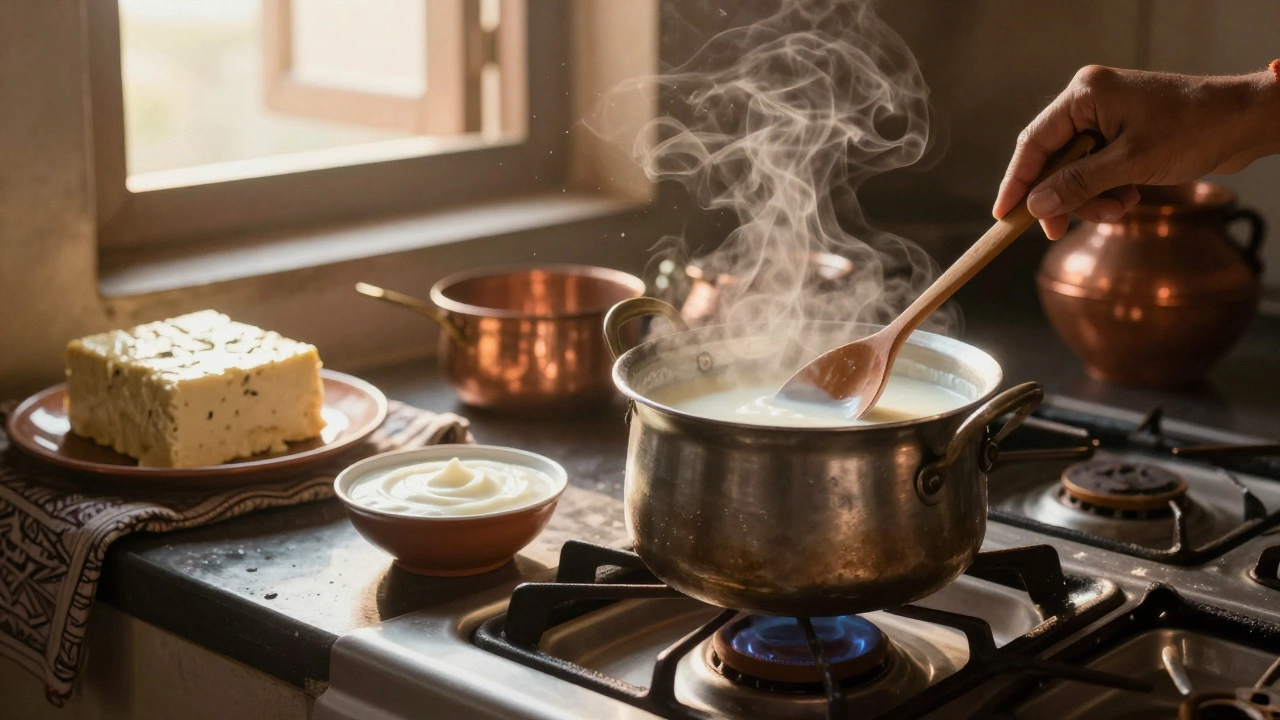
How to Curdle Milk Without Lemon and Vinegar for Homemade Paneer
Learn how to make fresh paneer at home without lemon or vinegar using yogurt, buttermilk, or naturally soured milk. Discover the best alternatives, common mistakes, and how to store your homemade cheese.