Nighttime Legumes: Best Lentils and Beans for Evening Meals
When you think about eating legumes at night, it’s not just about filling your stomach—it’s about choosing the nighttime legumes, lentils and beans that are gentle on digestion and support restful sleep. Also known as evening dals, these are the kinds of pulses Indian households have quietly relied on for generations after sunset. Not all legumes are made equal when the sun goes down. Some, like chana dal or moong dal, break down easily and don’t sit heavy in your gut. Others, like rajma or black-eyed beans, can cause bloating if eaten too late. The key isn’t avoiding legumes at night—it’s picking the right ones.
digestible beans, lentils that are low in complex sugars and easy to cook thoroughly. Also known as soft dals, they’re the backbone of traditional South Indian dinners. Think of moong dal khichdi or chana dal with rice—simple, warm, and calming. These aren’t just meals; they’re rituals. In homes across Tamil Nadu and Kerala, people know that soaking dal overnight isn’t just a cooking step—it’s a way to make the night lighter. Fermentation and soaking reduce phytic acid and oligosaccharides, the compounds that make your belly feel bloated. That’s why traditional recipes don’t rush the process. They let time do the work.
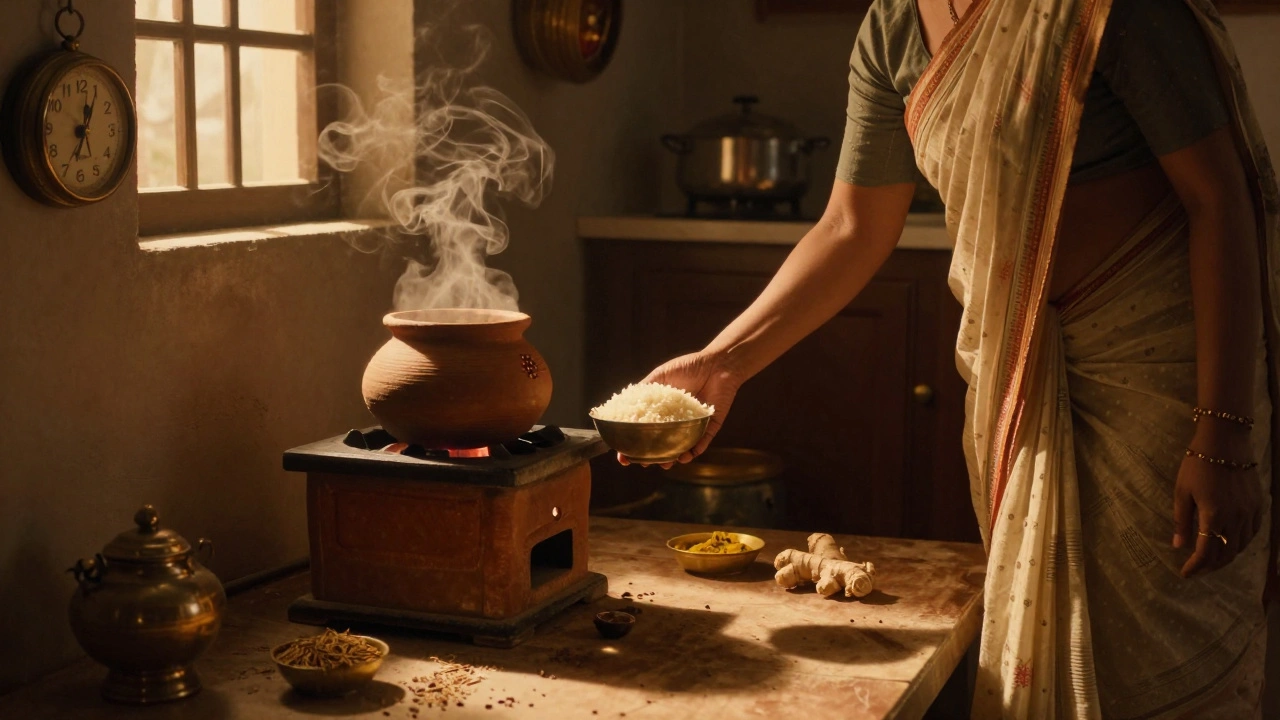
It’s not just about the bean itself. It’s how you cook it. Slow-simmered with turmeric, cumin, and a touch of asafoetida, these legumes become something more than protein. They become comfort. And that’s why you’ll find recipes like nighttime legumes paired with rice, not roti—because the softer texture matches the slower pace of evening. Even the oil matters. Coconut or groundnut oil, lightly heated, helps the spices bloom without adding heaviness. No cream. No butter. Just clean, slow-cooked nourishment.
People ask why Indian grandmothers insist on dal for dinner. It’s not tradition for tradition’s sake. It’s science wrapped in culture. The amino acids in moong dal help produce serotonin, the calming hormone. The fiber keeps blood sugar steady through the night. And when you pair it with rice, you get a complete protein without the burden of meat. That’s why you won’t find many Indian families eating heavy lentils like urad dal or chickpeas after 8 p.m.—they save those for lunch, when the body’s digestive fire is strongest.
Below, you’ll find real recipes and tips from kitchens that have been doing this for centuries. Whether you’re looking for the easiest dal to digest after a long day, or wondering why fenugreek shows up in your evening dosa batter, these posts break it down without fluff. No guesswork. Just what works.
Why You Should Avoid Eating Dal at Night
Eating dal at night can cause bloating, poor sleep, and digestive discomfort due to its high fiber and protein content. Learn why traditional advice to avoid dal after sunset makes sense scientifically - and what to eat instead.