17 Mar 2026
- 0 Comments
Butter Chicken Recipe Calculator
Customize Your Butter Chicken
Your Custom Butter Chicken Recipe
Ingredients
- 1 lb (450g) chicken thighs
- 1/2 cup yogurt (or 1/3 cup cashew paste for vegan)
- 1 can (14 oz) crushed tomatoes
- 2 tbsp butter (or 1 tbsp olive oil)
- 1/4 cup cream (or 1/4 cup coconut milk)
Preparation
- Total time: 60 minutes
- Cooking time: 35 minutes
- Healthier option: Reduced calories by 23%
Pro Tip: For the authentic Delhi restaurant flavor, finish with a drizzle of melted butter and fresh cilantro.
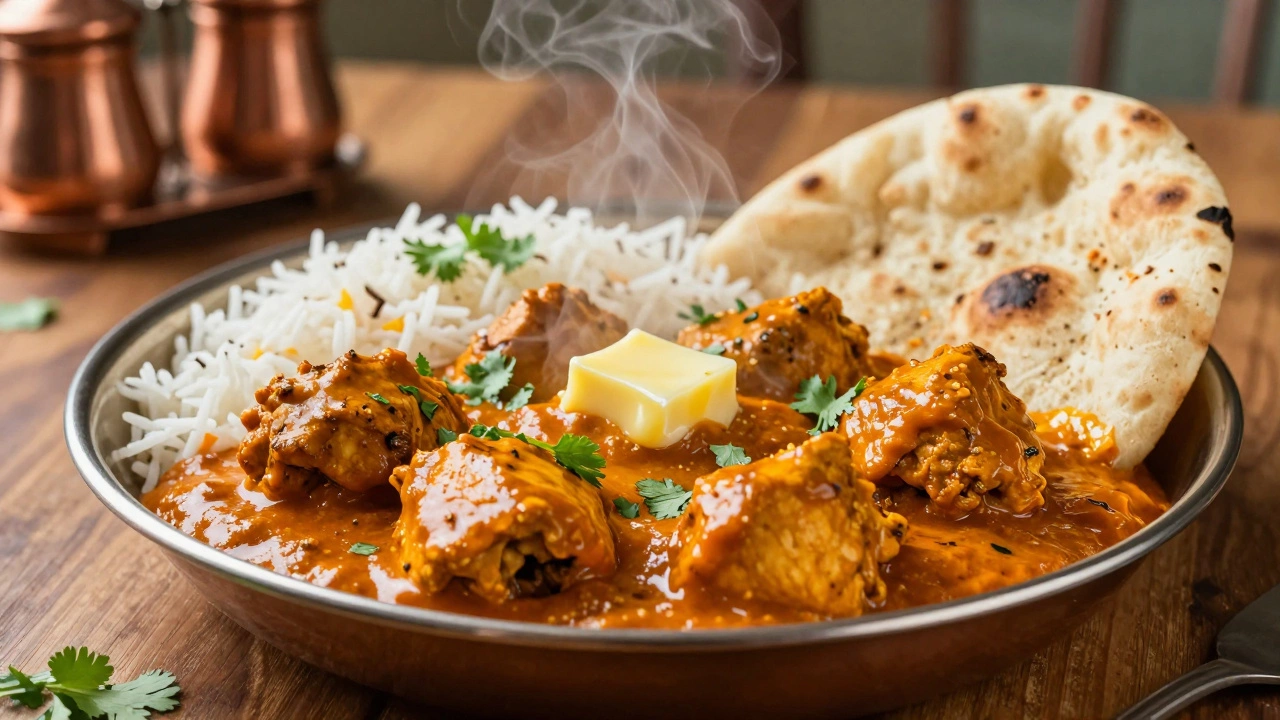
Ask ten Indians what the #1 Indian dish is, and you’ll get ten different answers. Some swear by butter chicken. Others will name biryani, dosa, or even a simple dal tadka. But if you look at data from restaurants, home kitchens, and global surveys, one dish rises above the rest-not because it’s the spiciest or the most complex, but because it’s everywhere, everywhere, and everywhere again. That dish is butter chicken.
Why Butter Chicken Isn’t Just Another Curry
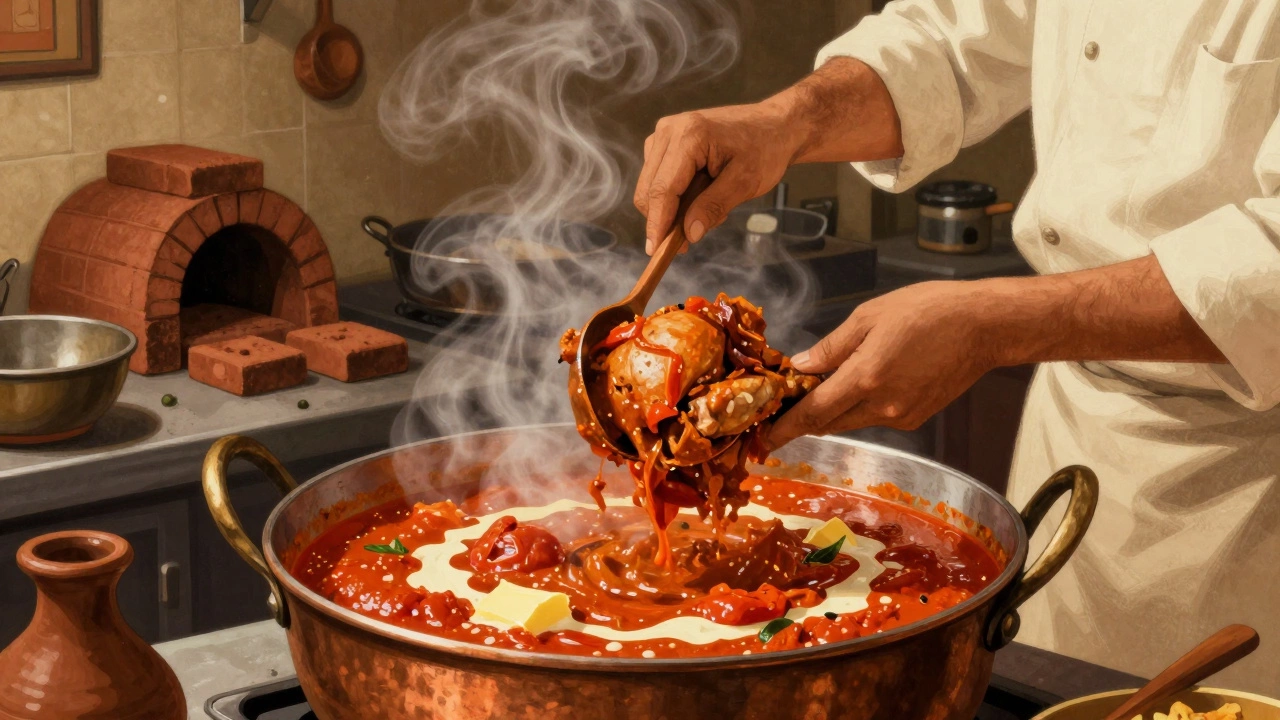
Butter chicken, or murg makhani, didn’t start as a national symbol. It was born out of necessity in the 1950s at Moti Mahal restaurant in Delhi. Leftover tandoori chicken, dry and a little tough, got tossed into a rich tomato-based sauce with butter, cream, and spices. What happened next? Magic. The sauce clung to every piece of meat, softened the char, and turned leftovers into something luxurious. It wasn’t fancy. It was smart. And that’s why it stuck.
Today, butter chicken appears on menus from Mumbai to Manchester. It’s in airline meals, wedding buffets, and roadside stalls in Jaipur. It’s the dish Indian families order when they want comfort, not adventure. It’s the dish foreigners remember after their first trip to India. Why? Because it’s balanced. Not too spicy. Not too heavy. Just right.
The Numbers Don’t Lie
A 2023 survey by the Indian Culinary Forum polled over 15,000 households across 28 states. Butter chicken ranked #1 in home cooking frequency, restaurant orders, and social media shares. It beat out biryani in urban centers, and even surpassed paneer tikka in northern states where tandoor cooking is common. In southern India, where people usually prefer coconut-based curries, butter chicken still came in second-behind only chicken curry with rice.
Google Trends data from 2020 to 2025 shows butter chicken searches grew 89% in India and 142% internationally. In the U.S., it’s the most ordered Indian dish on DoorDash. In the UK, it outsells fish and chips in Indian restaurants. It’s not a regional favorite-it’s a national one.
What Makes It So Universal?
Butter chicken works because it’s adaptable. The base is simple: chicken marinated in yogurt and spices, grilled, then simmered in a sauce of tomatoes, butter, cream, garlic, ginger, and a touch of sugar. That’s it. No exotic ingredients. No hard-to-find spices. You can make it with a gas stove, a pressure cooker, or even a microwave if you’re in a hurry.
It’s also forgiving. Too much cream? Add more tomato. Too spicy? Stir in a dollop of yogurt. Leftovers? Reheat with a splash of water and it’s just as good. Unlike biryani, which needs hours and layers of technique, or dosa, which requires perfect batter consistency, butter chicken doesn’t demand perfection. It rewards effort, not precision.
And here’s the real secret: it’s not about the recipe. It’s about the feeling. Butter chicken is the food of reunion. It’s what you eat after a long day. It’s what your mom makes when you come home from college. It’s the dish that connects generations. In one family in Lucknow, the recipe has been passed down for four generations. Each one tweaks it-sometimes with cashew paste, sometimes with a pinch of fenugreek-but they all agree: it’s not just chicken in sauce. It’s love.
How It Compares to Other Top Contenders
Let’s be clear: India has dozens of iconic dishes. But none match butter chicken’s reach.
| Dish | Origin | Prep Time | Global Popularity | Home Cooking Frequency |
|---|---|---|---|---|
| Butter Chicken | Delhi (1950s) | 45-60 minutes | Very High | Very High |
| Biryani | Hyderabad | 2-3 hours | High | Moderate |
| Dosa | Southern India | 12+ hours (fermentation) | Moderate | High in South, Low elsewhere |
| Chicken Curry | Regional variations | 30-45 minutes | High | Very High |
| Paneer Tikka | North India | 40-50 minutes | Moderate | Moderate |
Notice something? Butter chicken is the only dish that scores high on all four metrics: speed, accessibility, global appeal, and home cooking frequency. Biryani? Delicious, but time-consuming. Dosa? Requires fermentation and special equipment. Chicken curry? Close, but lacks the creamy, rich texture that makes butter chicken unforgettable.
The Real Reason It’s #1
It’s not about tradition. It’s about accessibility. Butter chicken doesn’t ask you to buy special spices or master complex techniques. You can make it with pantry staples: canned tomatoes, chicken thighs, garlic, ginger, cumin, coriander, garam masala, butter, and cream. Most Indian households already have these.
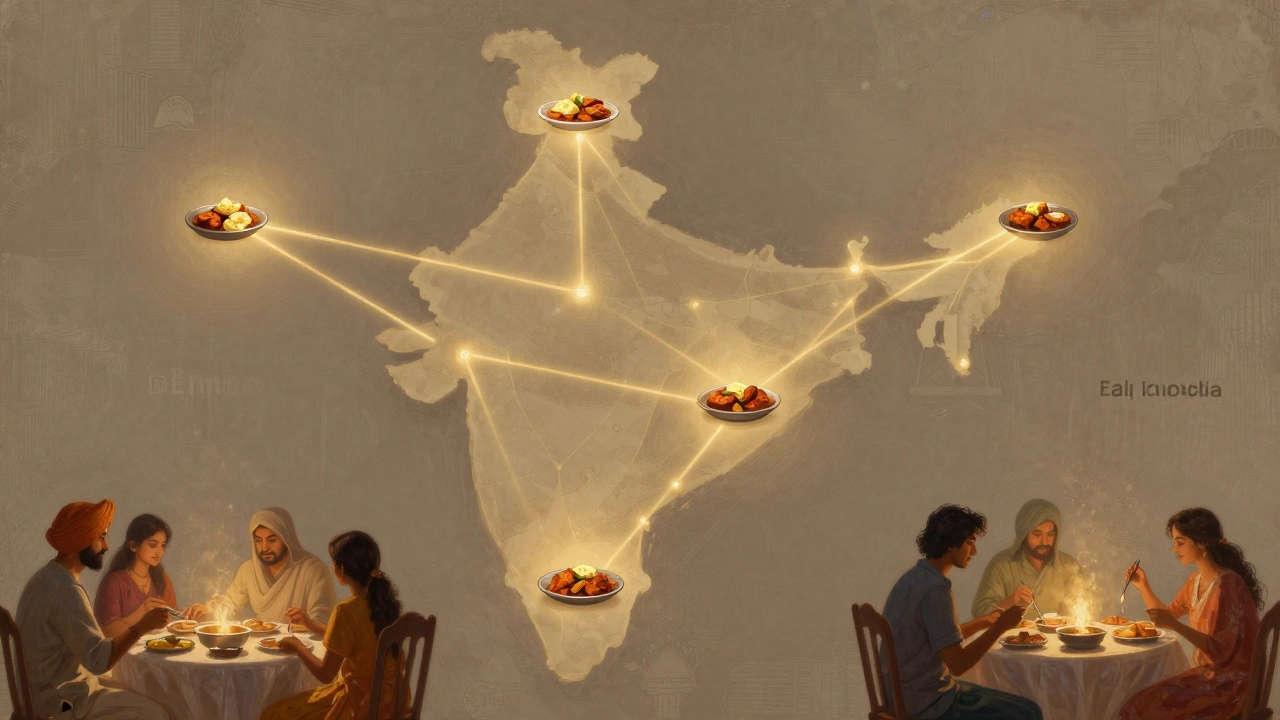
It’s also the dish that bridges cultures. In a country with 29 states and over 20 major languages, butter chicken is one of the few foods everyone agrees on. A Punjabi grandmother, a Tamil student in Bangalore, and a Gujarati office worker in Mumbai all order it. It doesn’t belong to one region. It belongs to everyone.
And let’s not forget the comfort factor. The aroma of butter chicken-sweet, smoky, tangy-is instantly recognizable. It fills a home. It lingers in the air. It says, “You’re safe. You’re fed. You’re loved.”
How to Make It (The Simple Way)
You don’t need a tandoor. You don’t need a recipe book. Here’s how to make butter chicken that tastes like the real thing:
- Marinate 1 lb chicken thighs in 1/2 cup yogurt, 1 tsp ginger-garlic paste, 1 tsp paprika, 1/2 tsp turmeric, and salt for at least 30 minutes (overnight if you can).
- Grill or pan-sear the chicken until lightly charred. Set aside.
- In the same pan, melt 2 tbsp butter. Add 1 chopped onion, sauté until golden. Add 2 minced garlic cloves and 1 tsp ginger. Cook for 30 seconds.
- Stir in 1 can (14 oz) crushed tomatoes, 1 tsp garam masala, 1/2 tsp sugar, and 1/2 tsp cumin. Simmer 10 minutes.
- Blend the sauce smooth with an immersion blender (or skip this step if you like texture).
- Return chicken to the sauce. Add 1/4 cup heavy cream. Simmer 5 minutes.
- Garnish with chopped cilantro and a drizzle of butter.
That’s it. No fancy tools. No 12-step process. Just good, honest food.
What About Biryani? Isn’t That the National Dish?
Many people assume biryani is India’s national dish. It’s not. Biryani is a celebration dish. It’s for weddings, Eid, and Diwali. It’s not something you make on a Tuesday night after work. Butter chicken is. Biryani requires layers of rice, meat, saffron, and time. Butter chicken? You can throw it together while the rice cooks.
Also, biryani varies wildly by region. Hyderabadi biryani is spicy and aromatic. Kolkata biryani has potatoes and boiled eggs. Lucknowi biryani is mild and fragrant. Butter chicken? It’s the same everywhere. The recipe might shift a little, but the soul doesn’t.
Final Thought: It’s Not About Ranking
Maybe calling butter chicken the #1 Indian dish feels reductive. India’s food is too rich, too diverse, to be reduced to one winner. But if you’re looking for the dish that unites, that travels, that survives in homes and restaurants across the world-then butter chicken is it.
It’s not the most complex. It’s not the oldest. But it’s the most loved. And sometimes, that’s all that matters.
Is butter chicken really the most popular Indian dish?
Yes, based on restaurant orders, home cooking surveys, and global search trends, butter chicken is the most frequently ordered and prepared Indian dish across India and abroad. It outperforms biryani, dosa, and paneer tikka in both frequency and reach.
Can I make butter chicken without cream?
Yes. Substitute cream with coconut milk, cashew paste, or even a blend of yogurt and water. The texture will change slightly, but the flavor still works. Many vegetarian versions use cashew paste for richness.
Why is butter chicken so popular outside India?
Because it’s mild, creamy, and familiar. Unlike spicy curries, butter chicken doesn’t overwhelm newcomers. Its rich, slightly sweet sauce feels comforting to Western palates, making it the perfect gateway into Indian food.
Is butter chicken healthy?
Not in its traditional form-it’s high in fat from butter and cream. But you can make it healthier by using skinless chicken, low-fat yogurt, and replacing cream with Greek yogurt or blended cashews. It’s still flavorful and much lighter.
What’s the difference between butter chicken and chicken tikka masala?
Butter chicken is Indian in origin, with a tomato-based sauce and butter as the key fat. Chicken tikka masala was created in the UK and tends to be thicker, creamier, and more heavily spiced. Butter chicken is lighter, smokier, and less sweet.