2 Oct 2026
- 0 Comments
Biryani Milk Ratio Calculator
Not all biryanis use milk, but when they do, the ratio is critical for separating grains and carrying spice flavors. Use this tool to determine the right amount for your specific regional style and ingredient quantities.
Enter your rice quantity and select a style to calculate the perfect milk ratio.
You’ve probably seen it in grandma’s kitchen or a high-end restaurant prep station: someone pouring a splash of milk into the pot while the rice is still cooking. It looks like a mistake. Isn’t this supposed to be a savory dish? Why would you introduce dairy sweetness and creaminess to something defined by spicy masala and aromatic basmati?
If you’ve ever wondered why your biryani turns out dry or the grains stick together, that milk might be the missing link. It’s not just a random tradition; it’s a functional ingredient that changes how starch behaves, how spices bind, and ultimately, how the final dish feels on your tongue. Let’s break down exactly what happens when you add milk to biryani, when you should do it, and when you absolutely shouldn’t.
The Science Behind Starch and Dairy
To understand why milk works, you have to look at what happens inside the pot. Rice contains two types of starch: amylose and amylopectin. When you boil rice in plain water, the granules absorb water and swell. If you overcook them slightly, they burst, releasing sticky starch into the liquid. This is usually bad news for biryani, where you want distinct, fluffy grains.
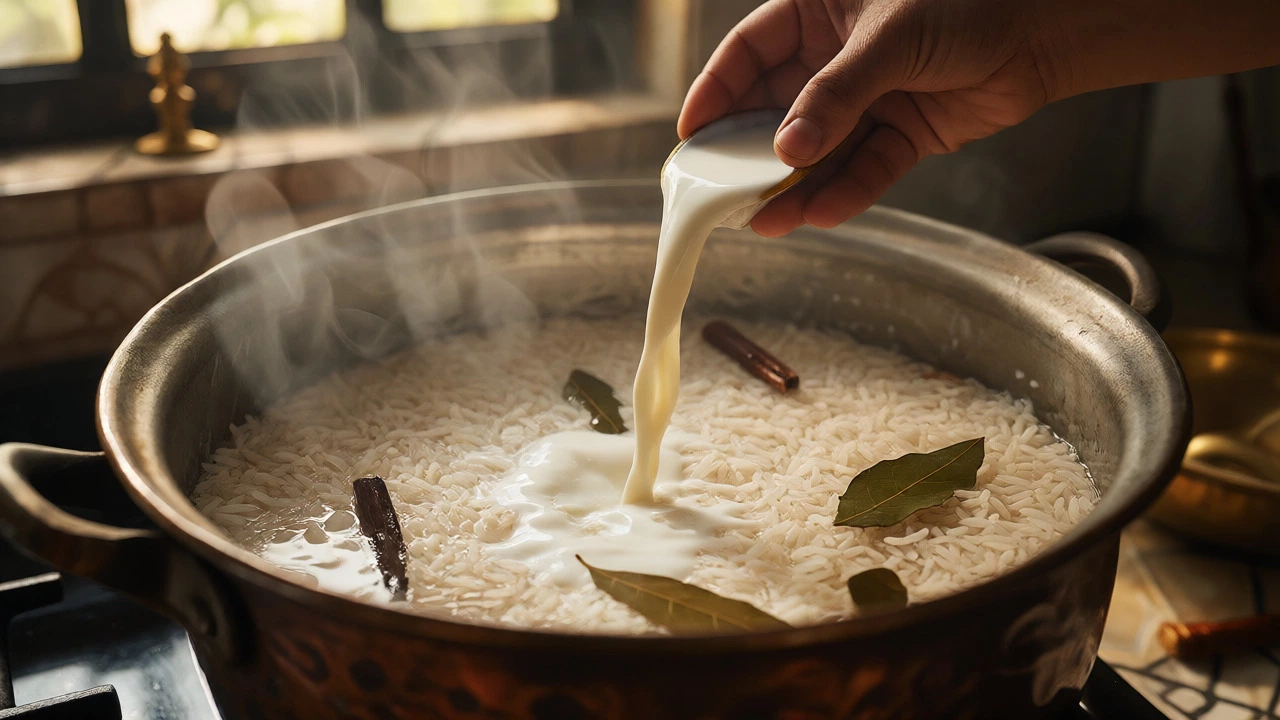
Milk changes this dynamic. The fat content in milk coats the rice grains as they cook. Think of it like putting a non-stick layer on each grain. This coating prevents the starches from leaching out excessively and sticking to their neighbors. Instead of a clumpy mess, you get separate grains that slide past each other easily. But there’s more than just lubrication happening here.
Casein, the primary protein in milk, interacts with the surface of the rice. It helps stabilize the moisture balance. Water evaporates quickly during the high-heat phase of dum cooking (the sealed-pot method). Milk has a higher boiling point than water due to its solutes, which means it holds onto heat and moisture longer. This keeps the interior of the rice grain tender without turning the exterior mushy.
Flavor Carrier: How Fat Transmits Taste
Spices are oil-soluble, not water-soluble. This is a fundamental rule of Indian cooking. If you throw cumin, coriander, and garam masala into plain water, much of the flavor stays locked in the spice particles because it can’t dissolve in the water. You end up with spicy water and bland rice.
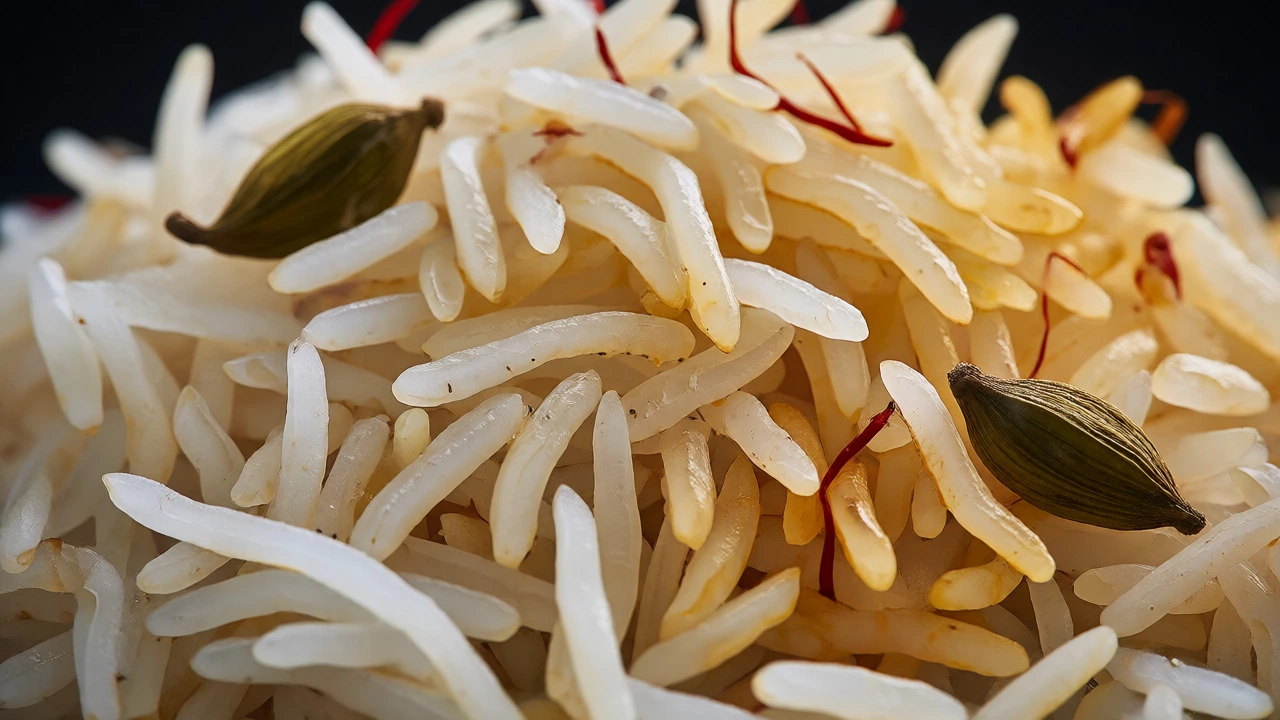
Fat is the vehicle for flavor. When you add milk-especially full-fat milk-you introduce butterfat into the system. This fat binds with the essential oils in your whole spices and ground masalas. As the rice absorbs this mixture, it doesn’t just take in salt and water; it takes in the complex aromatic compounds of the spices. The result is a deeper, more rounded flavor profile. The milk smooths out the sharp edges of chili heat and lets the subtle notes of cardamom and saffron shine through rather than being masked by harshness.
This is also why ghee is often added alongside milk. Ghee provides pure fat, while milk provides water, protein, and lactose sugar. Together, they create an emulsion that coats every single grain evenly. Without this, you might find some bites overly salty and others completely bland.
Texture and Mouthfeel: The Creamy Factor
Biryani isn’t risotto, but it shouldn’t be dry either. There’s a sweet spot between "fluffy" and "creamy." In many regional variations, particularly those influenced by Mughal cuisine, a slight creaminess is prized. This is known as khichdi-style tenderness in some households, though true biryani retains structure.
Milk contributes to this mouthfeel. The lactose sugars in milk caramelize slightly under the intense heat of the dum process. This adds a very subtle sweetness that balances the acidity of tomatoes or yogurt often used in the marinade. It creates a rounder taste experience. If you’ve ever eaten a Hyderabadi Kacchi Biryani, you know the meat juices mix with the rice fats. Adding a bit of milk ensures this mixture isn’t too oily or too watery-it becomes a cohesive sauce that clings to the rice.
Consider the difference between steamed white rice and pilaf. Pilaf often uses broth and sometimes a touch of dairy or butter for richness. Biryani sits somewhere in between, leaning towards the rich side. The milk bridges the gap between the dry heat required for the crust (the maillard reaction on the bottom) and the moist steam needed to cook the top layers.
Regional Variations: Who Uses Milk and When?
Not all biryanis use milk. In fact, most street-food versions skip it entirely to keep costs low and cooking times fast. However, specific regional styles rely on it heavily.
- Hyderabadi Biryani: Often uses yogurt in the marinade, which brings tanginess and tenderizing enzymes. Some home cooks add a splash of milk to the rice water to ensure whiteness and softness before draining.
- Lucknowi (Awadhi) Biryani: Known for its subtlety. Milk or cream is frequently added during the layering process (pakki style) to enhance the delicate aroma of rose water and kewra. The goal here is elegance, not heaviness.
- Kolkata Biryani: Famous for its potato inclusion. The gravy is lighter and sweeter. A small amount of milk can help achieve that signature mild, slightly sweet profile that distinguishes it from its spicier southern cousins.
- Sindhi Biryani: Usually relies on dried plums (alu bukhara) for tartness. Milk is less common here, as the focus is on the interplay of sour and spicy flavors.
If you are making a standard Chicken Biryani at home and find the results inconsistent, adding 1/4 cup of milk to the rice while par-boiling can act as a safety net. It guarantees softer grains even if you misjudge the boiling time.
When NOT to Add Milk
While milk is helpful, it’s not a magic wand. There are scenarios where it ruins the dish.
First, avoid using low-fat or skim milk. The science relies on fat to coat the grains and carry flavor. Skim milk mostly adds water and protein, which can make the rice gluey without providing the necessary richness. Always use full-fat cow or buffalo milk.
Second, don’t add milk if you are aiming for a crispy tar (the burnt, crunchy bottom layer). Milk burns faster than water or oil. If you pour it directly onto the hot base of the pot, it might scorch and turn bitter before the rice above it finishes cooking. Add milk to the rice *before* layering it in the pot, or mix it into the meat gravy, not the hot oil at the bottom.
Third, watch out for curdling. If you add cold milk to a very hot, acidic environment (like a pot full of tomato-heavy masala), the milk proteins can coagulate, creating ugly white lumps. To prevent this, temper the milk. Heat it slightly in a separate pan before adding it to the main dish, or stir it into warm gravy gradually.
Step-by-Step: How to Incorporate Milk Correctly
Here is a practical guide to using milk in your next batch without messing up the texture.
- Preparation: Soak your basmati rice for at least 30 minutes. This reduces cooking time and ensures even hydration.
- Rice Cooking: Boil plenty of water with whole spices (bay leaf, cinnamon, cloves) and salt. Once boiling, add the drained rice. Cook for only 50-70% completion. The center should still be hard.
- The Milk Step: Just before draining the rice, stir in 2-3 tablespoons of full-fat milk per cup of raw rice. Stir gently. This coats the partially cooked grains.
- Drain and Rest: Drain the rice immediately. Spread it on a tray to stop the cooking process. The milk residue will dry slightly, forming a protective film.
- Layering: Layer the semi-cooked rice over your prepared meat gravy. Dot with ghee and fried onions. Seal the pot tightly.
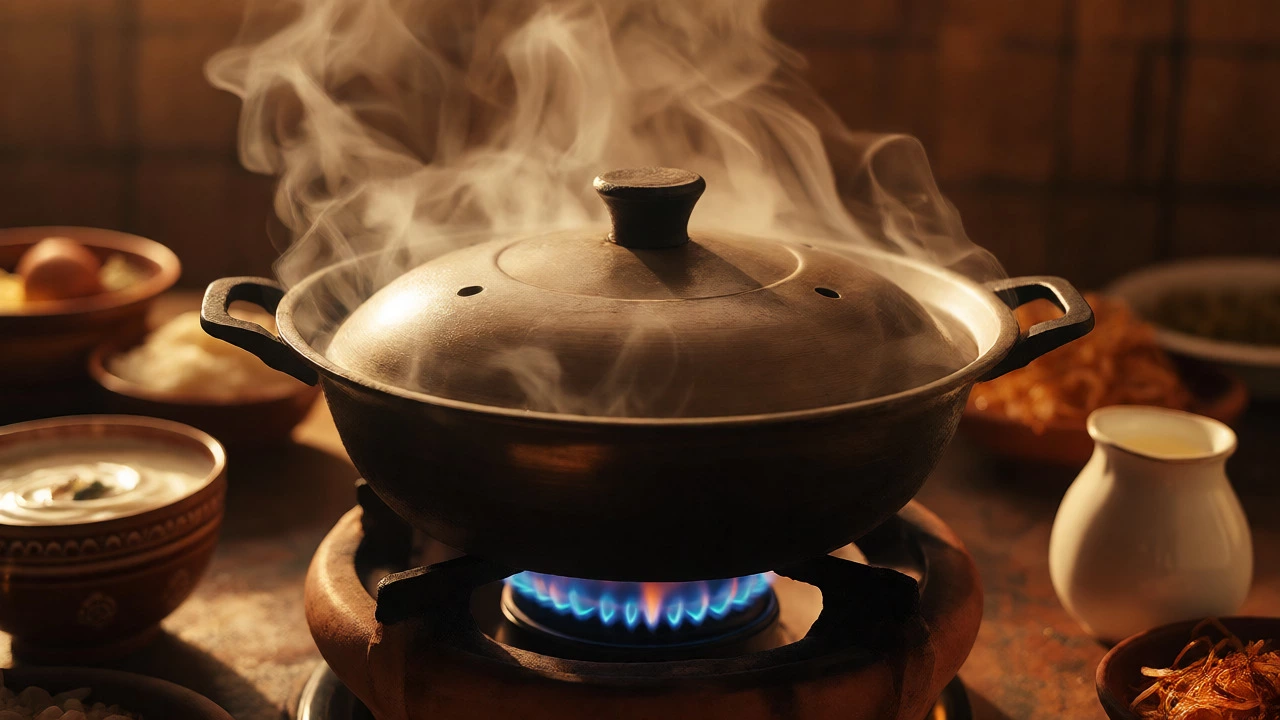
- Dum Cooking: Cook on low heat. The residual moisture in the rice, combined with the steam from the gravy, finishes the cooking. The milk fat has already done its job of separating the grains.
Alternatively, for a richer version, mix 1/4 cup of milk with your yogurt marinade. Whisk it until smooth. This thins the yogurt slightly, allowing it to penetrate the meat better, while the milk fat enriches the overall gravy. This method is safer against curdling because the yogurt buffers the pH change.
Common Myths About Milk in Biryani
Myth 1: Milk makes biryani sweet.
Reality: Only if you use condensed milk or sugar. Regular fresh milk adds negligible sweetness. It adds body, not dessert-like flavor.
Myth 2: All Indian dishes use milk.
Reality: North Indian gravies often use cream or cashew paste for richness. South Indian sambar or rasam rarely uses milk. Biryani sits in the middle-it’s a celebratory dish that borrows techniques from both regions.
Myth 3: Coconut milk is a direct substitute.
Reality: Coconut milk has a distinct tropical flavor and different fat structure. While delicious in Kerala-style biryanis, it will alter the traditional aroma of a Lucknowi or Hyderabadi biryani significantly. Use it only if you want that specific regional twist.
Troubleshooting Your Biryani
If your biryani turned out sticky despite using milk, check these factors:
- Too much water during par-boiling: If the rice absorbed too much water before you added the milk, it was already swollen. The milk couldn’t prevent the sticking. Reduce boiling time next time.
- Wrong type of rice: Short-grain rice (like Sona Masoori) releases more starch than long-grain Basmati. Milk helps, but it can’t fully compensate for the wrong rice variety in a traditional biryani context.
- Overcooking during Dum: If the seal wasn’t tight enough, you might have added extra water to compensate, leading to mush. Trust the steam.
Conversely, if your biryani is dry, you likely didn’t use enough fat. Next time, increase the ghee quantity or add a tablespoon of milk to the gravy layer before sealing the pot. The steam generated from the milk will infuse the upper layers with moisture.
Frequently Asked Questions
Can I use almond milk instead of dairy milk?
You can, but the result will differ. Almond milk lacks the saturated fat found in dairy, so it won't coat the rice grains as effectively. It may also impart a nutty flavor that clashes with strong spices like clove or mace. For best results, stick to full-fat dairy milk or coconut milk if you want a plant-based alternative.
Does adding milk make biryani healthier?
Not necessarily. Milk adds calories and saturated fat. However, it can reduce the need for excessive oil or ghee to achieve a moist texture. If you cut back on ghee and replace it with milk, you might lower the total fat content, but the calorie count remains similar. It's about balance, not health enhancement.
Why did my milk curdle in the biryani?
Curdling happens when cold milk hits high heat in an acidic environment (from tomatoes or yogurt). To fix this, always temper the milk first by warming it separately. Alternatively, mix the milk into the room-temperature yogurt marinade before adding it to the hot pot. This stabilizes the proteins.
Is milk used in all types of biryani?
No. Street food biryanis and quick home-style versions often omit milk to save time and cost. Traditional royal recipes from Lucknow and Hyderabad frequently include milk or cream for luxury and texture. Check your specific regional recipe requirements.
How much milk should I add to one cup of rice?
A general rule of thumb is 2 to 3 tablespoons of full-fat milk per cup of raw rice. This is enough to affect texture and flavor without making the dish soupy. Adjust based on whether you prefer drier or moister biryani.