
1 Dec 2025
- 0 Comments
Indian Street Food Etiquette Quiz
Test your knowledge about eating traditions, hygiene practices, and cultural significance of eating Indian street food with your hands
What are the five elements represented by fingers in Hindu philosophy when eating with hands?
Why is the left hand traditionally considered unclean for eating in Indian culture?
What is the primary reason street vendors in India provide lemon water or neem-infused water?
What is the key benefit of eating with hands for digestion according to the article?
Why is eating pani puri with utensils problematic?
Walk through any busy street in Delhi, Mumbai, or Kolkata at dusk, and you’ll see people eating piping hot samosas, pani puri, or bhel puri-no forks, no napkins, just bare hands. It’s not messy. It’s not rude. It’s how food was meant to be eaten. In India, eating street food with your hands isn’t a habit-it’s a sensory ritual. And it’s been this way for centuries.
The Science Behind Touching Your Food
Your hands aren’t just tools for grabbing food. They’re part of the digestive process. When you touch warm, spiced food with your fingers, the temperature and texture send signals to your brain that trigger saliva and enzyme production. This is called cephalic phase digestion. Studies show that tactile stimulation before eating improves digestion by up to 30%. That’s why many older Indians say, "Food tastes better when you feel it first." In Indian kitchens, even home-cooked meals are often eaten by hand. The act of mixing rice with curry using your fingers allows you to control the ratio of spice to starch. You can scoop a bit of dal, press it into a ball of rice, and pop it in your mouth exactly how you like it. Street food takes this further. With pani puri, you tear the crisp shell, fill it with tamarind water, chickpeas, and spices, then eat it whole. No spoon can do that. Your thumb and index finger are the only tools that let you feel the crunch, the burst, the heat-all at once.Cultural Roots: More Than Just Tradition
This practice didn’t start because people didn’t have utensils. It started because food was sacred. In Hindu philosophy, the five fingers represent the five elements: earth, water, fire, air, and ether. Eating with your hands is a way of connecting with the physical world. You’re not just consuming calories-you’re honoring the ingredients, the cook, the earth they came from. In rural villages, it’s still common to eat meals on banana leaves. The leaf adds a subtle fragrance, and the act of folding it into a packet after eating is part of the ritual. Street vendors in cities inherited this. They serve food on banana leaves or in paper cones, not plates. The hand becomes the plate. There’s no need for washing dishes after a quick snack. It’s practical. It’s sustainable. And it’s deeply personal.Why Utensils Don’t Work for Street Food
Think about pani puri again. You have a hollow, crispy puri. Inside: spiced potato, chickpeas, mint water, tamarind chutney. If you try to eat it with a fork, the shell shatters. The water spills. The flavors separate. You lose the balance. A spoon? Too slow. Too clumsy. A fork? Won’t hold the puri. Your hand? Perfect. Same with dosa. You tear off a piece, dip it in coconut chutney and sambar, and roll it in your fingers. The texture-crispy outside, soft inside-needs pressure and flexibility that metal can’t give. Even chaat, with its mix of crunchy sev, soft bread, and tangy yogurt, requires your fingers to layer the ingredients just right. Utensils turn a layered experience into a sloppy mess.
Hygiene Myths and Reality
People outside India often assume eating with hands is unhygienic. But in India, handwashing is part of the culture. Before eating, people wash their hands thoroughly with soap and water. Many street vendors keep a bucket of water and a jug nearby, often with lemon slices or neem leaves for antibacterial properties. You’ll see customers rinse their hands right before ordering. It’s not an afterthought-it’s a rule. Even in crowded markets, you rarely see someone eating with dirty hands. The social norm is strong. If you don’t wash, you’re judged. And vendors? They use tongs, gloves, or clean cloths to handle food. They don’t touch what you eat. The hand is only for the final step: bringing food to your mouth.Why This Tradition Is Still Alive
Modernization hasn’t killed this practice. If anything, it’s gotten stronger. Young people in Mumbai and Bangalore post videos of themselves eating pani puri with their hands on TikTok. It’s become a symbol of authenticity. Restaurants that serve street food with forks get mocked. "This isn’t real Indian street food," one viral comment said. "Where’s the touch?" In 2023, a survey by the Indian Institute of Food Processing Technology found that 89% of Indians under 30 prefer eating street food with their hands-even if they use cutlery at home. Why? Because they associate it with joy, freedom, and real flavor. It’s not about being backward. It’s about being present.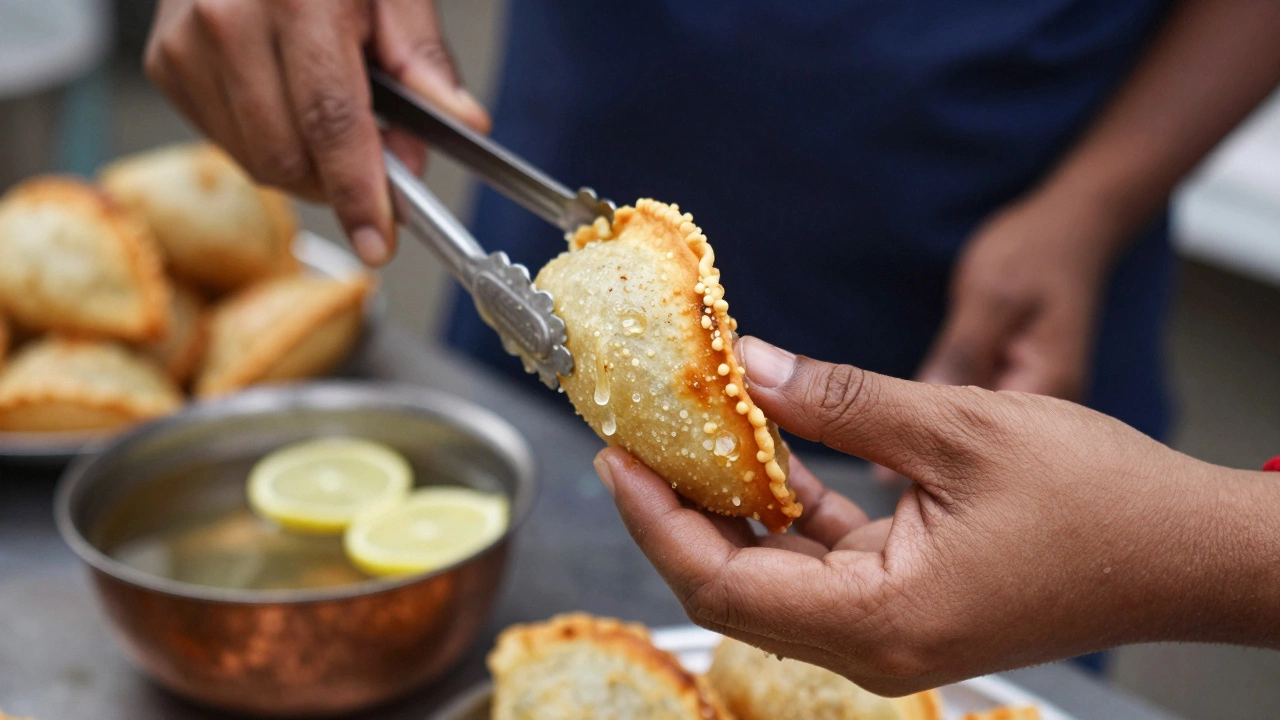
The Hidden Benefit: Mindful Eating
When you eat with your hands, you slow down. You feel the heat. You smell the spices before you taste them. You notice the texture change as you mix ingredients. You don’t shovel food into your mouth. You savor it. Psychologists call this embodied eating. It reduces overeating. It increases satisfaction. People who eat with their hands report feeling fuller faster and enjoying meals more deeply. That’s why many chefs in Europe and North America are now experimenting with "hand-eaten" tasting menus. They’re borrowing from Indian tradition-not as a gimmick, but because it works.What Happens When You Try It
If you’ve never eaten Indian street food with your hands, here’s what to expect:- Wash your hands before you start. Don’t skip this.
- Use your right hand only. Left hand is considered unclean in traditional settings.
- Don’t lick your fingers in public. It’s fine to wipe them on a napkin or tissue.
- Start with soft foods like bhel puri or dahi bhalla. They’re forgiving.
- For pani puri, hold the puri with your thumb and index finger, dip lightly, then pop it whole.
- Let the food cool a little. Burning your fingers is part of the learning curve.
Is This Practice Dying Out?
Not at all. In fact, it’s spreading. Indian diaspora communities in London, Toronto, and Sydney now host "hand-eating nights" at cultural festivals. Tourists line up for pani puri stalls in New York’s Queens district-using their hands, even if they’re nervous. The tradition isn’t fading. It’s being rediscovered. What’s dying is the idea that utensils are superior. Food isn’t just fuel. It’s texture. It’s scent. It’s connection. And in India, your hands are the best tool you have to experience it all.Is it really safe to eat Indian street food with your hands?
Yes, if you follow basic hygiene. Most people wash their hands before eating, and street vendors avoid touching the food directly. They use tongs, gloves, or clean cloths. The key is washing your hands thoroughly with soap and water before you eat. Many vendors even provide lemon water or neem-infused water for rinsing. The risk isn’t from using your hands-it’s from poor food handling, which is rare in trusted stalls.
Why do Indians use only the right hand to eat?
In traditional Indian culture, the left hand is used for personal hygiene, so it’s considered unclean for eating. This isn’t a strict religious rule everywhere, but it’s still widely followed, especially in public and with street food. Using the right hand is a sign of respect. If you’re visiting India, it’s best to follow this custom-it shows you understand the culture.
Can I use a napkin instead of washing my hands?
No. A napkin wipes away surface dirt, but it doesn’t remove bacteria or oils from your skin. In India, handwashing with soap and water is the standard. Street vendors expect it. If you don’t wash, you’re not just being messy-you’re breaking an unspoken rule. Always rinse your hands before eating, even if you’re just grabbing a quick snack.
Do all Indian foods need to be eaten by hand?
No. Formal meals like biryani or curry served in restaurants often come with spoons or forks. But street food? Almost always by hand. The texture and structure of snacks like samosas, pani puri, chaat, and dosa are designed for fingers. Utensils just don’t work well. If you’re eating something that’s liquid-heavy or saucy, like a thick dal, a spoon is fine. But for crispy, layered, or handheld snacks-your fingers are the only correct tool.
Why do foreigners find eating with hands so strange?
Because most Western cultures associate eating with utensils as "civilized" and eating with hands as "primitive." That’s a bias, not a fact. In reality, many cultures eat with hands-think Middle Eastern hummus, Ethiopian injera, or Filipino kamayan feasts. The discomfort comes from unfamiliarity. Once you try it, you realize it’s not messy-it’s more intimate, more alive. The food connects with your skin before it hits your tongue. That’s something no fork can replicate.