16 Jan 2026
- 0 Comments
Chutney Vinegar Calculator
Fix Your Vinegary Chutney
Recommended Vinegar
Warning: If you've used tamarind and lemon juice together, reduce vinegar by 1/4 cup.
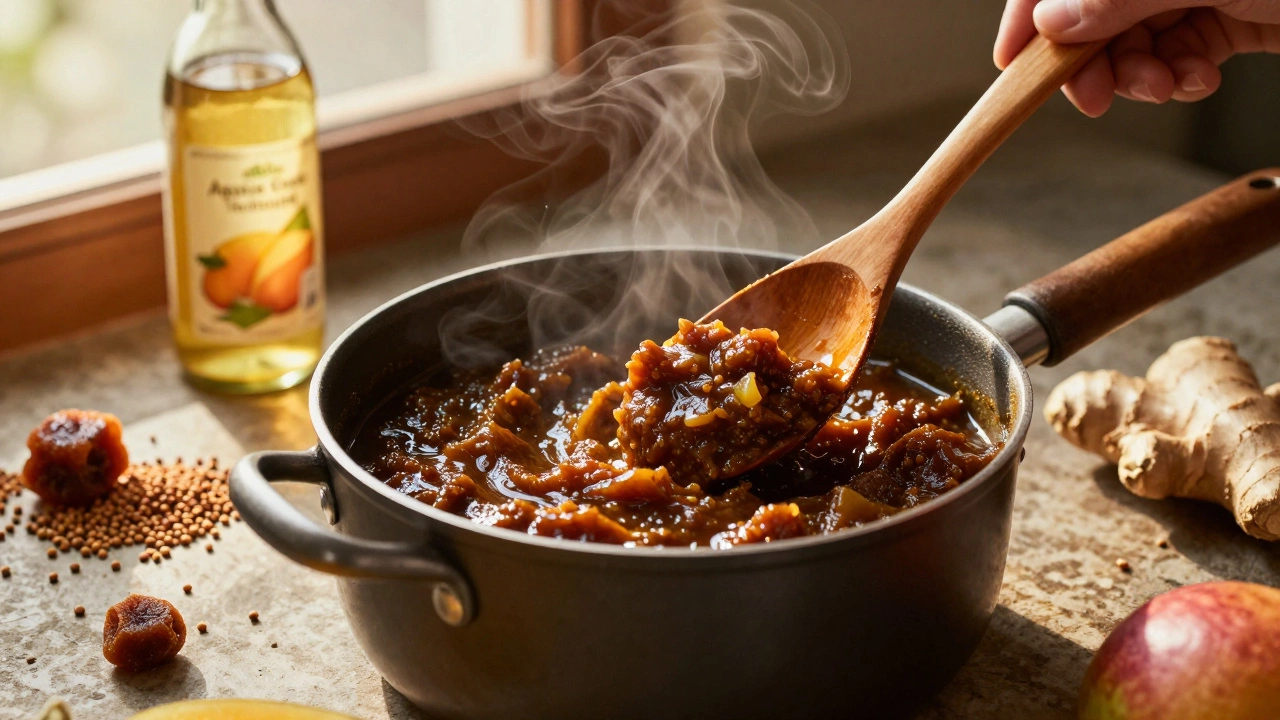
If your homemade chutney tastes like a pickle jar exploded in your mouth, you’re not alone. A lot of people make the same mistake-pouring in vinegar because they think it’ll make the chutney last longer or taste more "authentic." But vinegar isn’t a magic ingredient. Too much of it kills the fruit, hides the spices, and turns your chutney into something you’d use to clean a grill, not serve with samosas.
Why Vinegar Gets Overused in Chutney
Vinegar does three things in chutney: it preserves, it adds tang, and it balances sweetness. But people often confuse balance with dominance. If you’re following an old family recipe passed down through generations, it might call for half a cup of vinegar for two cups of fruit. That was fine back then when refrigerators were rare and food safety was a bigger concern. Today? You don’t need that much. Modern chutneys are meant to be eaten fresh or stored for a few weeks in the fridge, not shelf-stable for years.Also, many online recipes copy each other without testing. You’ll see "1 cup apple cider vinegar" in a mango chutney recipe that uses only 2 cups of fruit. That’s not a recipe-it’s a warning label.
How Much Vinegar Should You Actually Use?
The right amount of vinegar depends on the fruit, the sugar, and the spices. Here’s a simple rule: use 1/4 to 1/3 cup of vinegar per pound of fruit. That’s about 60-80ml for 450g of fruit. If you’re using tart fruits like green mango, tamarind, or cranberries, stick to the lower end. If you’re using sweet fruits like ripe mango, peach, or pineapple, you can go up to 1/3 cup.For example:
- Green mango chutney: 1/4 cup vinegar per 500g fruit
- Ripe mango chutney: 1/3 cup vinegar per 500g fruit
- Tomato chutney: 1/4 cup vinegar per 500g tomatoes
- Apple and cinnamon chutney: 1/3 cup vinegar per 500g apples
Always taste before adding more. Add vinegar in small splashes-never all at once.
What Else Is Making Your Chutney Too Sour?
Vinegar isn’t the only source of acidity. Other ingredients can sneak in extra sourness:- Tamarind paste: This is a common culprit. A tablespoon of tamarind paste can be as sour as two tablespoons of vinegar. If your recipe calls for both, you’re doubling down on acid.
- Lemon or lime juice: Some recipes add citrus for brightness, but it’s not always necessary. If you’re already using vinegar, skip the citrus unless you want a very sharp, bright flavor.
- Underripe fruit: Green mangoes, unripe plums, and sour apples are naturally high in acid. If you’re using them, reduce vinegar even further.
- Overcooked spices: Roasting cumin, mustard, or fenugreek seeds too long can bring out bitter, sharp notes that mimic sourness.
Check your ingredient list. If you’ve got vinegar, tamarind, and lemon juice all in one pot, you’re asking for trouble.

How to Fix Chutney That’s Already Too Vinegary
You don’t have to throw it out. Here’s how to rescue it:- Add sugar: Start with a teaspoon of raw sugar, jaggery, or brown sugar. Stir well and taste. Repeat until the sourness softens. Sugar doesn’t neutralize acid-it masks it by balancing flavors.
- Add a pinch of salt: Salt helps round out sharp flavors. A tiny pinch can make a surprising difference.
- Stir in a spoonful of yogurt or coconut milk: This adds creaminess and softens the bite. Works especially well in mango or tomato chutney.
- Simmer it longer: Cooking for another 10-15 minutes lets the vinegar mellow. The alcohol in vinegar evaporates, and the acid becomes less aggressive. Don’t rush this step.
- Blend in a ripe banana or cooked apple: These add natural sweetness and body. They’re especially good if your chutney is thin and watery.
Never add more vinegar to fix it. That’s like putting more salt on soup that’s already too salty.
Why Your Chutney Tastes Better After a Few Days
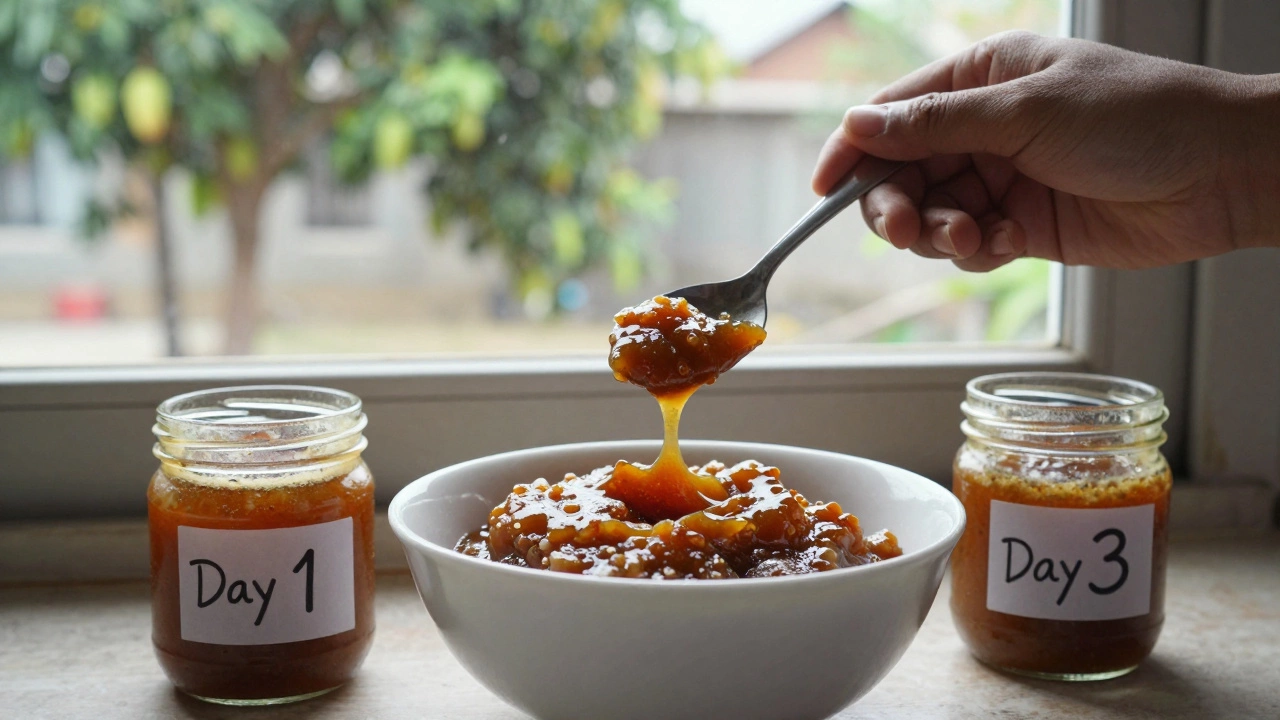
Here’s something most people don’t realize: chutney improves after sitting for 2-3 days. When you first make it, the vinegar is sharp, the spices are loud, and the fruit tastes raw. But over time, the flavors meld. The vinegar softens. The sugar dissolves fully. The spices release their oils slowly.If your chutney tastes too vinegary right after cooking, give it a few days. Store it in a clean glass jar in the fridge. Taste it again on day three. You might be surprised how much it changes.
Pro Tips for Perfectly Balanced Chutney
- Always taste before bottling: Don’t assume it’ll improve. Taste it hot, then cool it down and taste again. Flavors change with temperature.
- Use apple cider vinegar or rice vinegar: They’re milder than white distilled vinegar. White vinegar is too harsh for chutney-it tastes chemical.
- Toast your spices before grinding: Raw spices can taste bitter. Lightly dry-roast cumin, coriander, and mustard seeds in a pan until fragrant. Let them cool before grinding.
- Don’t skip the sugar: Sugar isn’t just for sweetness. It helps balance acidity and thickens the chutney. Use jaggery for deeper flavor, or brown sugar for caramel notes.
- Use fresh ingredients: Old, dried-out tamarind or stale spices won’t blend well. Freshness makes a huge difference.
When to Use Vinegar-Free Chutney
You don’t need vinegar in every chutney. Many traditional Indian chutneys skip it entirely:- Mint-coriander chutney: Uses lemon juice for tang, no vinegar.
- Coconut chutney: Relies on tamarind or yogurt for sourness.
- Tomato chutney (South Indian style): Often uses tamarind only, no vinegar.
If you’re making a chutney meant to be eaten fresh-like a quick condiment for dosas or idlis-you can skip vinegar altogether. Just use lemon juice or tamarind, and store it in the fridge for up to a week.
Final Rule: Taste, Adjust, Wait
The biggest mistake people make is adding all the vinegar at the start and never tasting again. Chutney isn’t a science experiment. It’s a living blend of flavors that changes as it cooks and rests.Start with less vinegar than you think you need. Add sugar. Taste. Wait a day. Taste again. Adjust slowly. Your chutney will thank you.
Why does my chutney taste sour even after adding sugar?
Sugar masks sourness but doesn’t cancel it. If the vinegar or tamarind is too strong, sugar alone won’t fix it. Try simmering the chutney longer to let the vinegar evaporate, or add a spoonful of yogurt or coconut milk to soften the sharpness.
Can I use white vinegar in chutney?
You can, but it’s not ideal. White vinegar has a harsh, chemical taste that overpowers fruit and spices. Apple cider vinegar, rice vinegar, or even wine vinegar are much gentler and add more flavor complexity.
How long does homemade chutney last?
In a clean, airtight jar in the fridge, most chutneys last 3-4 weeks. If you’ve used vinegar and sugar properly, it can last up to 6 weeks. Always use a clean spoon each time you scoop it out.
Should I boil chutney for a long time?
Yes, but not too long. Boil until the fruit breaks down and the mixture thickens slightly-usually 20-30 minutes. Overcooking can make it too thick or burn the spices. Let it cool and check the texture. It will thicken more as it cools.
Is vinegar necessary for chutney?
No, vinegar isn’t always necessary. Many traditional chutneys use lemon juice or tamarind for acidity. Vinegar is mainly used for preservation in recipes meant to last months. If you’re eating it within a week, you can skip it entirely.