9 Dec 2025
- 0 Comments
Egg Consumption Calculator
Your annual egg consumption:
0 eggs
Indian average: 60 eggs per person per year
When people outside India hear about Indian food, they often think of curries, lentils, and vegetarian dishes. That’s not wrong-but it’s incomplete. One question that comes up again and again is: Do they eat eggs in India? The answer isn’t yes or no. It’s layered, personal, and shaped by religion, region, class, and family tradition.
Eggs Are Common, But Not Universal
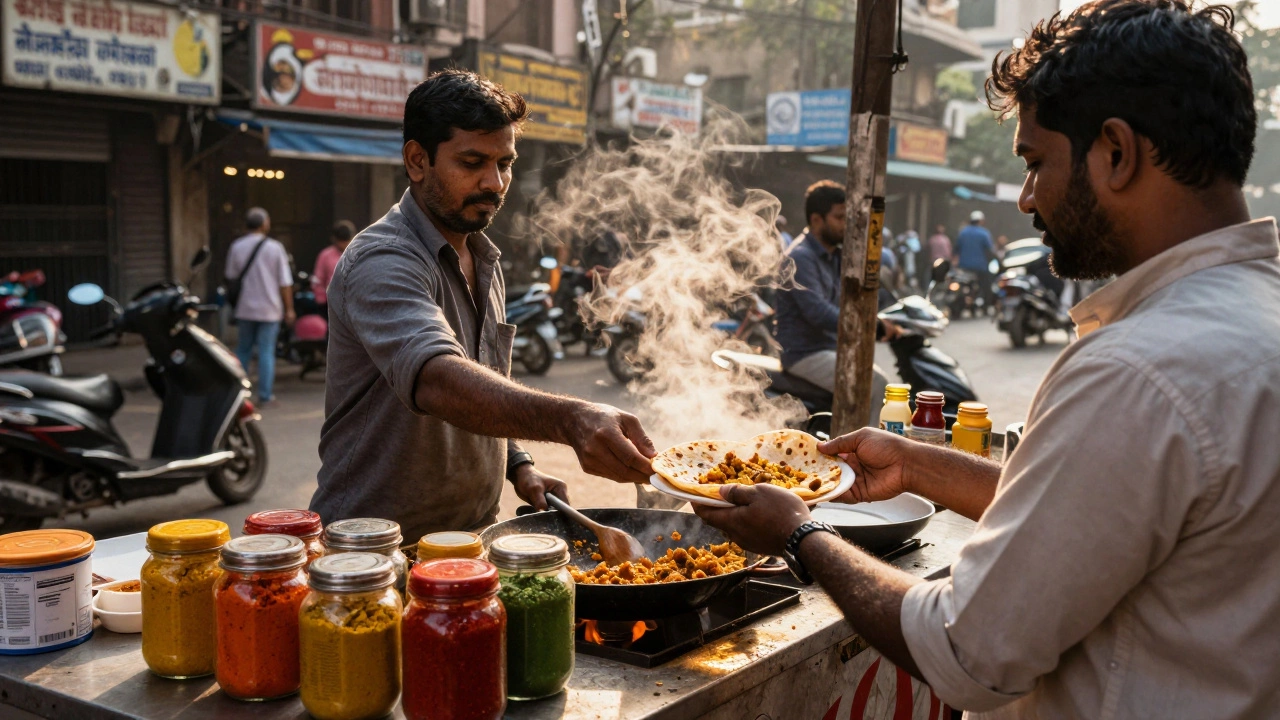
Eggs are eaten across India-but not by everyone. In cities like Mumbai, Delhi, or Bangalore, you’ll find egg bhurji on breakfast menus, boiled eggs in lunchboxes, and egg curry in roadside dhabas. In rural villages, families that keep chickens often eat eggs regularly. But in some households, especially those following strict vegetarian diets tied to Hindu, Jain, or certain Brahmin traditions, eggs are avoided entirely.
There’s no national law or religious rule banning eggs. Instead, it’s a personal or family choice. Many Indians who call themselves vegetarian still eat eggs. In fact, a 2021 survey by the National Sample Survey Office found that over 30% of people who identify as vegetarian in India consume eggs. That’s more than one in three. The reason? Eggs are cheap, nutritious, and widely available. For millions, they’re a lifeline for protein.
Why Some Avoid Eggs
The biggest reason eggs are avoided comes from how they’re classified in some Hindu and Jain communities. In these traditions, vegetarianism means avoiding anything that comes from an animal’s body-whether it’s meat, milk, or eggs. Eggs are seen as potential life, even if they’re unfertilized. This view is strongest among upper-caste Brahmins in states like Gujarat, Rajasthan, and parts of South India.
Jain communities take it further. Many Jains avoid not just eggs but also root vegetables like potatoes and onions, because harvesting them kills the plant and harms tiny organisms in the soil. For them, food is about minimizing harm, not just avoiding meat.
But here’s the twist: many Hindus who don’t eat meat still eat eggs. In states like Kerala, West Bengal, and Odisha, egg consumption is normal-even among people who pray daily. In coastal areas, where fish is common, eggs are just another protein source. There’s no guilt, no debate-it’s just food.
Eggs in Indian Cooking: More Than Just Breakfast
If you’ve ever had egg bhurji, you know how good Indian-style scrambled eggs can be. But eggs aren’t just for breakfast. They’re in curries, biryanis, snacks, and even desserts.
- Egg Bhurji: Spiced scrambled eggs with onions, tomatoes, and chili. Often eaten with paratha or toast.
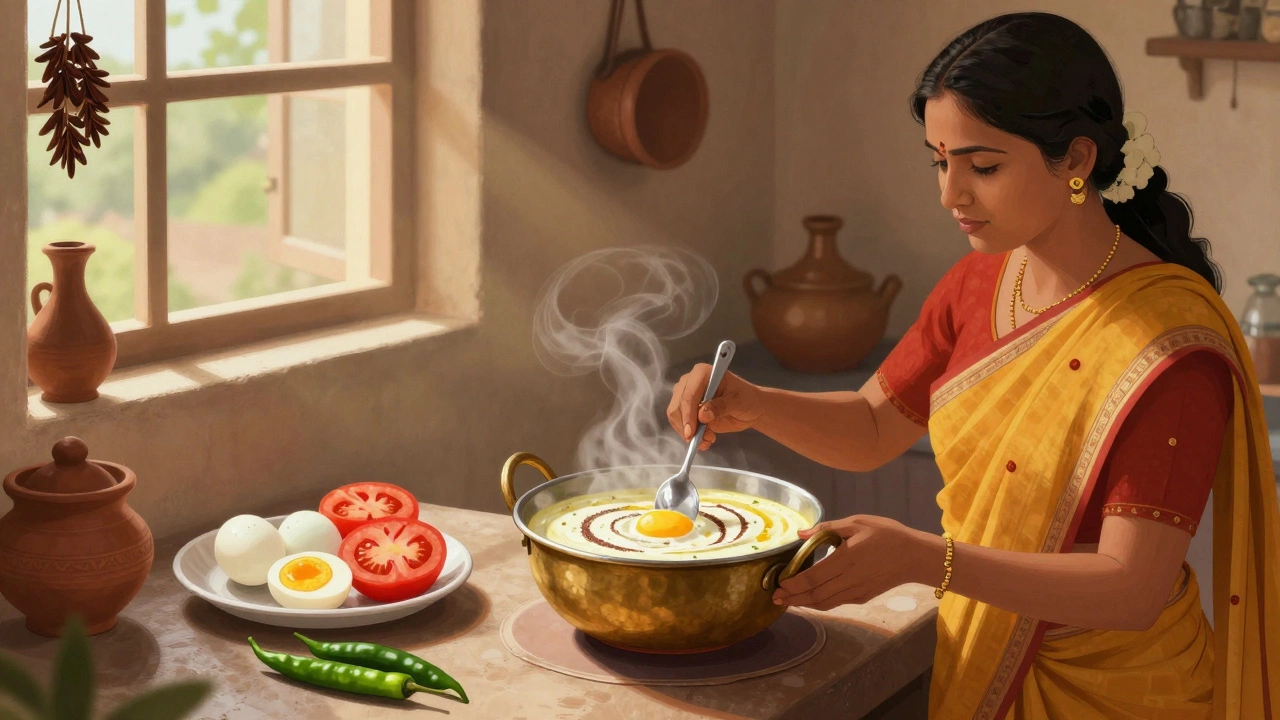
- Egg Curry: Hard-boiled eggs simmered in a spicy tomato-coconut gravy. Popular in Kerala and Tamil Nadu.
- Egg Fried Rice: A street food staple in cities like Kolkata and Mumbai. Often made with leftover rice, soy sauce, and green onions.
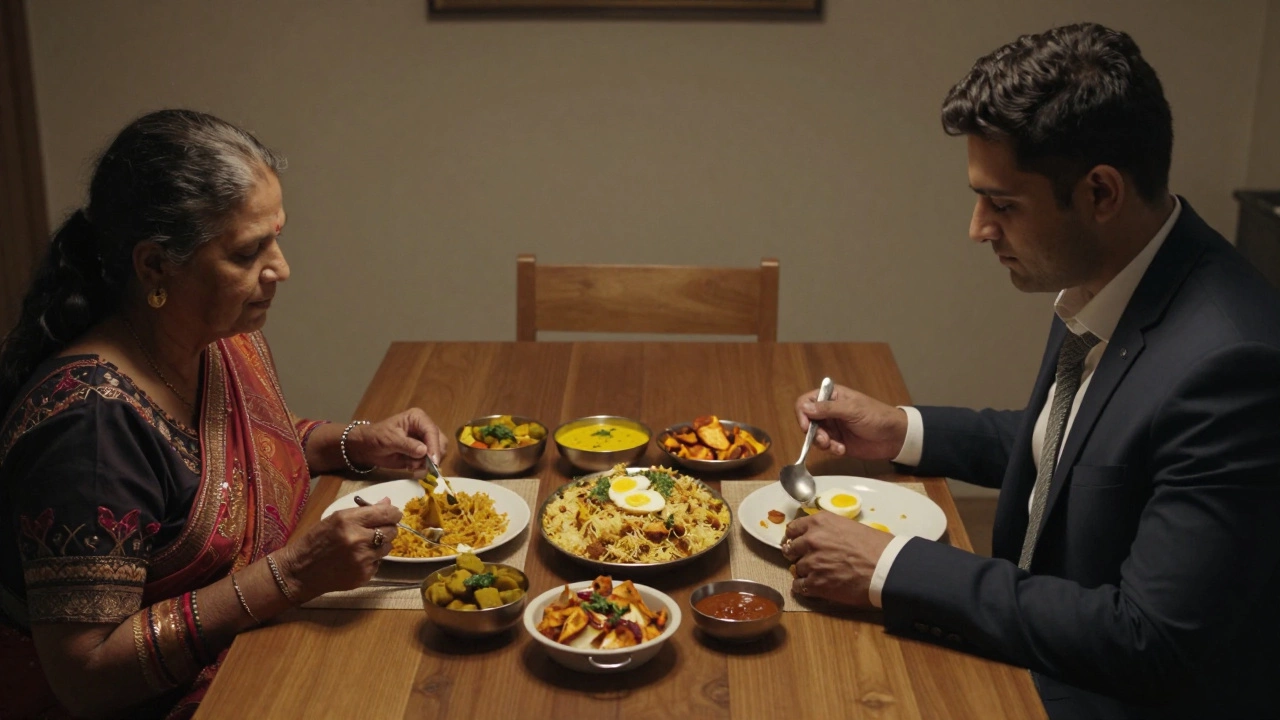
- Egg Biryani: A non-vegetarian version of the famous dish, where eggs replace or supplement meat. Common in Hyderabad and parts of Uttar Pradesh.
- Boiled Eggs with Chutney: A quick snack or side dish, especially in South India. Often paired with coconut chutney or tamarind sauce.
Even in vegetarian households, eggs are sometimes served to children, pregnant women, or elderly family members as a supplement. It’s not seen as breaking vegetarianism-it’s seen as taking care of health.
The Economic Reality
Eggs are one of the most affordable sources of protein in India. A dozen eggs cost less than ₹60 (about $0.70 USD) in most markets. A kilo of chicken can cost twice that. For low-income families, eggs are a daily necessity. In government schools and midday meal programs, eggs are often included to fight malnutrition.
According to the Indian Egg Board, over 90 billion eggs were produced in India in 2024. That’s more than 60 eggs per person per year. Compare that to the U.S., where it’s around 270 per person. India’s consumption is rising fast-especially in urban areas. More young people are choosing eggs over meat because they’re cheaper, cleaner, and easier to cook.
Regional Differences Matter
What you eat depends on where you live.
- South India: Eggs are widely accepted. In Tamil Nadu and Andhra Pradesh, egg curry is a weekend staple. In Kerala, egg roast and egg masala are common.
- North India: Mixed. In Punjab and Haryana, eggs are common in working-class homes. In Delhi, you’ll find egg rolls and egg sandwiches on every street corner. But in some Brahmin households, eggs are still taboo.
- East India: West Bengal and Odisha have high egg consumption. Bengali families often serve boiled eggs with mustard sauce or in egg pulao.
- West India: Gujarat and Rajasthan have lower consumption due to strict vegetarian traditions. But even there, non-vegetarian families eat eggs regularly.
There’s no single Indian diet. There are dozens. And eggs sit somewhere in the middle-accepted in some places, avoided in others, and quietly eaten by millions who don’t see a contradiction.
What About Vegans and Vegetarians?
India has the largest number of vegetarians in the world-around 38% of the population, according to a 2023 Pew Research study. But many of them still eat eggs. That’s because in India, vegetarian doesn’t always mean vegan. Milk and dairy are considered pure, but eggs are seen as ambiguous.
Many people who eat eggs call themselves eggetarian-a term you won’t find in dictionaries, but one you’ll hear in homes across the country. It’s a practical label: no meat, no fish, no chicken-but eggs are fine.
Younger generations are redefining these labels. College students, urban professionals, and fitness enthusiasts are choosing eggs for their protein and convenience. They don’t care about old labels. They care about what fuels their body.
Final Thought: It’s Not About Religion. It’s About Choice.
India doesn’t have one answer to the question of eggs. It has thousands. In one home, eggs are forbidden. In the next, they’re breakfast. In the next, they’re a treat for kids. In another, they’re a lifeline.
Trying to label Indian food as purely vegetarian is like trying to label American food as purely burgers and fries. It’s not wrong-but it’s missing the full picture.
Eggs in India aren’t a controversy. They’re a quiet, everyday part of life for millions. Whether you eat them or not, it’s your choice. And that’s the real story behind the question: Do they eat eggs in India? Yes. Many do. And they’re not apologizing for it.
Are eggs considered vegetarian in India?
It depends on who you ask. Legally and nutritionally, eggs are not meat, so many Indians classify them as vegetarian. But in religious or cultural terms-especially among strict Hindus and Jains-eggs are avoided because they’re seen as potential life. So while millions eat eggs and call themselves vegetarian, others avoid them entirely. The term "eggetarian" is often used to describe those who eat eggs but no other animal flesh.
Do Indian restaurants serve eggs?
Yes, absolutely. Most Indian restaurants, especially in cities, serve egg dishes. Egg bhurji, egg curry, and egg biryani are common menu items. Street vendors sell egg rolls and boiled eggs. Even many "vegetarian" restaurants include eggs because so many customers eat them. If you’re unsure, just ask-the staff will tell you if a dish contains eggs.
Can you find egg-free Indian food?
Yes, and it’s easy. Traditional Indian cuisine is rich in plant-based proteins like lentils, chickpeas, paneer, and tofu. Dishes like dal, chana masala, palak paneer, and vegetable biryani are naturally egg-free. Many restaurants label dishes as "pure vegetarian" (no egg, no meat), and street vendors often have separate stalls for egg-free snacks. Just ask for "behen ki khana"-which means "no egg" in Hindi.
Are eggs popular in Indian households?
Yes, especially in urban and middle-class homes. Eggs are affordable, quick to cook, and packed with protein. In many households, they’re a daily breakfast staple. Even in families that avoid meat, eggs are often eaten by children, pregnant women, or elderly members. The Indian Egg Board reports over 90 billion eggs produced annually, showing how common they are.
Do South Indians eat more eggs than North Indians?
Generally, yes. South Indian states like Kerala, Tamil Nadu, and Andhra Pradesh have higher egg consumption. Egg curry, egg roast, and boiled eggs are everyday foods. In North India, consumption varies more by region and community. In Punjab and Delhi, eggs are common. In Gujarat and Rajasthan, they’re less common due to cultural norms. But even in the North, eggs are rising in popularity among younger generations.