Curry Spice: How to Build Real Flavor with Authentic Indian Spices
When you think of curry spice, a blend of ground spices used to build depth and aroma in South Indian dishes. Also known as curry powder, it's not one single spice—it's a kitchen’s heartbeat, mixed fresh in homes across Kerala, Tamil Nadu, and beyond. This isn’t the pre-mixed powder you find in Western supermarkets. Real curry spice starts with whole seeds—mustard, cumin, coriander, fenugreek—dry-roasted and ground just before use. That’s why your homemade curry tastes different from restaurant versions. The difference isn’t heat. It’s freshness.
What makes curry spice, a blend of ground spices used to build depth and aroma in South Indian dishes. Also known as curry powder, it's not one single spice—it's a kitchen’s heartbeat, mixed fresh in homes across Kerala, Tamil Nadu, and beyond. work so well is how they interact. Turmeric gives color and earthiness. Red chilies bring heat without burning. Asafoetida adds a savory umami punch that lingers. And when you bloom these in hot oil—called tadka, the technique of frying spices in oil or ghee to unlock their full flavor—you’re not just cooking. You’re activating chemistry. The oil pulls out essential oils. The heat releases volatile compounds. That’s the moment your kitchen smells like a street vendor’s cart in Chennai.
People think curry spice is just for chicken or lamb. But it’s the soul of lentils, vegetables, even rice. A simple dal, a staple South Indian lentil dish, often seasoned with curry spice and tempered with mustard seeds and curry leaves becomes unforgettable with a pinch of roasted cumin and a few curry leaves fried in coconut oil. The same blend lifts a bland dosa, a fermented rice and lentil crepe, often served with chutneys and sambar seasoned with curry spice from flat to fiery. And when you cook chicken, the spice doesn’t just coat it—it seeps in during slow simmering, turning tough meat into tender bites.
You don’t need fancy tools. Just a dry pan, a mortar and pestle, and patience. Store your spice blend in a dark jar, away from light and steam. It loses punch fast. Buy whole spices. Grind small batches. Taste as you go. Most recipes skip this step—they assume you already know how to build flavor. But here’s the truth: flavor isn’t added. It’s layered. One spice at a time. One step at a time.
Below, you’ll find real fixes for bland curry, the secret to tender chicken, and why soaking dal matters more than you think. No fluff. No shortcuts. Just what works in Indian kitchens every day.
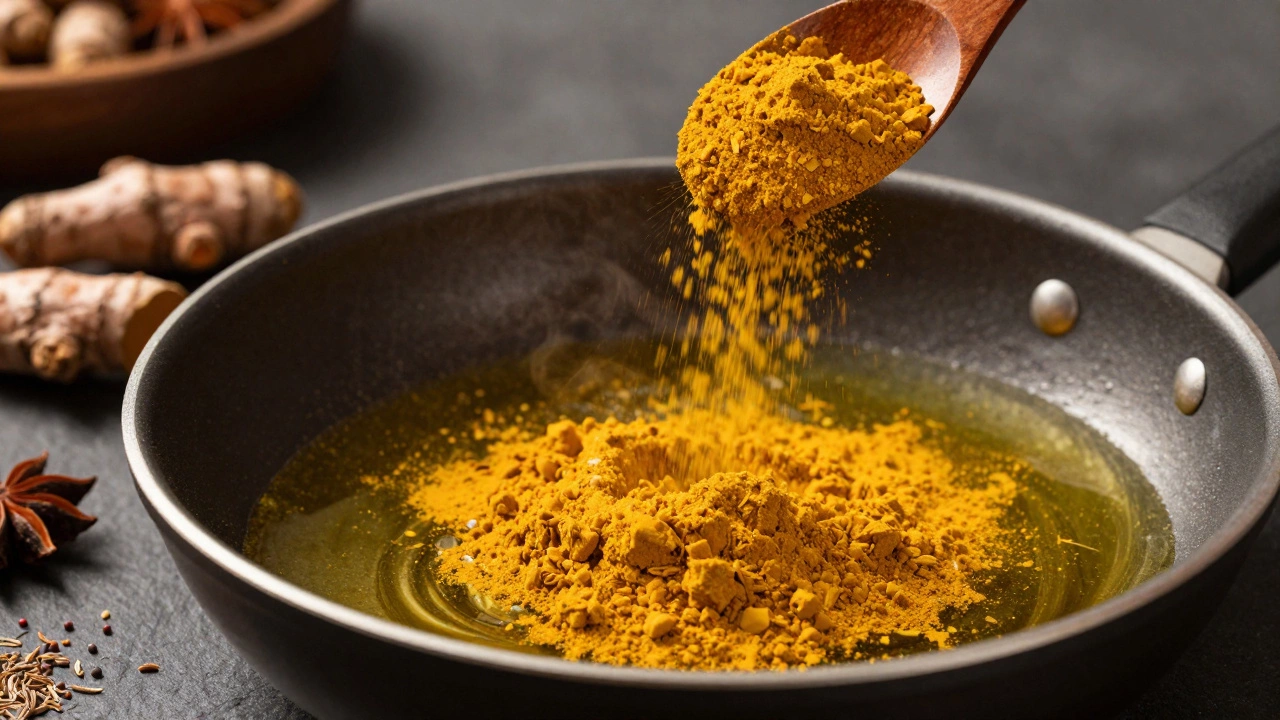
What Is the Golden Yellow Spice Used in Curries?
Turmeric is the golden yellow spice that gives curries their signature color and earthy depth. Used for thousands of years in Indian cooking, it's the backbone of chicken curry and many other dishes-not just for flavor, but for tradition and authenticity.
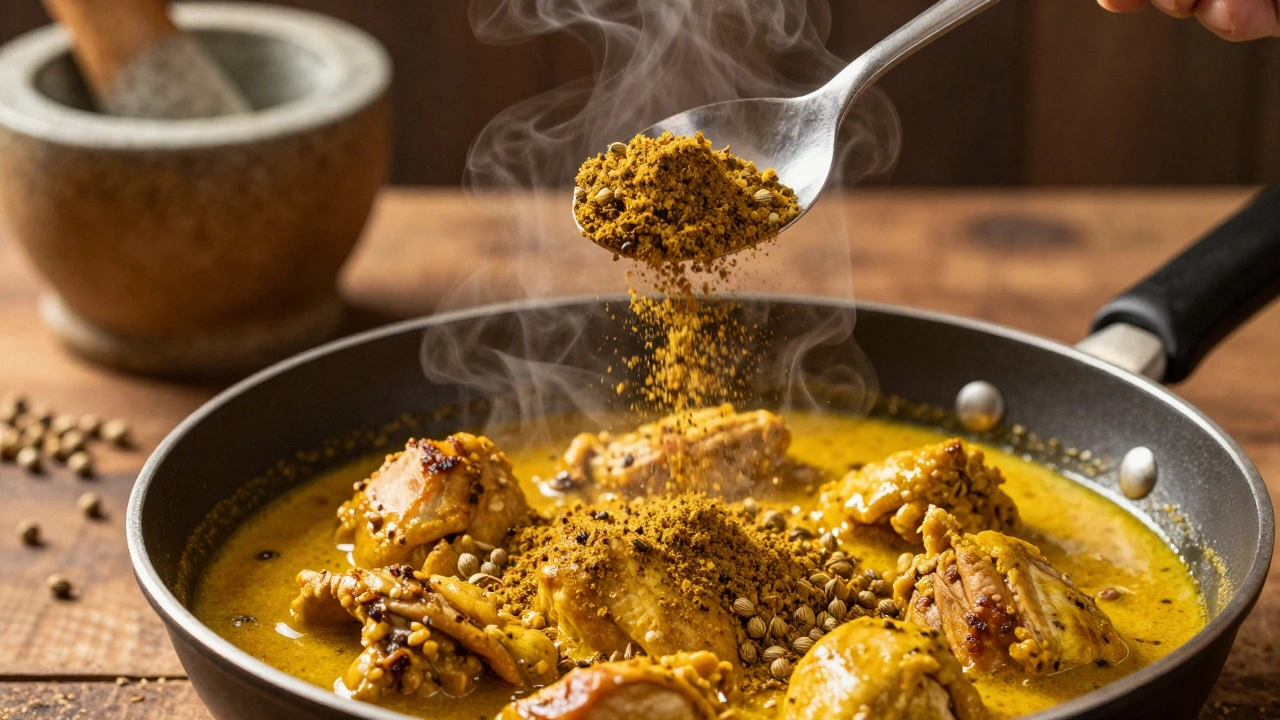
What Is the Most Important Spice in Chicken Curry?
Coriander powder is the essential spice in chicken curry, providing balance and depth that other spices rely on. Learn why it's the foundation and how to use it right.