2 Dec 2025
- 0 Comments
Curry Depth Calculator
How much flavor depth is in your chicken curry? Answer these questions to see how close you are to restaurant-quality results. Depth comes from technique, not just ingredients!
Your Curry Depth Score
Your Action Plan
Ever made a chicken curry that tasted flat, even though you followed the recipe exactly? You added all the spices, simmered it for hours, and still felt like something was missing. That’s not your fault. Most people think curry depth comes from more spices or longer cooking. It doesn’t. It comes from layering.
Depth isn’t about quantity-it’s about timing
Adding all your spices at once is like throwing every ingredient into a pot and hoping it works. Real depth comes from introducing spices at different stages so their flavors unfold one after another, not all at once.
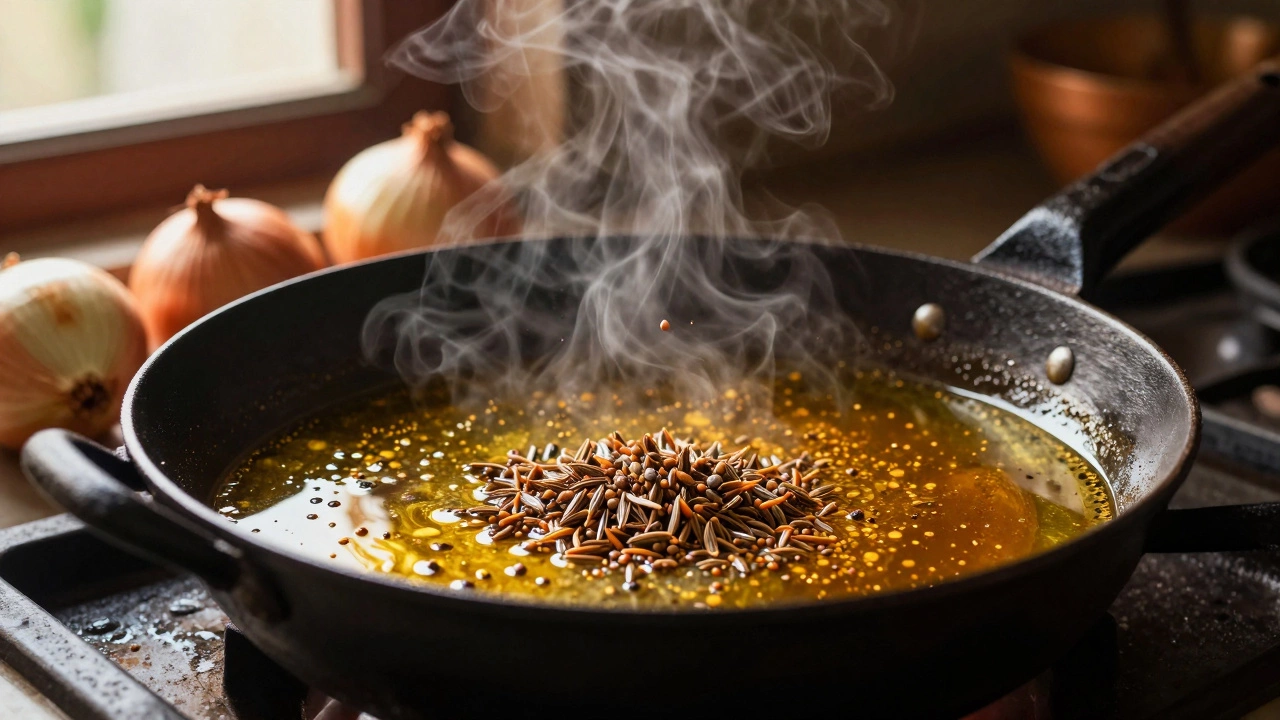
Start with whole spices-cumin seeds, mustard seeds, fenugreek, and bay leaves-in hot oil. Let them sizzle until they pop. That’s your base. This step, called tadka or tempering, unlocks oils that water-soluble powders never can. If you skip this, your curry will taste dusty, not deep.
Then, after the onions soften and turn golden, add ground spices: turmeric, coriander, cumin powder. Cook them for 30 seconds to a minute, stirring constantly. This isn’t just mixing-it’s toasting. Raw ground spices taste bitter. Toasted, they turn sweet, earthy, and complex. Burn them, and the whole dish turns bitter. Under-toast them, and they taste like chalk.
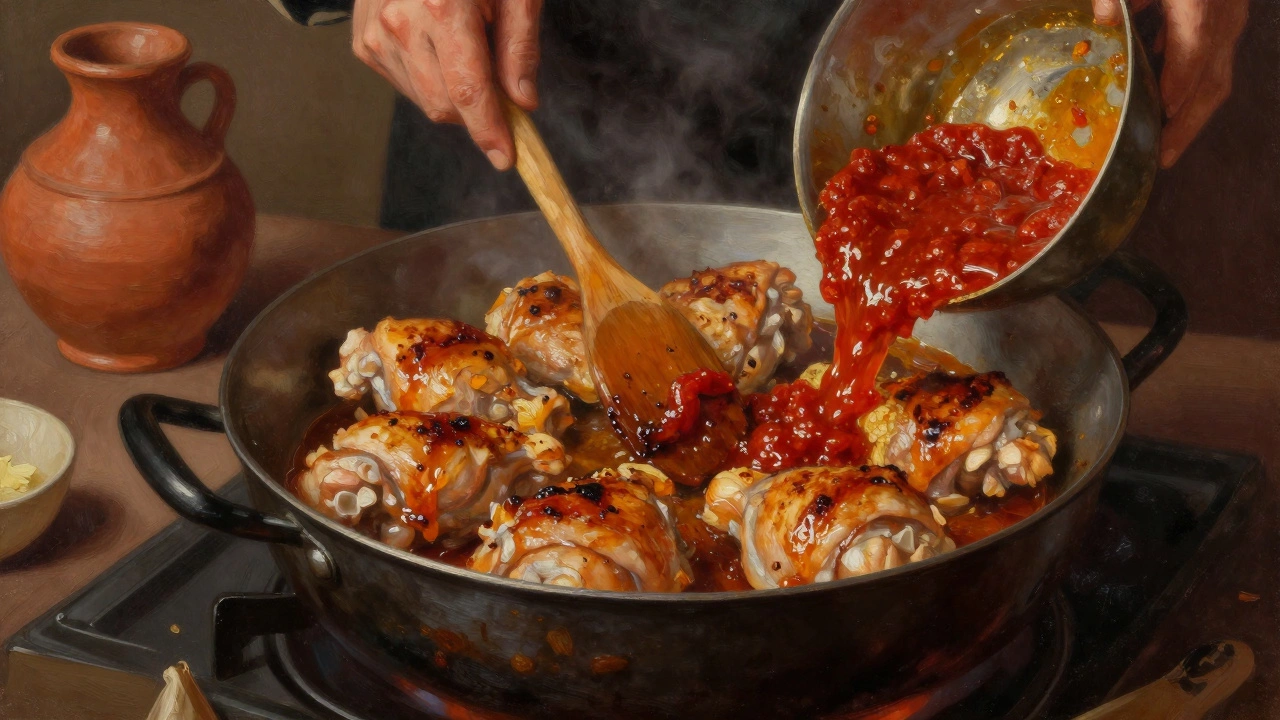
Finally, add tomato paste or pureed tomatoes. The acidity cuts through the fat and lets the spices cling to the chicken. This is where the magic happens: the Maillard reaction from the onions, the caramelization from the tomatoes, and the toasted spices all merge into a single, rich base.
Chicken matters more than you think
Most recipes say ‘use chicken thighs.’ That’s good advice-but not because they’re juicier. It’s because they have more connective tissue. When you brown them well before adding liquid, that collagen breaks down into gelatin. That’s what gives curry its body, its silkiness, its cling to the spoon.
Don’t just toss raw chicken into the sauce. Brown it in batches. Let it sit undisturbed for a full minute per side until it’s deeply golden. Those browned bits stuck to the pan? That’s flavor gold. Deglaze with a splash of water or stock, scraping it all up. That’s not cleaning the pan-it’s building flavor.
Chicken breast? It won’t give you depth. It’ll give you dryness. Even if you marinate it. Stick to bone-in, skin-on thighs. Remove the skin after browning if you want less fat, but keep the bones. They release marrow and minerals as they simmer, adding a subtle umami that no powder or bouillon can replicate.
The hidden ingredient: fermented and dried elements
Here’s what most home cooks miss: fermented flavors. Tamarind paste, dried mango powder (amchoor), or even a small piece of dried coconut (used in South Indian curries) add sourness that doesn’t just brighten-it deepens. Sourness doesn’t make curry taste sour. It makes every other flavor pop.
Same with dried chilies. Red Kashmiri chilies aren’t just for color. They bring fruity heat that lingers. Compare them to cayenne: cayenne hits fast and fades. Kashmiri chilies build slowly, wrapping around the tongue. Use both if you can. One gives punch, the other gives presence.
And then there’s the umami secret: dried shrimp powder or a teaspoon of fish sauce. Yes, fish sauce. It’s not Indian, but it’s used in Goan and coastal curries for decades. A tiny amount-less than half a teaspoon-adds a savory backbone. It’s not fishy. It’s like the difference between salt and soy sauce. You can’t name it, but you notice it’s missing.
Slow simmering isn’t enough-pressure matters
You’ve heard ‘simmer for two hours.’ But if you’re using a regular pot on the stove, you’re losing moisture, and with it, flavor. The water evaporates, but the volatile aromatics escape too.
Use a pressure cooker for the first 20 minutes. It traps steam, increases the boiling point, and breaks down the chicken and spices faster. Then, open the lid and let it reduce for another 15-20 minutes. That’s when the sauce thickens naturally, concentrating the flavors without adding flour or cream.
If you don’t have a pressure cooker, cover the pot with a tight lid and use the lowest possible heat. A slow simmer under a lid for 90 minutes works better than a rolling boil for 30. You want the sauce to thicken by evaporation, not by stirring in cornstarch.
Finish with fresh, not just hot
Adding garam masala at the end isn’t a tradition-it’s science. Garam masala contains volatile oils from cardamom, cloves, cinnamon, and black pepper. Heat destroys them. Add it in the last two minutes, off the heat, and stir. The aroma hits you before the spoon even touches your mouth.
Same with fresh cilantro. Don’t stir it in early. Sprinkle it on top right before serving. The green, citrusy note cuts through the richness. It’s not garnish. It’s balance.
And a squeeze of lime? Absolutely. But not at the start. Wait until the end. Acid at the end wakes up the whole dish. It’s the final spark.
What to avoid at all costs
- Using pre-ground spices older than six months. They lose 70% of their essential oils by then.
- Adding too much salt early. Salt draws out moisture and prevents caramelization. Season in stages.
- Using coconut milk from a can without reducing it. The water content dilutes flavor. Simmer it for 10 minutes first to thicken.
- Skipping the oil. Fat carries flavor. No oil = no depth. Use ghee if you can-it adds nuttiness.
Real-world example: My Sydney kitchen test
Last month, I made three batches of chicken curry with the same ingredients but different methods.
Batch one: All spices added at once. Simmered 45 minutes. Result: Tasted like a spice mix floating in water.
Batch two: Layered spices, browned chicken, pressure cooked, finished with lime and garam masala. Result: Rich, layered, complex. My neighbor asked for the recipe twice.
Batch three: Same as batch two, but I added a teaspoon of tamarind paste and a pinch of dried shrimp powder. Result: The one I made again the next day. That’s depth.
It’s not about fancy ingredients. It’s about sequence. Timing. Patience.
Quick checklist for deeper chicken curry
- Brown chicken in batches-don’t crowd the pan.
- Temper whole spices in hot oil first.
- Toast ground spices for 30-60 seconds before adding liquid.
- Use bone-in thighs, not breast.
- Add tomato paste, not just tomatoes.
- Use pressure cooking for 20 minutes, then reduce.
- Finish with garam masala, cilantro, and lime-off the heat.
- Add a whisper of tamarind or dried shrimp powder if you want that ‘I can’t put my finger on it’ depth.
Depth in curry isn’t magic. It’s method. Do each step right, and your curry won’t just taste good-it’ll taste like it’s been simmering for days, even if it hasn’t.
Why does my curry taste bland even with lots of spices?
You’re probably adding all the spices at once. Ground spices need to be toasted in oil after the onions soften to release their oils. Whole spices need to be fried first. Without this step, they stay raw-tasting. Depth comes from layering, not quantity.
Can I use chicken breast instead of thighs?
You can, but you won’t get the same depth. Thighs have collagen that turns into gelatin when cooked slowly, giving curry body and richness. Breast meat dries out and adds no texture or mouthfeel. If you must use breast, brown it quickly and add it late to avoid overcooking.
Is ghee better than oil for curry?
Ghee adds a nutty, caramelized note that regular oil doesn’t. It’s traditional in North Indian curries and helps carry spice flavors better. But if you don’t have ghee, neutral oil works fine-just don’t skip the fat. Oil is what lets spices bloom.
What’s the best way to store leftover curry?
Store it in the fridge for up to 4 days. The flavor often improves after 24 hours as the spices continue to meld. Reheat gently on the stove-don’t microwave it. Add a splash of water or stock if it thickens too much. Never freeze curry with fresh herbs or lime juice; add those after thawing.
Do I need to use fresh ginger and garlic?
Yes. Powdered versions lack the bright, pungent kick that fresh ones give. Grate them finely and add them after the onions soften but before the dry spices. Cook for a minute until the raw smell disappears. That’s when their flavor becomes sweet and rounded.
Can I make curry depth without dairy?
Absolutely. Cream and yogurt are common, but they’re not essential. Depth comes from browning, slow cooking, and fermented or dried ingredients like tamarind, dried shrimp powder, or even a small piece of dark chocolate (used in some regional recipes). These add richness without dairy.