2 Jan 2026
- 0 Comments
Chutney vs Jam Substitution Checker
Recipe Context
Chutney vs Jam
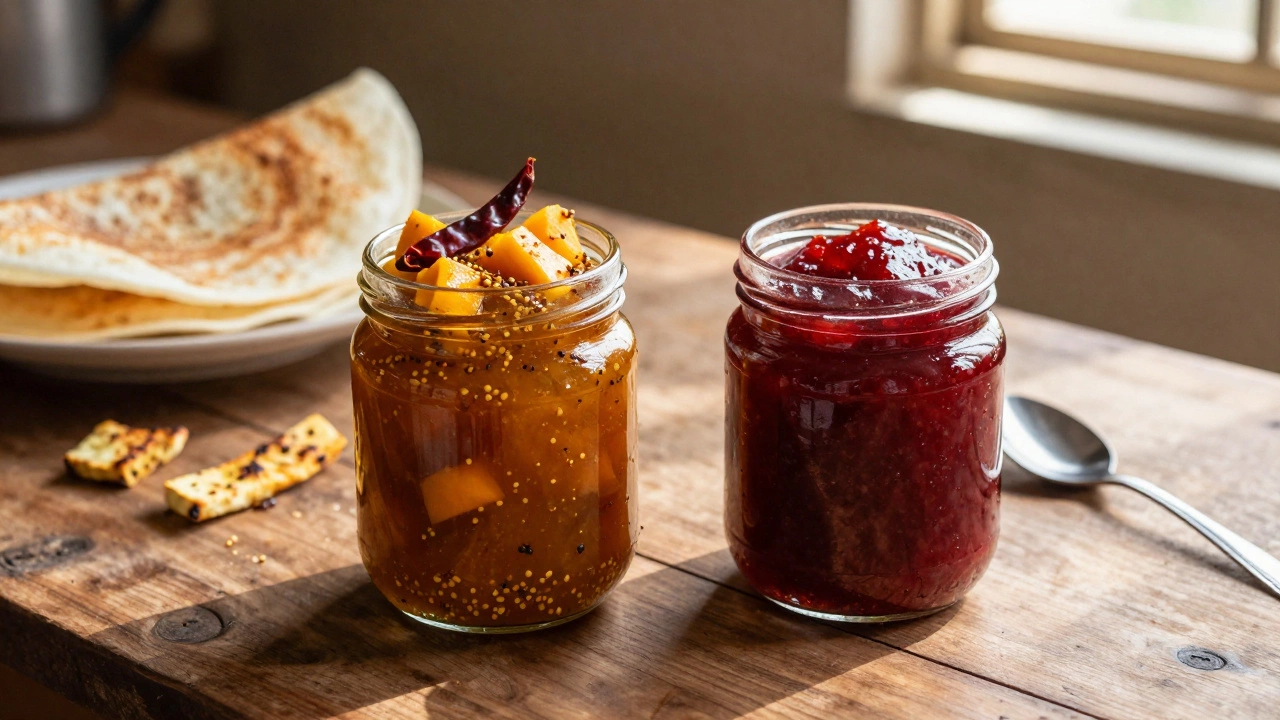
Chutney
Chunky texture, contains vinegar/spices, balances rich dishes
- Best for curries, rice dishes, samosas
- Key elements: vinegar, mustard seeds, chilies
Jam
Smooth texture, fruit-based, pure sweetness
- Best for toast, scones, breakfast
- Key elements: fruit, sugar, pectin
Ever opened your pantry and found a jar labeled chutney next to a jar of jam and wondered if they’re the same thing? You’re not alone. Many people assume chutney is just a spicy version of jam. But they’re not. They’re built differently, taste differently, and serve completely different roles on your plate.
Chutney Isn’t Just Spicy Jam
Chutney comes from India, where it’s been made for thousands of years as a way to preserve seasonal fruits and vegetables. It’s not just a side-it’s a flavor engine. A good chutney can lift a plain dal, cut through rich biryani, or wake up a simple dosa. It’s usually made with vinegar, sugar, spices like mustard seeds or dried chilies, and sometimes even garlic or ginger. The texture? Chunky, not smooth. The taste? Sour, sweet, spicy, and salty all at once.
Jam, on the other hand, is about sweetness and fruit. It started in Europe as a way to preserve fruit without fermentation. The base is fruit, sugar, and sometimes pectin. No vinegar. No spices beyond maybe a hint of cinnamon. It’s meant to be spread on toast, stirred into yogurt, or eaten straight off the spoon. The goal? Pure fruit flavor, thickened into a smooth, sticky paste.
What’s in a Chutney? The Real Ingredients
Let’s break down what actually goes into a traditional Indian chutney. Take a classic mango chutney: ripe mangoes, sugar, vinegar (often white or cider), mustard seeds, fenugreek, turmeric, and dried red chilies. Some versions include tamarind for tang, or even a splash of lime juice. The vinegar isn’t just for taste-it’s a preservative. That’s why homemade chutneys can last months in the fridge.
Coconut chutney? Ground coconut, green chilies, roasted lentils, curry leaves, and a pinch of salt. No sugar. No vinegar. Still a chutney. That’s because chutney is defined by its role, not its ingredients. It’s a condiment that adds complexity, heat, or brightness to a meal.
Compare that to strawberry jam: strawberries, sugar, lemon juice (for acidity and pectin activation), and maybe a tiny bit of vanilla. No spices. No heat. No savory notes. It’s all about the fruit’s natural sweetness, amplified and thickened.
Texture and Consistency: Chunky vs Smooth
Chutney is almost always textured. You’ll find bits of fruit, seeds, even whole spices floating in it. That’s intentional. The texture gives you bursts of flavor as you eat. Think of it like salsa-each spoonful has layers.
Jam is the opposite. It’s smooth, even, and uniform. Even when it has fruit pieces (called “chunky jam”), those pieces are soft, broken down, and evenly distributed. The goal is spreadability. You don’t want to chew through a chunk of chili in your toast.
There are exceptions, like some British-style fruit chutneys that are smoother. But even then, they still carry the savory-spicy profile of chutney, not the sweet purity of jam.
How They’re Used in Meals
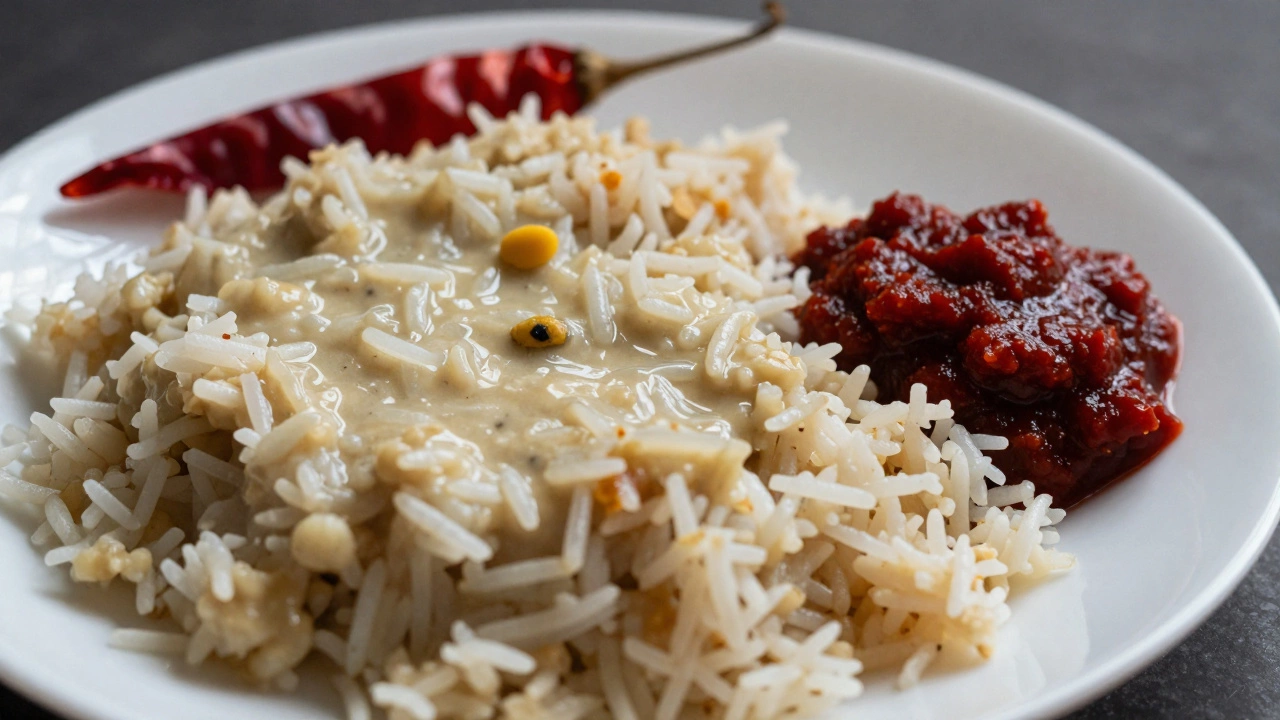
Chutney is a seasoning. It’s served alongside food to balance it. A plate of samosas? A dollop of mint chutney cools the fried dough. A bowl of rice? A spoon of tamarind chutney adds sour punch. It’s not eaten alone-it’s a partner.
Jam is a standalone treat. You eat it on bread, with cheese, in a scone, or straight from the jar. It doesn’t need anything else. It’s the star. In Indian households, you might find jam on toast for breakfast, but you’ll never find it served with dal or curry. That would be like putting whipped cream on curry-it just doesn’t belong.
Here’s a real-life example: At a family lunch in Sydney, someone brought homemade mango chutney. It was served with grilled paneer and basmati rice. A guest asked, “Is this jam?” The answer was no. It had vinegar, mustard, and chili. It made the rice taste alive. Jam would have drowned it.
Shelf Life and Storage
Because chutney contains vinegar and salt, it’s naturally preserved. Homemade chutney can last 3-6 months in the fridge. Some traditional recipes even use oil on top to seal it, letting it sit unrefrigerated for weeks. That’s why you’ll see chutneys in Indian grocery stores that don’t need refrigeration until opened.
Jam relies on sugar and pectin for preservation. Once opened, it needs to be refrigerated and used within 1-2 months. If it’s not sealed properly, mold grows faster than in chutney. That’s because jam lacks the antimicrobial punch of vinegar and spices.
When You Can Substitute One for the Other
Short answer: almost never.
If you’re making a sandwich and only have apricot jam, you can use it in place of a sweet chutney-like a sweet onion chutney-but you’ll lose the spice and tang. The sandwich won’t taste wrong, but it’ll feel flat.
Trying to use chutney instead of jam on toast? You might love it if you’re used to bold flavors. But most people will find the vinegar and chili too sharp. It’s not a swap-it’s a different experience.
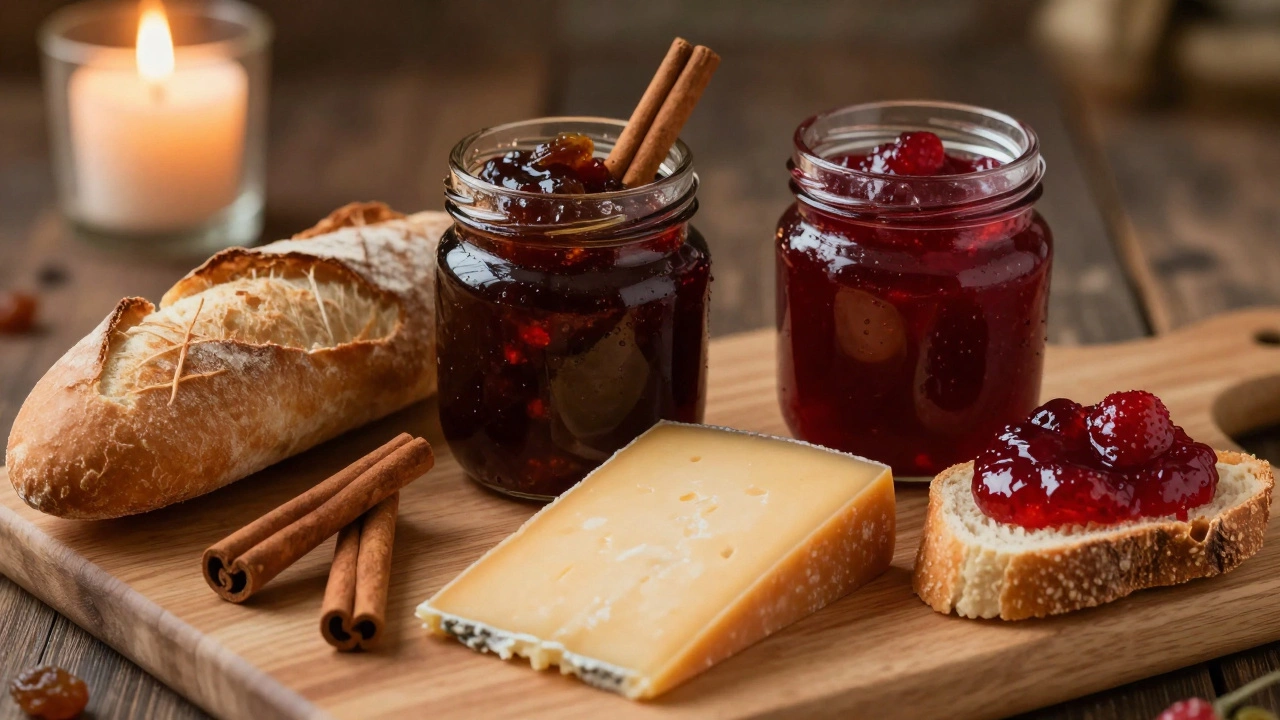
There’s one exception: in British cuisine, “fruit chutney” (like apple or pear chutney with raisins and spices) is sometimes used on cheese boards. In that context, it’s closer to a sweet condiment. But even then, it’s still not jam. It’s a chutney playing a jam-like role.
Why This Matters in Your Kitchen
Understanding the difference helps you cook better. If you’re following an Indian recipe that calls for tamarind chutney, don’t substitute it with strawberry jam. You’ll ruin the balance. The dish needs sour, salty, spicy-not just sweet.
Conversely, if you’re making a scone and only have a mango chutney, you could try it-but you’ll need to reduce the vinegar or add more sugar to make it palatable. It’s not impossible, but it’s not the same.
Knowing the difference also helps you shop smarter. In the grocery store, chutneys are often near pickles and sauces. Jams are near butter and honey. Don’t assume they’re interchangeable just because they’re both in jars.
Common Misconceptions
Myth: “Chutney is just Indian jam.” No. It’s a condiment with a completely different flavor philosophy.
Myth: “All fruit preserves are jam.” Not true. Jams, jellies, marmalades, and chutneys are all fruit-based, but they’re different categories.
Myth: “If it’s sweet, it’s jam.” Many chutneys are sweet-but they’re still chutneys because of the vinegar, spices, and savory elements.
Myth: “You can use chutney as a spread.” You can, but it’s not designed for it. Jam is. That’s why jam jars have wide mouths. Chutney jars are often narrow, meant for scooping, not spreading.
Can I use jam instead of chutney in a curry?
Not really. Jam lacks the vinegar, spices, and tang that chutney brings to balance rich curries. Using jam will make the dish overly sweet and flat. If you’re out of chutney, try a splash of lime juice and a pinch of cumin instead.
Is chutney healthy?
It depends. Homemade chutney with fresh fruit, minimal sugar, and no preservatives can be a healthy condiment. It often contains antioxidants from spices like turmeric and ginger. Store-bought versions can be high in sugar and sodium, so check the label.
Why does my homemade chutney taste too sour?
You likely used too much vinegar or not enough sugar. Taste as you cook. Add sugar gradually, a teaspoon at a time, until the sourness balances out. Let it sit for a day-flavors mellow over time.
Can I make chutney without vinegar?
Yes, but it won’t keep as long. Traditional Indian chutneys like coconut or mint chutney use lemon juice or tamarind for acidity instead of vinegar. These are best eaten within a week and kept refrigerated.
What’s the difference between chutney and salsa?
Salsa is raw or lightly cooked, with fresh tomatoes, onions, cilantro, and lime. Chutney is cooked down, often with sugar and spices, and has a thicker, jam-like texture. Salsa is bright and fresh; chutney is deep and complex.
Final Thought: It’s About Function, Not Form
Chutney and jam aren’t rivals-they’re different tools. One is a flavor enhancer. The other is a sweet indulgence. If you’re cooking Indian food, chutney belongs on the table. If you’re having breakfast, jam belongs on the toast. Don’t mix them up. And if you ever make your own chutney, remember: it’s not about sweetness. It’s about balance.