
20 Jan 2026
- 0 Comments
Tandoori Chicken Doneness Calculator
Check Your Chicken's Safety
Determine if your tandoori chicken is properly cooked. The red liquid you see isn't blood—it's normal spice pigment mixed with moisture. Only the internal temperature confirms doneness.
Ever cut into a perfectly marinated tandoori chicken leg and seen bright red liquid oozing out? You might panic-did you undercook it? Is it blood? Is the chicken spoiled? Relax. That red stuff isn’t blood. It’s perfectly normal, and it’s actually a sign you did everything right.
That Red Juice Is Just Spice and Water
The red liquid you see isn’t blood. Chicken, like all poultry, has very little blood left in it after slaughter and draining. What you’re seeing is a mix of water, yogurt, and the natural pigments from the spices in your tandoori marinade-especially paprika, Kashmiri red chili powder, and sometimes beetroot or tomato paste. Kashmiri chili powder is the secret weapon here. It’s not about heat; it’s about color. It gives tandoori chicken that signature deep red hue without making it spicy-hot. When you mix it with yogurt and let the chicken sit overnight, the pigment gets pulled into the meat fibers. During cooking, the heat forces moisture out, and that moisture carries the dissolved pigment with it. That’s the red stuff you see pooling on the plate or dripping from the bone.Why Yogurt Makes It Worse (in a Good Way)
Yogurt is the base of every good tandoori marinade. It tenderizes the meat, adds tang, and helps spices stick. But here’s the catch: yogurt holds water. When you marinate chicken in yogurt for 12 to 24 hours, the meat soaks up that liquid like a sponge. As the chicken cooks, that water comes back out-carrying the red spice pigments with it. If you used less yogurt, you’d get less red juice. But you’d also get tougher chicken. The trade-off is worth it. The juice isn’t a flaw-it’s proof your marinade worked. Professional chefs in Delhi and Mumbai see this every day. They don’t worry about it. You shouldn’t either.How to Tell If the Chicken Is Actually Undercooked
The real question isn’t about the red liquid-it’s about temperature. Blood doesn’t look like this. Blood is dark, thick, and clotted. What you’re seeing is bright red, watery, and runs freely. That’s not blood. That’s spice water. To check if your chicken is cooked, use a meat thermometer. Insert it into the thickest part of the leg, avoiding the bone. The internal temperature should hit 74°C (165°F). If it’s below that, keep cooking. If it’s at or above that, it’s safe-even if red liquid is still coming out. You can also check by poking the meat with a knife. If the juices run clear, you’re good. But if they’re still pinkish-red, give it another 5-10 minutes. Don’t rely on color alone. The marinade can make even fully cooked chicken look red on the outside.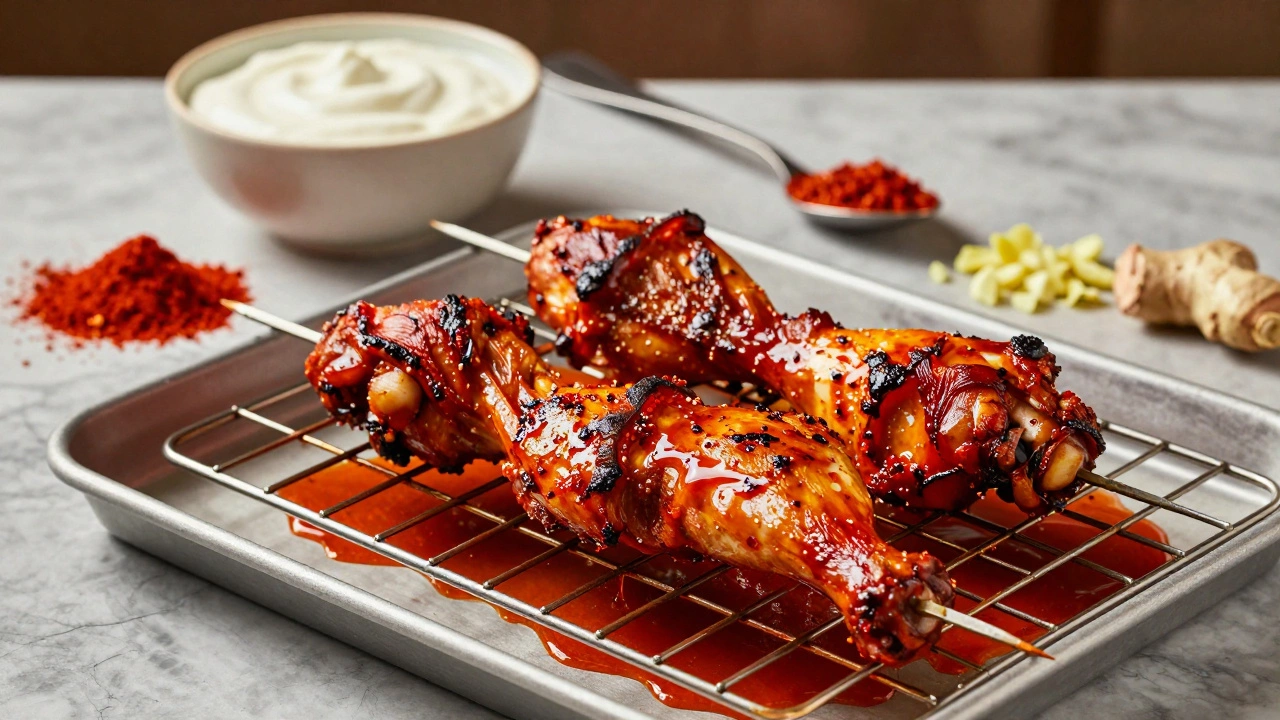
Why Store-Bought Tandoori Chicken Doesn’t Do This
Ever bought pre-marinated chicken from the grocery store and noticed it doesn’t leak red juice? That’s because many commercial brands use food coloring-like Red 40-to get the color without relying on natural pigments. They also use less yogurt and shorter marination times to reduce moisture. Homemade tandoori chicken uses real ingredients: Kashmiri chili, paprika, garlic, ginger, lemon juice, and yogurt. No artificial dyes. That means more moisture, more natural color, and more red juice. It’s not a defect-it’s authenticity.How to Minimize the Red Juice (If You Want To)
You don’t have to live with dripping red liquid. If you prefer a cleaner presentation, here’s how to reduce it:- Pat the chicken dry after marinating. Use paper towels to gently blot the surface before cooking. This removes excess surface moisture.
- Use less yogurt. Cut the yogurt amount by 25% and add a tablespoon of olive oil instead. It still tenderizes but holds less water.
- Marinate for 8-12 hours instead of 24. Less time = less water absorption.
- Don’t pierce the chicken with a fork while cooking. That lets juices escape. Use tongs instead.
- Let the chicken rest for 5 minutes after cooking. That lets the juices redistribute instead of pouring out.
What Happens If You Ignore the Red Stuff?
Nothing bad. You’re not poisoning anyone. You’re not eating blood. You’re not serving unsafe food. In fact, the red juice is a badge of honor. It means your spices are real, your yogurt is fresh, and your chicken is properly marinated. In India, street vendors serve tandoori chicken with the red juice running down the skewers. Customers love it. They lick it off their fingers. That’s the flavor you’re after-not a sterile, dry, colorless chicken leg.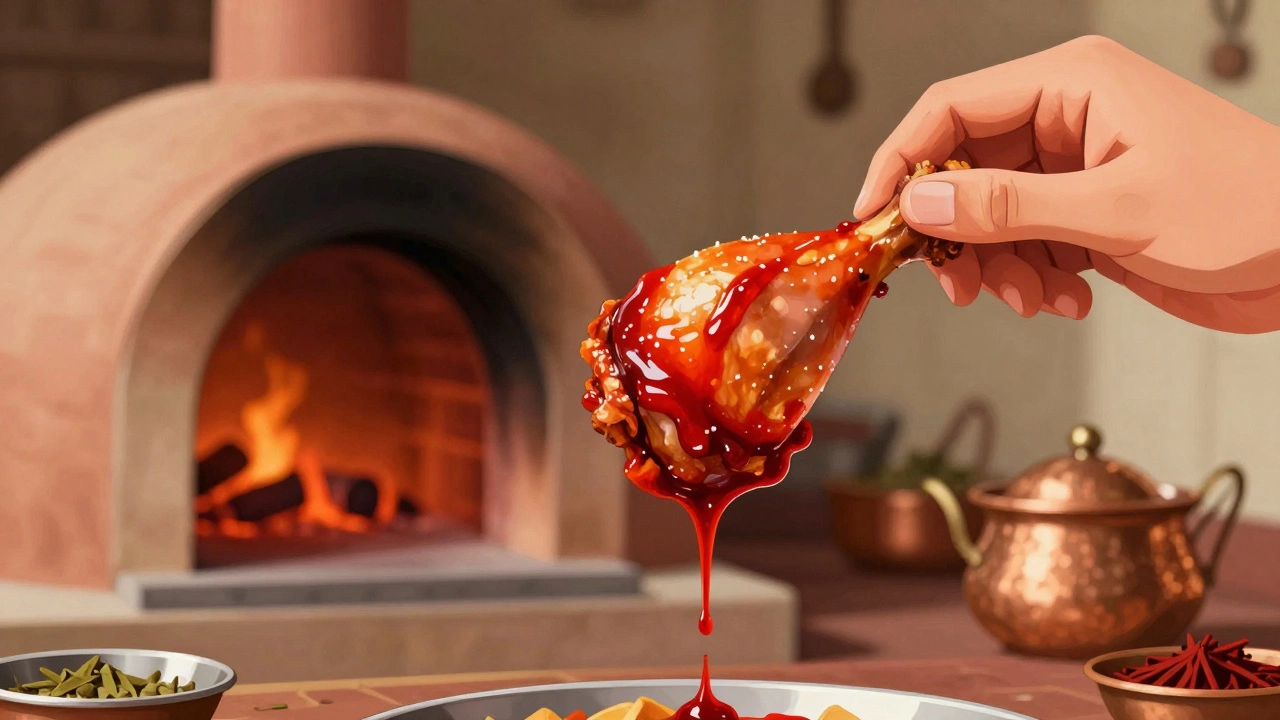
Real Tandoori Chicken Isn’t Perfect-It’s Flavorful
Perfect-looking food doesn’t always taste the best. Tandoori chicken isn’t about presentation. It’s about deep, smoky, spicy, tangy flavor that clings to your fingers. The red juice? That’s the flavor escaping. That’s the magic. If you’re cooking at home and see red liquid, smile. You didn’t mess up. You nailed it. The chicken is juicy, the spices are working, and you’re closer to restaurant-quality tandoori than you think.What Else Could Cause Red Liquid?
There are two rare cases where red liquid might mean trouble:- Undercooked chicken with pink meat - If the meat near the bone is still pink and the juices are thick and dark red, it might be undercooked. Check the temperature.
- Contaminated spice - If you used cheap, old, or fake Kashmiri chili powder that contains red dye or fillers, it might look unnatural. Stick to reputable brands like Everest or MDH.
How to Serve Tandoori Chicken Without the Mess
If you’re serving guests and want to avoid the red drips on the table:- Place the chicken on a wire rack over a baking sheet while cooking. Let the juices drip away cleanly.
- Use a large platter with a rim to catch any runoff.
- Serve with naan or rice to soak up the juices-don’t waste them.
- Offer wet wipes or a bowl of warm water with lemon slices for guests to clean their hands.
Is the red liquid from my tandoori chicken blood?
No, it’s not blood. Poultry has almost all its blood removed during processing. The red liquid is water mixed with pigment from spices like Kashmiri chili powder and paprika, released during cooking. It’s completely safe and a sign your marinade worked.
Why does my tandoori chicken leak red juice when I cut into it?
The yogurt marinade soaks into the chicken and holds moisture. When cooked, heat forces that moisture out, carrying red spice pigments with it. This is normal and happens with every properly marinated tandoori chicken. It’s not a mistake-it’s proof the flavors penetrated deep.
How do I know if my tandoori chicken is fully cooked?
Use a meat thermometer. Insert it into the thickest part of the leg without touching the bone. The internal temperature should reach 74°C (165°F). Color doesn’t matter-yogurt and spices can make cooked chicken look red. Temperature is the only reliable test.
Can I reduce the red juice without losing flavor?
Yes. Pat the chicken dry after marinating, reduce the yogurt by 25%, and add a tablespoon of oil. Marinate for 8-12 hours instead of 24. You’ll still get great flavor and tenderness, just less dripping. Don’t skip the spices-they’re what make it tandoori.
Why doesn’t store-bought tandoori chicken leak red juice?
Many commercial brands use artificial red dye (like Red 40) instead of natural spices. They also use less yogurt and shorter marination times to reduce moisture. Homemade tandoori uses real ingredients, which means more juice-but also more authentic flavor.