6 Jan 2026
- 0 Comments
Regional Chutney Finder
Select a region to view traditional chutney details
Traditional chutney isn’t just a side dish-it’s the flavor anchor of countless Indian meals. You’ll find it tucked beside a plate of dosa, dolloped on a samosa, or stirred into a bowl of dal. But what’s actually in it? Not every chutney is the same. What makes one authentic isn’t just the recipe-it’s the local ingredients, the way they’re ground, and the culture behind it.
Core Ingredients in Traditional Chutney
At its heart, traditional chutney is built on three pillars: fruit or vegetable base, spice, and acid. These aren’t random additions-they’re balanced to create contrast and depth. The base gives body, the spices bring heat and aroma, and the acid cuts through richness.
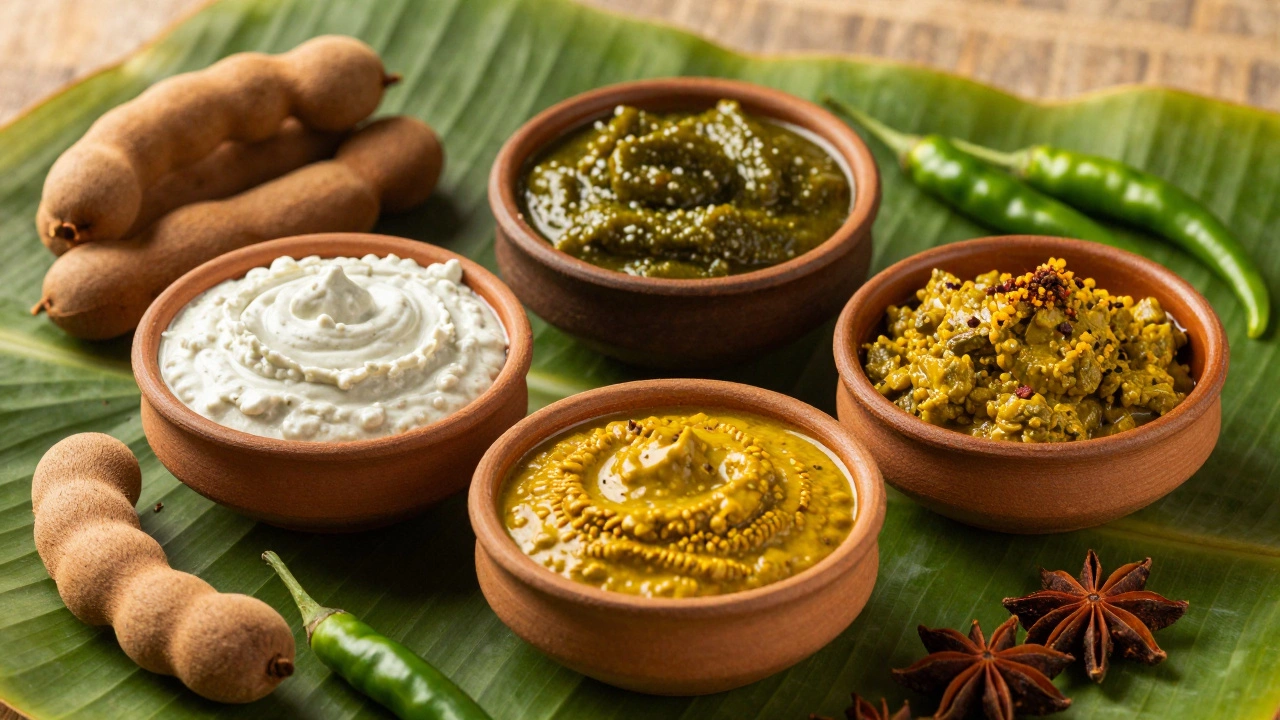
Coconut, tamarind, mint, coriander, tomatoes, and green chilies are the most common bases. In South India, freshly grated coconut is mixed with roasted chana dal and dried red chilies to make a creamy, nutty chutney that’s served with idli. In Maharashtra, raw green mangoes are ground with jaggery and mustard seeds for a sweet-tangy kick. In North India, tamarind pulp is simmered with jaggery, cumin, and dried ginger to make a thick, sticky chutney that pairs with chaat.
Spices are always toasted before grinding. Mustard seeds, cumin, fenugreek, asafoetida, and dried red chilies are dry-roasted until fragrant. This step isn’t optional-it unlocks oils that raw spices can’t deliver. The heat changes the flavor profile completely. Raw cumin tastes earthy. Toasted cumin smells smoky and sweet.
Acidity comes from tamarind, lemon, vinegar, or even raw mango. Tamarind is the most traditional. It’s soaked in warm water, mashed, and strained to remove seeds and fibers. The pulp is then cooked down with sugar or jaggery to balance its sharpness. Vinegar is a modern shortcut. It’s faster, but it lacks the fermented depth of real tamarind.
Regional Differences in Chutney Ingredients
Chutney changes as you move across India. In Kerala, coconut chutney includes curry leaves and green chilies, and is often served with appam. In Gujarat, a sweet tamarind chutney has dates added for extra richness. In Bengal, a mustard-based chutney uses ground mustard seeds, jaggery, and a touch of fish sauce-yes, fish sauce-giving it a pungent, umami punch.
In Tamil Nadu, you’ll find a chutney made from roasted peanuts, dried red chilies, and garlic. It’s coarse, nutty, and spicy-perfect with pongal. In Rajasthan, where water is scarce, dried mango powder (amchoor) and roasted cumin replace fresh fruit. The chutney is powdery, meant to be mixed with water just before serving.
Even within states, villages have their own versions. A grandmother in Andhra might add a pinch of sesame seeds to her coconut chutney. A family in Odisha might use dried red kokum instead of tamarind. These aren’t variations-they’re traditions passed down through generations.
How Traditional Chutney Is Made
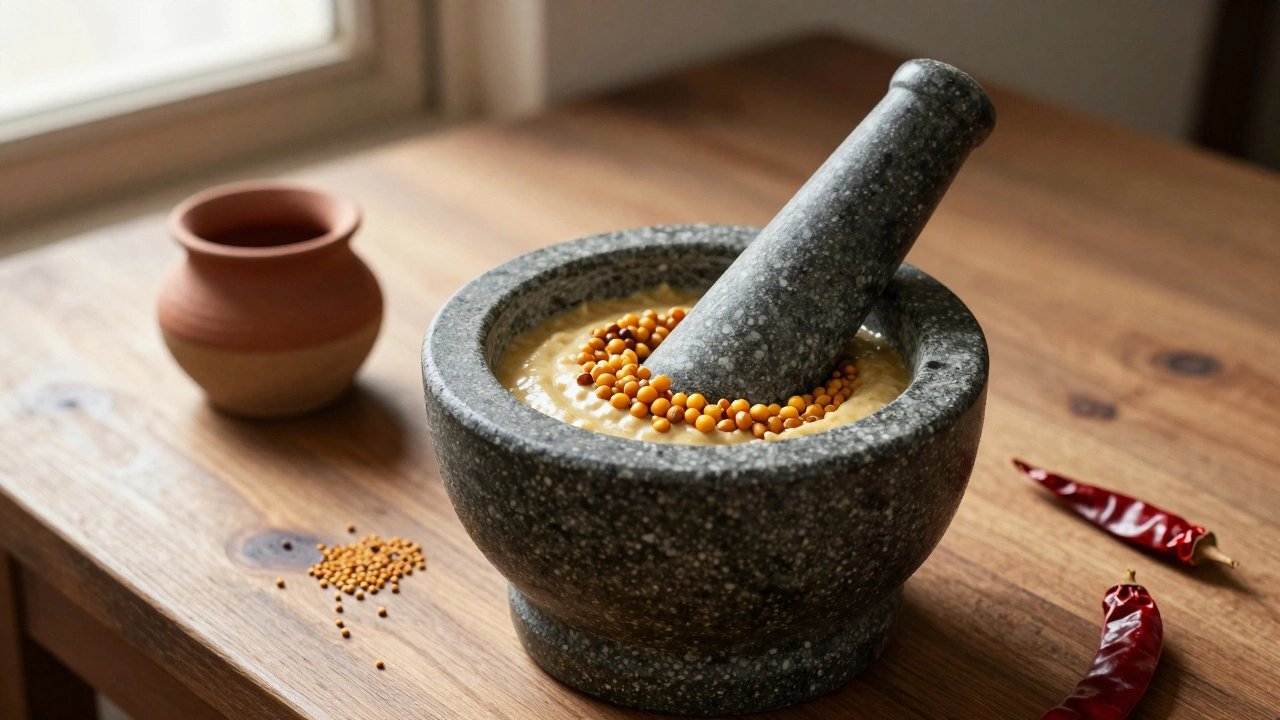
There’s no blender in traditional chutney making. It’s done with a stone mortar and pestle. Why? Because grinding by hand releases oils slowly, creating a paste that clings to food instead of separating. Blenders heat the ingredients, dulling the flavor. A stone grinder keeps everything cool and intact.
The process starts with dry roasting spices. Then, the base-coconut, tomato, or mint-is added in small batches. You grind slowly, adding a splash of water only if needed. Too much water makes it runny. The goal is a thick, spoonable paste, not a sauce.
Some chutneys are cooked. Tamarind chutney, for example, is simmered for 15-20 minutes until it thickens and darkens. Others are raw. Mint chutney is blended fresh and served immediately. It loses its bright green color and sharpness if left too long.
Storage matters. Traditional chutneys are kept in small clay pots or glass jars. They’re refrigerated and used within 3-5 days. No preservatives. No additives. The acidity and salt act as natural preservatives. If it smells sour or looks moldy, it’s gone bad.
Common Mistakes in Making Chutney
People think chutney is simple. It’s not. Here’s what goes wrong:
- Using pre-ground spices. They lose their oils in months. Freshly toasted spices make all the difference.
- Adding too much water. Chutney should be thick. If it’s runny, it won’t stick to food.
- Skipping the roast. Raw spices taste flat. Toasting is non-negotiable.
- Using store-bought tamarind paste. It’s often thickened with cornstarch or sugar. Real tamarind pulp has a natural tang.
- Blending instead of grinding. Heat from the blades kills the aroma.
One of the biggest errors? Making chutney ahead and storing it for weeks. Even in the fridge, fresh chutney loses its brightness after three days. It’s meant to be made fresh, daily, with care.
What Makes Chutney ‘Traditional’?
It’s not about following a recipe from a book. It’s about using what’s local, what’s in season, and what your family has always used. A traditional chutney doesn’t come with measurements. It’s made by feel. A pinch of this, a handful of that. You taste as you go.
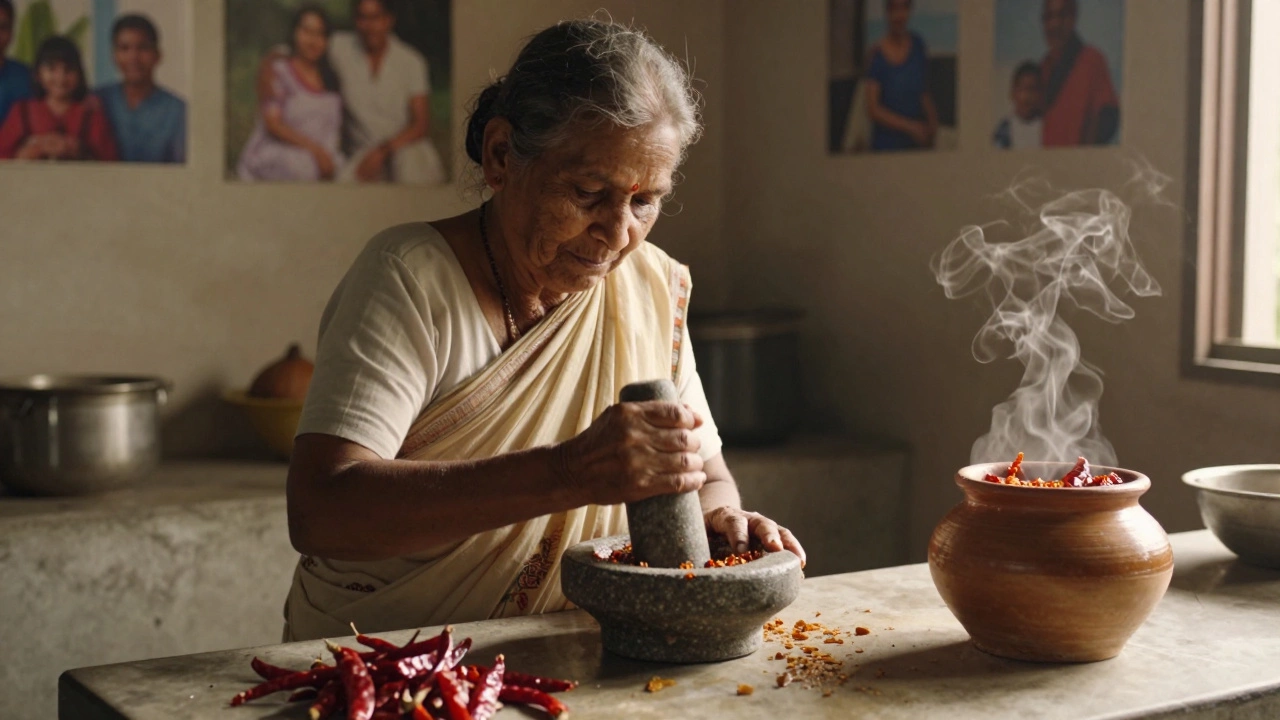
Traditional chutneys don’t have labels. They’re not sold in supermarkets. They’re made in kitchens, passed down from mother to daughter, from aunt to niece. They’re served with meals, not as garnish. They’re part of the rhythm of cooking-not an afterthought.
When you taste a real traditional chutney, you taste time. The slow roast of the spices. The sun-dried tamarind. The coconut scraped fresh from the shell. It’s not just flavor. It’s memory.
How to Start Making Traditional Chutney
If you want to make chutney the traditional way, start simple. Pick one base: coconut, mint, or tamarind. Here’s how:
- Toast 1 tsp mustard seeds and 1 tsp cumin seeds in a dry pan until they pop.
- Let them cool, then grind them with 1 cup fresh coconut (or 1 cup washed mint leaves, or 2 tbsp tamarind pulp).
- Add 2-3 dried red chilies (seeds removed for less heat).
- Grind slowly, adding water a teaspoon at a time until it forms a thick paste.
- Taste. Add salt. Add a pinch of jaggery if it’s too sharp.
- Use it the same day.
Don’t aim for perfection. Aim for authenticity. Your first chutney might be too spicy, too sour, too thick. That’s okay. The next one will be better. That’s how it’s always been done.