20 Feb 2026
- 0 Comments
Dosa Batter Baking Powder Calculator
Calculate the exact amount of baking powder needed for fluffy dosas based on your batter quantity. Always add at 10-15 minutes before cooking for best results.
Recommended Baking Powder
Ever made dosa batter, let it sit overnight, and still ended up with thin, flat, rubbery dosas instead of light, crispy ones? You’re not alone. Many home cooks add baking powder to dosa batter thinking it’s a shortcut to fluffiness-but adding it at the wrong time ruins everything. The truth? Baking powder can help, but only if you know exactly when to use it-and when to leave it out.
Why Dosa Batter Needs Help
Traditional dosa batter is made from soaked rice and urad dal, ground into a smooth paste, and left to ferment overnight. Fermentation is what gives dosa its airy texture and slight tang. But not all kitchens are warm enough. In places like Sydney, where winter nights dip below 15°C, fermentation slows down-or stops. That’s where people turn to baking powder. But here’s the catch: baking powder doesn’t replace fermentation. It only boosts it. If you add it too early, the gas it releases escapes before the batter has a chance to trap it. The result? Flat dosas that taste like plain rice pancakes.When NOT to Add Baking Powder
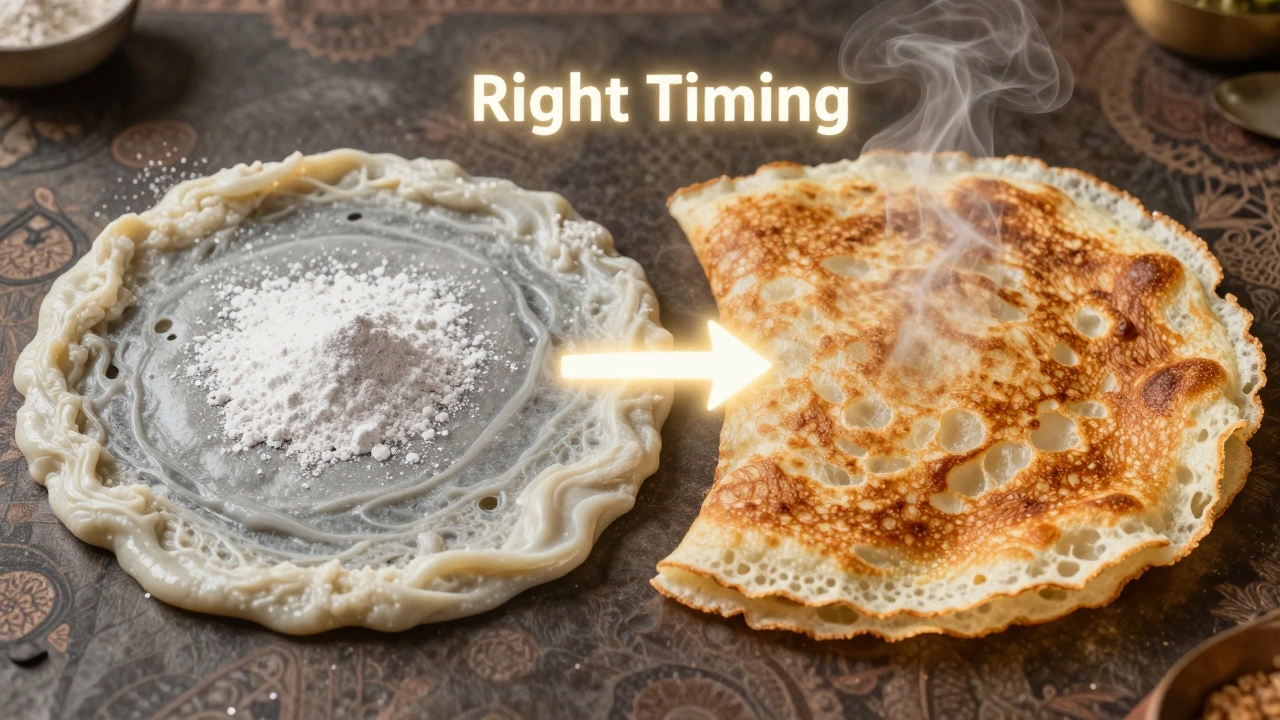
Don’t add baking powder when you’re mixing the batter. Not during grinding. Not right after combining the rice and dal paste. That’s a common mistake. Baking powder activates the moment it touches liquid. The carbon dioxide bubbles start forming immediately. In a thick, cool batter, those bubbles rise and pop before fermentation even kicks in. By the time you’re ready to cook, there’s nothing left to give your dosa lift. Same goes for adding it before fermentation. If you stir baking powder into the batter and leave it for 8-12 hours, you’re basically wasting it. The leavening action is over before the batter develops its natural sourdough-like rise.When to Add Baking Powder-The Right Way
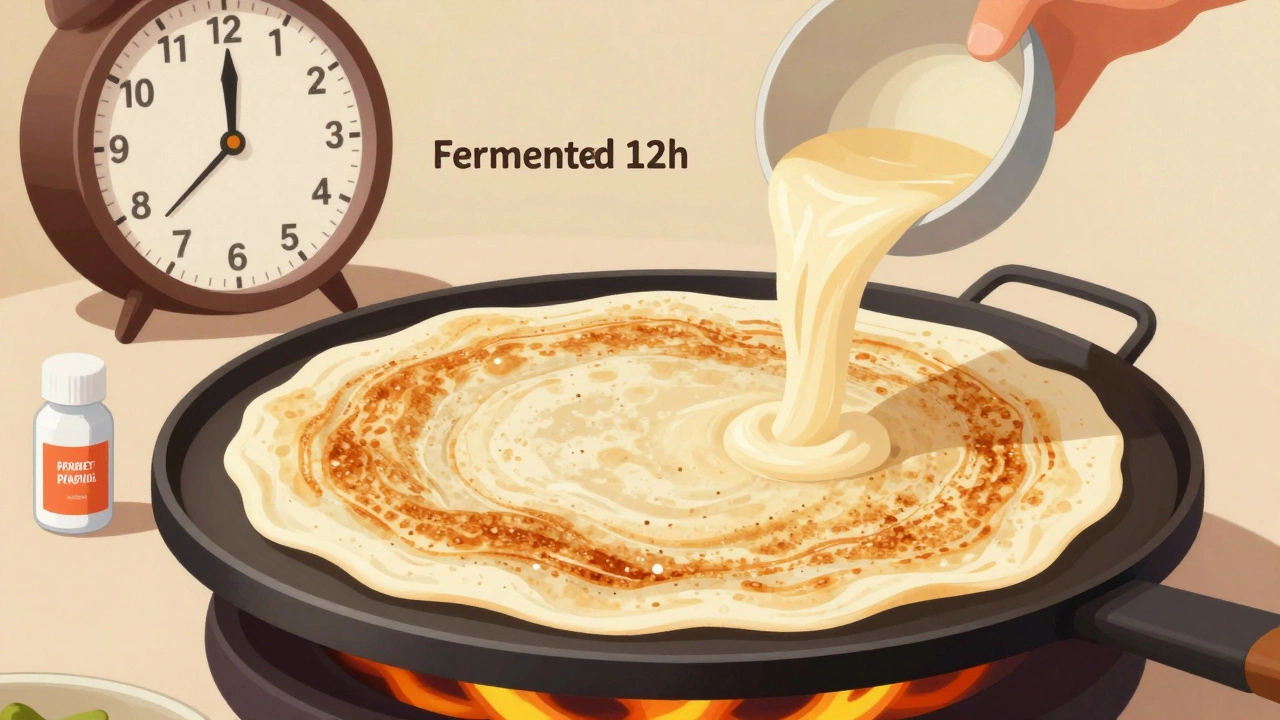
The only time baking powder works in dosa batter is right before you start cooking. Add it to the batter just 10-15 minutes before pouring the first dosa. This gives the baking powder enough time to react and create bubbles, but not so long that they disappear. Here’s how to do it:- Let your batter ferment fully overnight (8-12 hours) without any additives.
- In the morning, check if it’s ready: it should be bubbly, slightly sour-smelling, and doubled in volume.
- Stir the batter gently to deflate large bubbles.
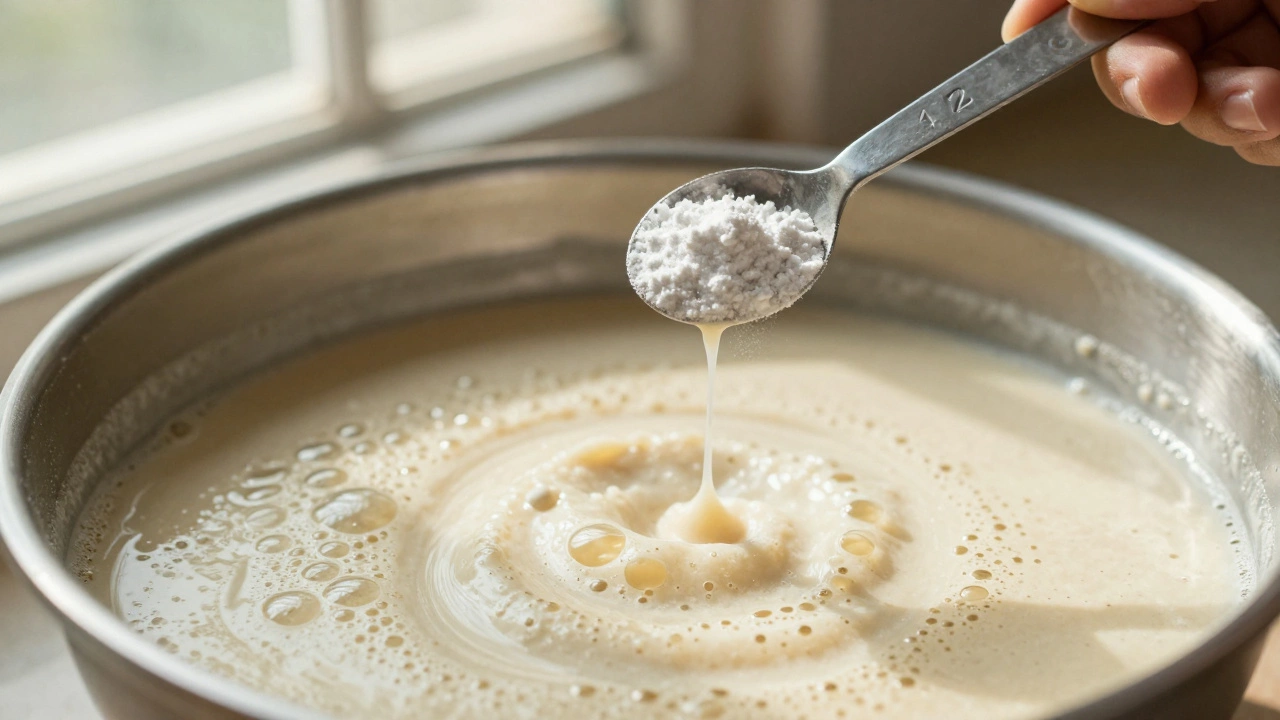
- Now, add 1/2 teaspoon of baking powder per 2 cups of batter. Mix lightly with a spatula-don’t whisk.
- Let it sit for 10-15 minutes while you heat the griddle.
- Pour and cook as usual.
Why This Works Better Than Fermentation Alone
In warm climates, fermentation naturally produces enough carbon dioxide to make dosas fluffy. But in cooler environments, the yeast and lactic acid bacteria work slower. Fermentation alone might only give you a 30% rise. Add baking powder at the right moment, and you get a 70-80% rise. The result? Dosa that’s airy, crisp, and still retains its authentic taste. A 2023 study by the Indian Institute of Food Processing Technology tested 12 variations of dosa batter. The group that added baking powder 15 minutes before cooking had the highest volume increase (74%) and the best texture score. Groups that added it earlier had no improvement over plain fermented batter.What Happens If You Use Too Much?
Adding more than 1/2 teaspoon per 2 cups of batter doesn’t make dosas fluffier-it makes them taste metallic or soapy. Baking powder contains sodium bicarbonate and acid salts. If there’s too much, the acid doesn’t fully react, leaving a bitter aftertaste. It can also make the batter too runny, leading to thin, brittle dosas that break easily. Some people try to fix bad fermentation by adding a full tablespoon. That’s a recipe for disappointment. You’ll get a chemical flavor, not a fluffy dosa.Alternatives to Baking Powder
If you don’t want to use baking powder, there are other ways to help fermentation:- Use warm water (not hot) when grinding the batter. Water around 30°C helps activate the microbes.
- Place the batter near a warm appliance-like a running oven or a phone charger. Even a 2°C rise makes a difference.
- Add 1/4 teaspoon of fenugreek seeds to the urad dal before soaking. They naturally boost fermentation.
- Use a fermentation box or a proofing drawer if you have one. These keep the batter at 28-30°C.
Common Mistakes and How to Fix Them
- Mistake: Adding baking powder before fermentation. Fix: Wait until just before cooking.
- Mistake: Whisking the batter after adding baking powder. Fix: Gently fold with a spatula to preserve bubbles.
- Mistake: Using old baking powder. Fix: Test it by mixing 1/2 tsp with hot water. If it fizzes hard, it’s good. If it barely bubbles, replace it.
- Mistake: Using baking soda instead of baking powder. Fix: Baking soda needs acid to activate. Dosa batter doesn’t have enough. Stick to baking powder.
Pro Tip: The Fermentation Check
Before you even think about adding baking powder, make sure your batter is truly ready. The sign isn’t just volume-it’s smell and texture. A ready batter smells like sourdough bread, has visible bubbles all through it, and leaves a trail when you drag a spoon through it. If it smells flat or sweet, it’s not ready. Let it sit longer. No shortcut replaces proper fermentation.Final Rule
Baking powder isn’t magic. It’s a helper. Use it only when fermentation falls short-and only at the very end. The best dosas come from patience, not chemistry. Let your batter ferment fully. Then, just before cooking, give it a tiny nudge with baking powder. That’s how you get restaurant-style dosas at home.Can I use baking soda instead of baking powder in dosa batter?
No, baking soda won’t work well in dosa batter. Baking soda needs an acid-like lemon juice or yogurt-to activate, and traditional dosa batter doesn’t contain enough acid. Baking powder already has acid built in, so it reacts on its own when mixed with liquid. Using baking soda alone will leave a soapy taste and won’t give you the lift you want.
How long should I ferment dosa batter?
In warm climates (above 25°C), 8-10 hours is enough. In cooler places like Sydney, aim for 12-16 hours. The batter should double in size, smell slightly sour, and have bubbles throughout. If it doesn’t rise after 16 hours, check your water temperature or try adding fenugreek seeds to help.
Should I stir the batter before adding baking powder?
Yes, gently stir it first. Fermentation creates large gas pockets. Stirring deflates those big bubbles so the batter becomes smooth and even. Then, when you add baking powder, the smaller bubbles it creates will stay trapped and give you consistent lift. Don’t whisk-just fold with a spatula.
Can I refrigerate dosa batter and use it later?
Yes, you can store fermented batter in the fridge for up to 5 days. But don’t add baking powder before refrigerating. When you take it out, let it come to room temperature, stir it, then add baking powder 10-15 minutes before cooking. Cold batter won’t react well with baking powder unless it’s warmed up.
Why do my dosas stick to the pan even with proper batter?
Sticking usually means the pan isn’t hot enough or you’re not using enough oil. Heat the griddle until a drop of water dances on it. Then, lightly brush with oil before each dosa. Even good batter won’t release if the surface isn’t properly seasoned and heated. A cast iron or non-stick tawa works best.