4 Aug 2026
- 0 Comments
Dosa Preparation Planner
Step 1: Environment & Ingredients
Enter your kitchen temperature and ingredient amounts on the left to generate your personalized preparation guide.
There is nothing worse than pouring your hard-earned batter onto a hot pan and watching it stick, tear, or turn out dense and rubbery. If you have ever struggled with flat, lifeless dosas, the culprit is almost certainly how long you soaked your urad dal. It sounds like a small detail, but in South Indian cooking, timing is everything. Getting this right changes everything about your breakfast.
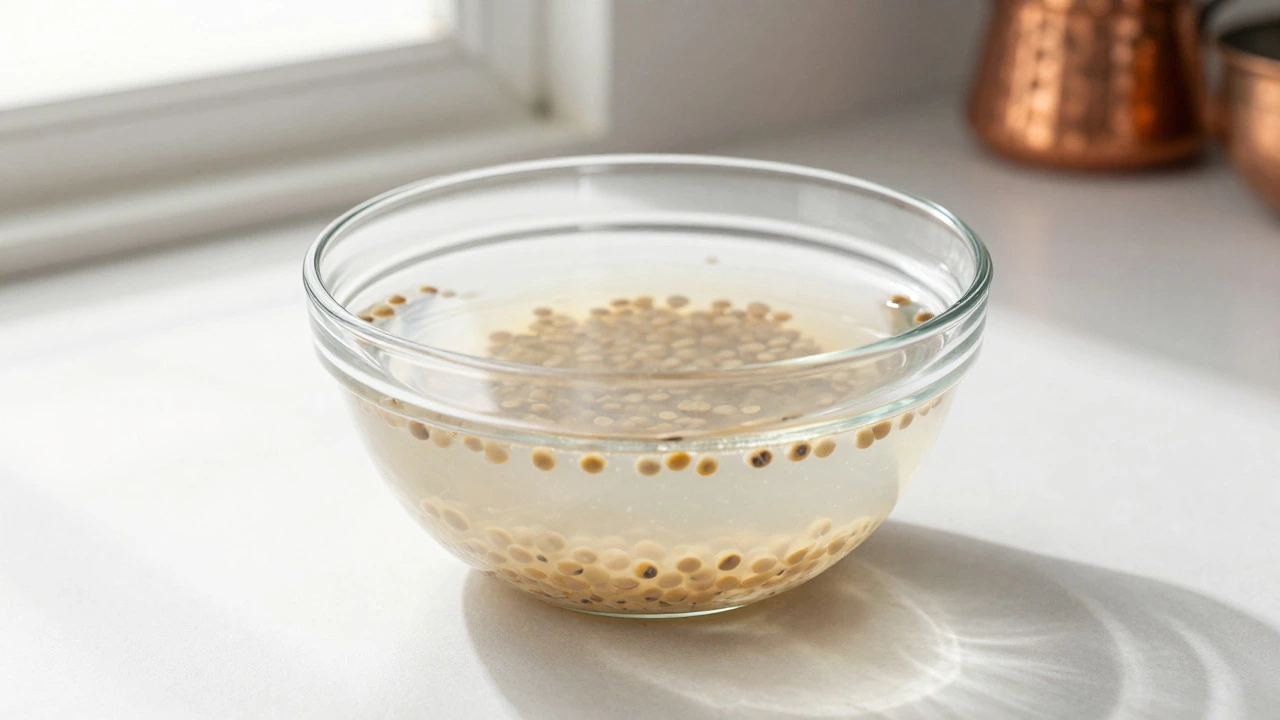
You might be looking for a quick number, and here it is: soak split black gram (urad dal) for at least 3 to 4 hours in room temperature water. If the weather is cold, extend that to overnight. If it is scorching hot, reduce it to 2 hours. But simply knowing the time isn't enough. You need to understand why we soak it, how to tell when it is ready, and how this step connects to the magic of fermentation.
Why Soaking Matters More Than You Think
Soaking is not just about softening the grain so your blender doesn't burn out. It is the first step in a chemical transformation that creates the structure of your dosa. When you submerge urad dal in water, enzymes begin breaking down complex starches into simpler sugars. This process, called predigestion, makes the nutrients more bioavailable and easier for your gut to handle.
More importantly for texture, soaking hydrates the proteins in the lentil. These proteins are essential for forming gluten-like networks during grinding and fermentation. Without proper hydration, the batter remains gritty and fails to trap air bubbles. Those air bubbles are what give your dosa its signature spongy interior and lacy, crisp exterior. If you skip or rush this step, you are fighting against physics every time you cook.
The Golden Rule: Time vs. Temperature
The clock on your wall lies to you if you ignore the thermometer. Water temperature dictates how fast the urad dal absorbs moisture. Here is a practical breakdown based on real kitchen conditions:
- Summer (Above 25°C / 77°F): Soak for 2 to 3 hours. In hotter climates like Sydney summers or tropical India, the dal will soften quickly. Leaving it too long can cause early, sour fermentation before you even grind it, leading to an unpleasant taste.
- Moderate Weather (18°C - 25°C / 64°F - 77°F): Stick to the standard 3 to 4 hours. This allows for thorough hydration without risking spoilage.
- Cold Weather (Below 18°C / 64°F): Soak overnight (8-10 hours). Cold water slows down absorption significantly. If you only soak for 3 hours in winter, your batter will likely be coarse and fail to rise properly.
Always use clean, filtered water. Tap water with high chlorine content can sometimes inhibit the natural yeast activity needed for later fermentation stages.
How to Tell When Urad Dal Is Ready
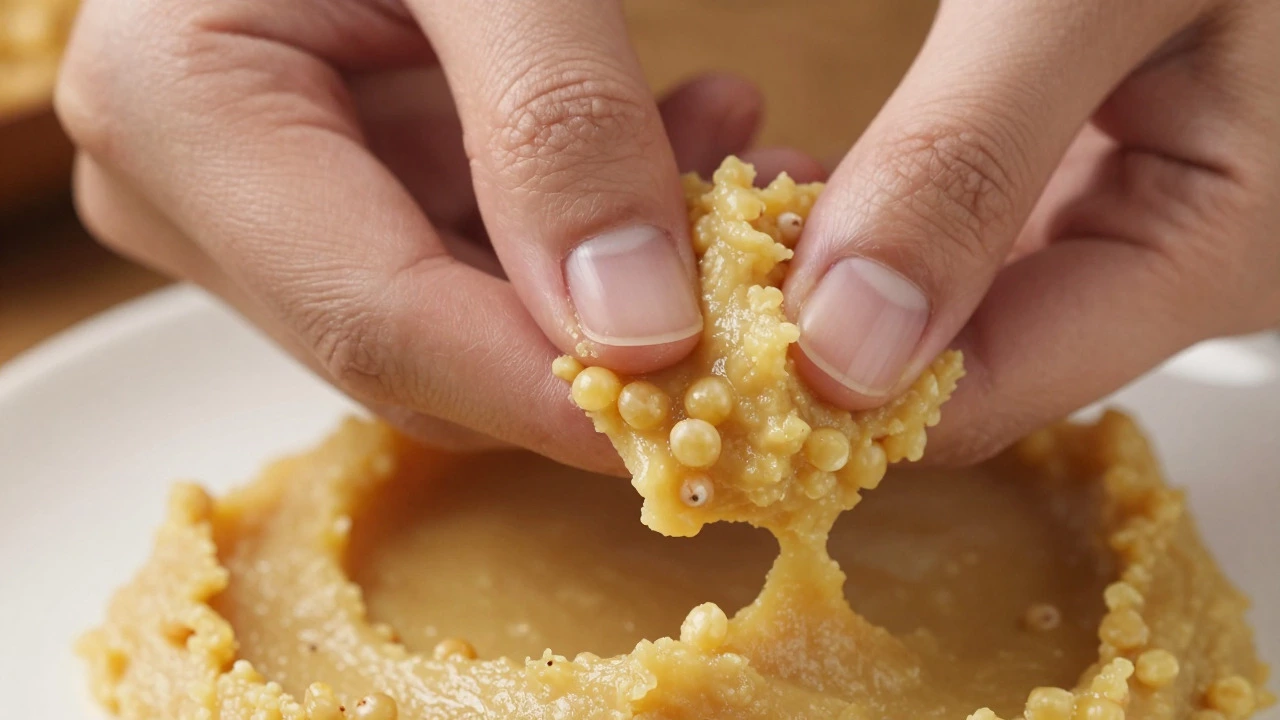
Forget the timer once the three-hour mark passes. Your senses are better tools. Pick up a handful of dal from the soaking water. Squeeze one grain between your thumb and forefinger. It should mash easily, leaving no hard center. If you feel a gritty core, it needs more time. If it turns to mush instantly, it has been soaking long enough.
Another visual cue is the water itself. As the dal releases starch, the water will become cloudy and slightly milky. This is normal. However, if the water smells sour or fizzy, you have waited too long, especially in warm weather. Drain immediately and rinse thoroughly before grinding.
The Ratio: Urad Dal to Rice
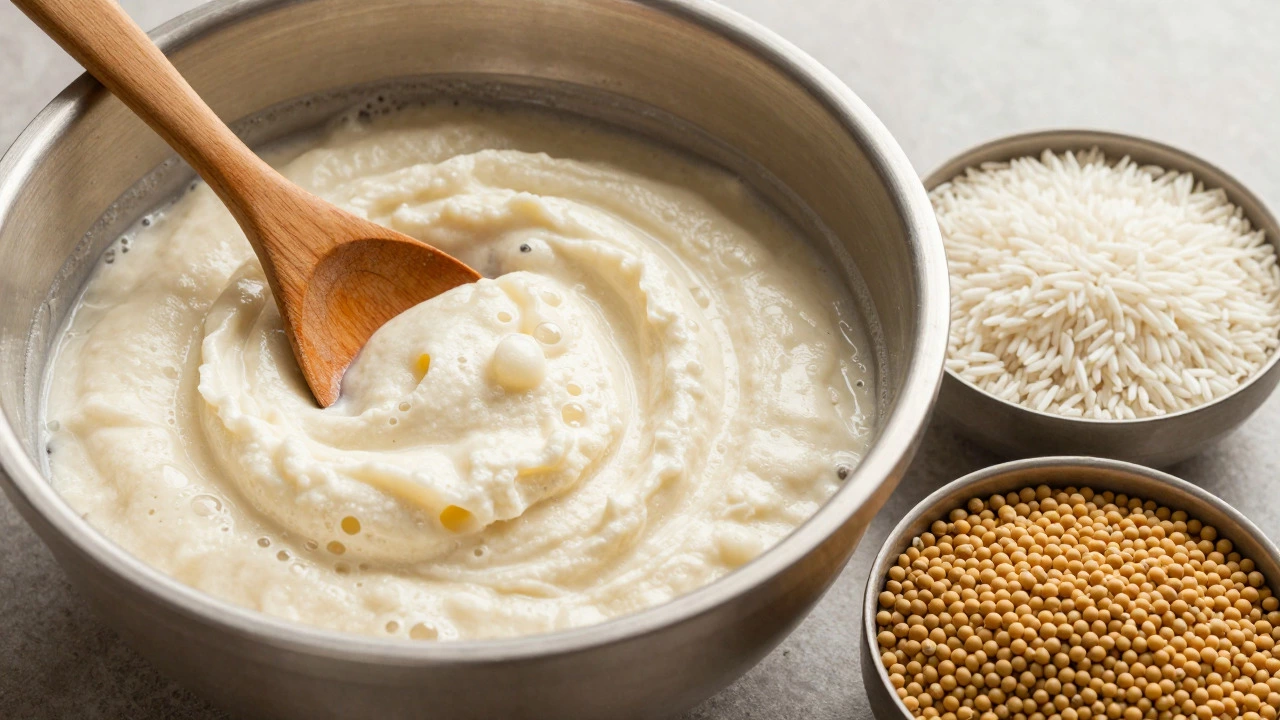
While you are focusing on the dal, remember that it does not work alone. A classic dosa batter relies on a specific balance between protein-rich urad dal and starch-rich rice. The most reliable ratio for beginners is 1 part urad dal to 3 parts rice by volume. For example, if you use 1 cup of dal, use 3 cups of raw rice.
Some recipes call for adding poha (flattened rice) or roasted chana dal to improve crispiness. If you add these extras, keep the urad dal quantity consistent. The dal provides the lift; the rice and additives provide the crunch. Changing the dal amount disrupts the entire ecosystem of the batter.
Grinding Techniques That Make or Break Batter
Once your dal is perfectly soaked, the next critical step is grinding. Do not drain all the water from the dal. Reserve some of the soaking liquid. You will need this to achieve the right consistency while grinding. Add the dal to your mixer grinder along with a pinch of cumin seeds (optional, but adds flavor and aids digestion).
Grind the dal separately from the rice. This is non-negotiable for best results. The dal requires less water and finer grinding than rice. Pulse the machine, adding small amounts of reserved soaking water gradually. Aim for a thick, fluffy paste that holds its shape but spreads easily. It should look like whipped cream, not runny soup.
If you grind the dal and rice together, the rice grains often remain coarse because they require more water to break down. Coarse rice particles weigh down the airy dal batter, resulting in heavy dosas. Keep them separate until the final mixing stage.
Fermentation: The Second Rise
After grinding both the dal and rice pastes, mix them together in a large bowl. Add salt now-about 1 teaspoon per cup of total dry ingredients. Salt draws out moisture and helps regulate fermentation speed. Cover the bowl loosely and let it sit in a warm place.
How long should you ferment? In summer, 4 to 6 hours is usually sufficient. In cooler months, you may need 8 to 12 hours. The batter is ready when it has increased in volume by at least 50%, looks bubbly, and has a slight tangy aroma. Over-fermented batter becomes too sour and thin, making it difficult to spread. Under-fermented batter stays dense and pale.
| Problem | Likely Cause | Solution |
|---|---|---|
| Dosa sticks to pan | Insufficient soaking or under-fermented batter | Ensure dal is fully mashed; check fermentation bubbles |
| Batter is too thick | Not enough water added during grinding | Add small amounts of water to reach pancake-batter consistency |
| No holes/crisp edges | Rice not ground finely enough or wrong dal-to-rice ratio | Grind rice longer; maintain 1:3 dal-to-rice ratio |
| Sour taste | Over-soaking in heat or over-fermenting | Reduce soaking time in summer; refrigerate after fermentation |
Pro Tips for Perfect Results Every Time
Use stone-ground rice flour if you want to save time on grinding, but still soak the urad dal fresh. Pre-ground rice flour lacks the freshness needed for optimal fermentation. Also, consider using idli rice or ponni rice specifically designed for fermented batters. Basmati or jasmine rice works in a pinch but yields softer, less crispy dosas due to higher amylopectin content.
When spreading the dosa, tilt the pan continuously in a circular motion. This ensures an even thickness. Too thick, and the center stays raw. Too thin, and it burns before cooking through. Heat management is key: medium-high heat for crisping, then lower to cook the top layer.
Storage and Leftovers
If you made too much batter, store it in the refrigerator. Cold temperatures slow fermentation. Use within 24 hours for best results. Before using chilled batter, bring it to room temperature and stir well. You may need to adjust consistency with a little water since cold batter thickens.
Avoid freezing dosa batter unless absolutely necessary. Freezing damages the delicate protein structures formed during fermentation, leading to a crumbly texture upon thawing. If you must freeze, do so before fermentation, though fresh preparation is always superior.
Can I soak urad dal overnight?
Yes, especially in colder weather. Overnight soaking (8-10 hours) ensures complete hydration. Just ensure the water is cool and change it if it starts smelling off. In hot weather, limit soaking to 3-4 hours to prevent premature souring.
What happens if I don't soak urad dal enough?
Under-soaked dal leads to a gritty, coarse batter that struggles to ferment properly. The resulting dosas will be dense, heavy, and lack the characteristic airy texture. They may also stick to the pan frequently.
Should I rinse urad dal after soaking?
Yes, drain the soaking water and rinse the dal thoroughly before grinding. This removes excess starch and any impurities. However, reserve some of the soaking water to use during grinding for better consistency control.
Can I use whole urad dal instead of split?
Whole urad dal takes longer to soak (overnight minimum) and grind. Split dal (skinned or unskinned) is preferred for dosas as it ferments faster and produces lighter batter. Whole dal is typically used for specific regional varieties like set dosa, but requires expert handling.
How do I know if my batter has fermented correctly?
Look for visible bubbles throughout the batter, a significant increase in volume (at least 50%), and a mild tangy smell. The batter should appear light and airy, not dense or separated. If it smells overly sour or alcoholic, it has over-fermented.
Does soaking time affect nutrition?
Yes, proper soaking reduces phytic acid, which inhibits mineral absorption. It also breaks down complex carbohydrates, making the dal easier to digest. Fermentation further enhances nutrient bioavailability, particularly B vitamins.