18 Sep 2026
- 0 Comments
Indian Breakfast Balance Checker
Select your typical morning meal to see how it stacks up against the "Balanced Plate" ideal (Protein + Fiber + Healthy Fats). Discover why some traditional foods are superior to modern conveniences.
Nutritional Analysis
Why this rating?
- Select a breakfast option to view detailed analysis.
You skip breakfast because you’re running late for the metro or the office. Maybe you grab a sugary chai and a biscuit on the way. Or perhaps you just drink water and wait for lunch. Sound familiar? You aren’t alone. A surprising number of urban Indians skip their first meal of the day. But here is the thing: your body has been fasting all night. It needs fuel to wake up, think clearly, and keep your metabolism humming. Skipping this step doesn’t just make you grumpy; it messes with your blood sugar, lowers your focus, and can actually lead to weight gain later in the day.
In India, breakfast isn’t just about eating; it’s about culture, geography, and health. From the steaming idlis of Chennai to the parathas of Punjab, every region has its own way of starting the day. But are these traditional meals still working for our modern, sedentary lifestyles? Let’s break down why that morning plate matters more than you think, and how to make it work for your busy schedule.
The Science Behind Your Morning Metabolism
Think of your body like a car. After eight hours of sleep, the tank is empty. You don’t expect a car to run efficiently without gas, right? The same logic applies to you. When you wake up, your cortisol levels spike to help you get moving. If you don’t eat, your body stays in a state of stress. This triggers your adrenal glands to release more cortisol, which can lead to anxiety and jitteriness.
Eating within an hour of waking helps regulate this process. It signals to your body that food is available, lowering stress hormones and stabilizing your energy. Studies show that people who eat a balanced breakfast have better cognitive function. They remember things better and solve problems faster. For students preparing for exams or professionals handling complex tasks, this mental edge is huge. Without it, you might find yourself staring at your screen, unable to concentrate, reaching for coffee after coffee just to stay awake.
Moreover, skipping breakfast often leads to overeating later. When you starve yourself until 1 PM, your hunger hormones (ghrelin) go into overdrive. By lunchtime, you’re likely to choose high-calorie, low-nutrient foods because your brain is screaming for quick energy. That samosa and cola combo hits harder when you haven’t eaten since dinner the previous night.
Traditional Indian Breakfasts: A Nutritional Powerhouse
India’s culinary heritage offers some of the most balanced breakfast options in the world. The problem isn’t the food itself; it’s how we’ve modified it. Traditional recipes were designed for active lifestyles-farmers, laborers, and people walking miles daily. Today, many of us sit at desks for ten hours. We need to adapt, not abandon.
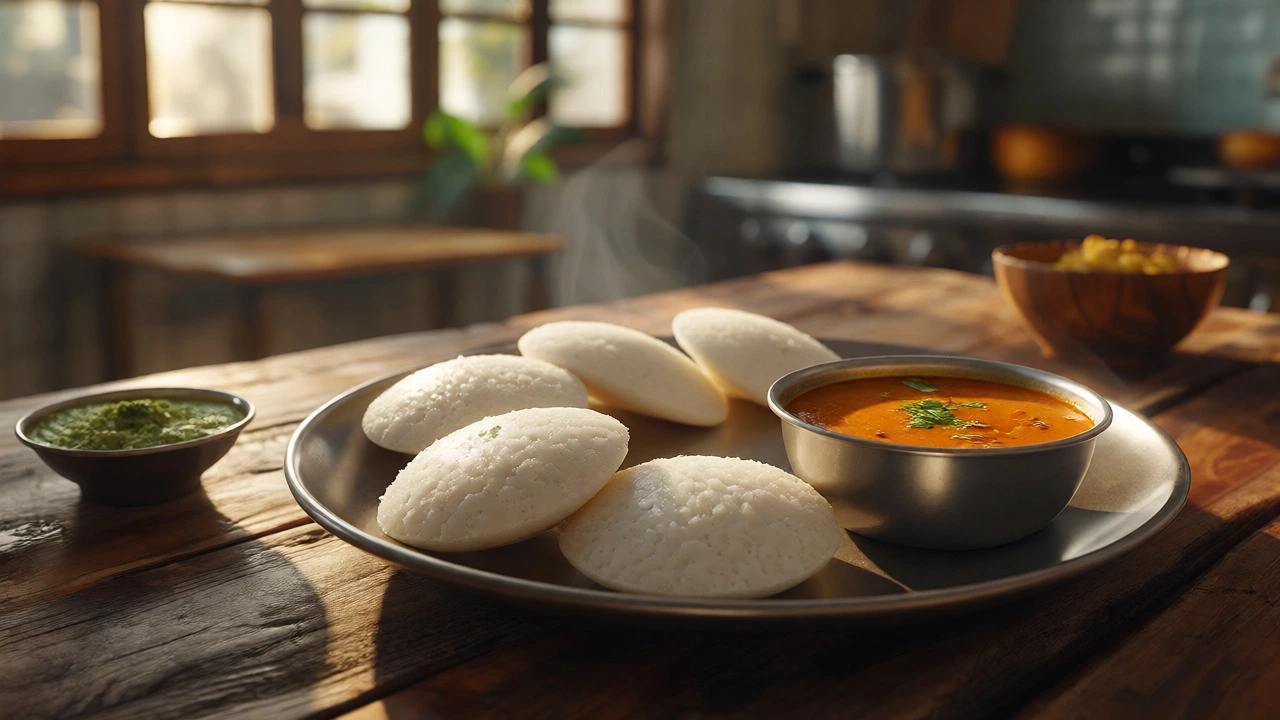
Take South India, for example. Idli is a steamed rice cake made from fermented batter. Fermentation breaks down anti-nutrients and increases vitamin B content. It’s light, easy to digest, and provides steady carbohydrates. Pair it with Sambar, a lentil-based vegetable stew rich in protein and fiber, and you have a complete meal. The fermentation process also aids gut health, which is increasingly linked to immunity and mood regulation.
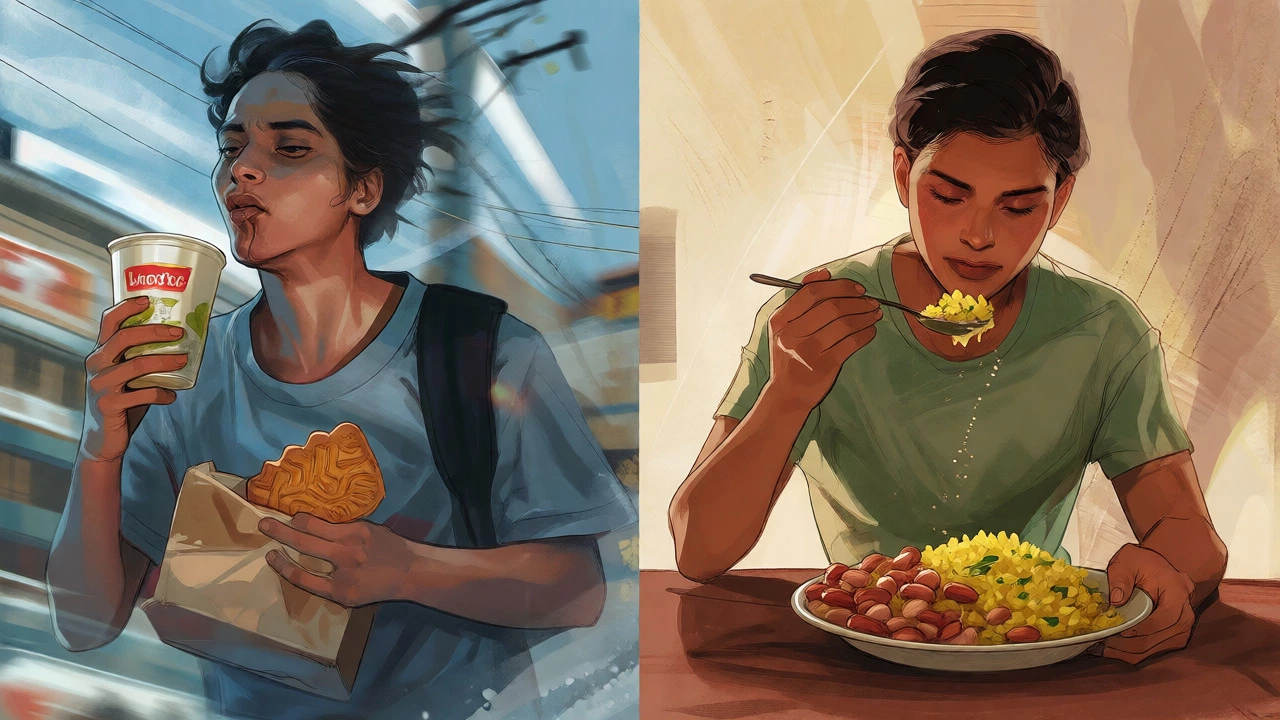
In North India, Poha is a flattened rice dish cooked with onions, peanuts, and spices. It’s gluten-free and cooks in minutes. Peanuts add healthy fats and protein, while vegetables provide micronutrients. It’s a great option if you want something warm but not heavy.
West Bengal brings us Luchi and Aloo Dum, though Luchi is fried and calorie-dense. In Gujarat, Dhokla is a steamed savory cake made from fermented gram flour (besan). It’s high in protein and low in oil compared to fried snacks. These regional variations prove that healthy breakfast doesn’t mean bland oatmeal. It means leveraging local ingredients wisely.
The Modern Trap: What We Are Actually Eating
Let’s be honest. Most urban Indians aren’t making fresh idlis at 6 AM. We rely on convenience. And convenience often means sugar. The classic "chai-biscuit" combo is a nutritional disaster. One cup of sweetened chai with two Marie biscuits can contain nearly 15 grams of added sugar and refined flour. It spikes your blood glucose rapidly, giving you a burst of energy followed by a crash an hour later. You end up hungry again by 10 AM.
Then there’s the packaged cereal trap. Many "healthy" cereals sold in supermarkets are loaded with preservatives and hidden sugars. Check the label. If sugar is in the top three ingredients, put it back. Similarly, white bread toast with jam is essentially candy on bread. It lacks protein and fiber, leaving you unsatisfied.
Even restaurant breakfasts can be misleading. A full English breakfast served in Indian cafes often comes with processed sausages and bacon, which are high in sodium and nitrates. The hash browns are deep-fried potatoes. While tasty, they offer little sustained energy. If you’re trying to manage weight or blood sugar, these choices work against you.
How to Build a Balanced Indian Breakfast Plate
You don’t need to cook elaborate meals every morning. The goal is balance. Every good breakfast should include three components: protein, fiber, and healthy fats. Carbohydrates are fine, but they should come from whole grains, not refined flour.
| Breakfast Item | Main Ingredient | Protein Source | Fiber Content | Best For |
|---|---|---|---|---|
| Idli & Sambar | Rice & Lentils | Lentils (Dal) | Moderate (from veggies in Sambar) | Gut health, light digestion |
| Poha | Flattened Rice | Peanuts | Low-Moderate (add peas/carrots) | Quick energy, gluten-free diets |
| Besan Dhokla | Gram Flour | High (Besan) | Moderate | Weight management, protein boost |
| Paratha & Curd | Wheat Flour | Curd/Yogurt | Moderate (if whole wheat) | Sustained energy, probiotics |
| Chai & Biscuits | Tea & Refined Wheat | Negligible | Very Low | Quick fix (but causes crashes) |
Notice the pattern? The best options combine carbs with protein or fat. Idli alone is carb-heavy. Add sambar, and you get protein. Poha alone is carb-heavy. Add peanuts and curd, and it becomes balanced. Paratha is dense; pair it with yogurt instead of pickle to aid digestion and add calcium.
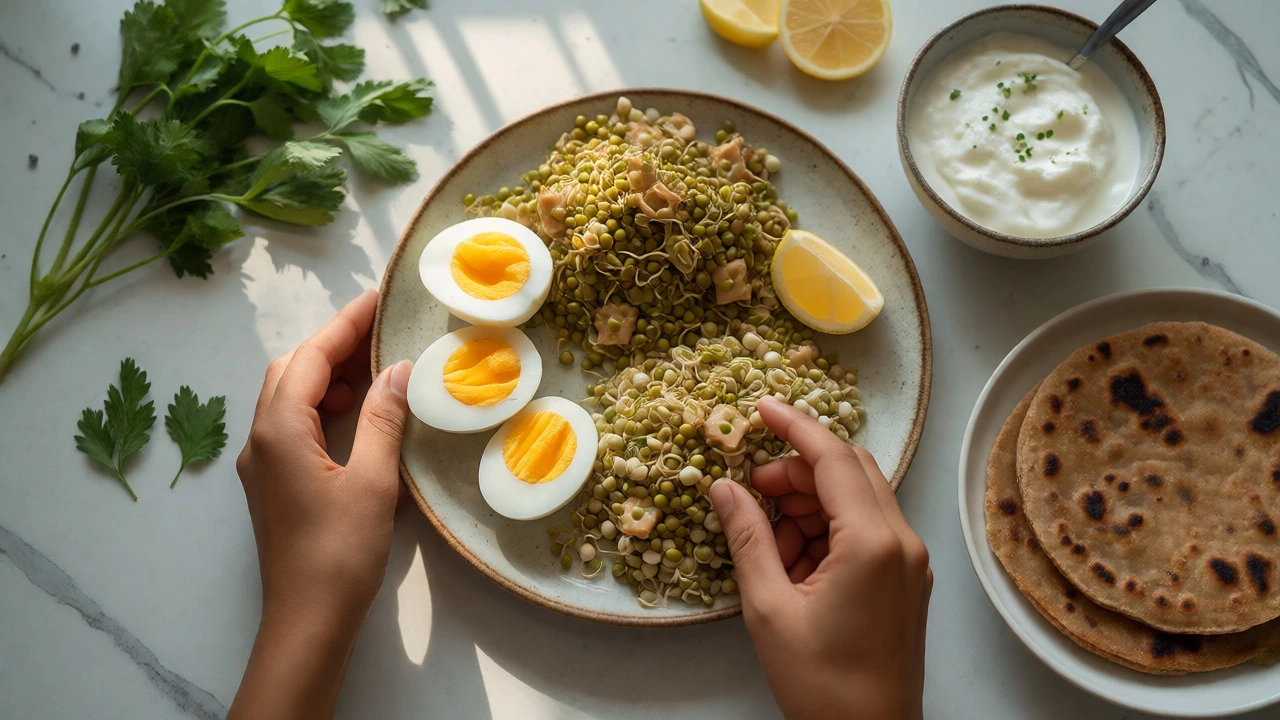
If you’re vegetarian, getting enough protein at breakfast can be tricky. Eggs are the easiest solution if you eat them. Two boiled eggs provide 12 grams of high-quality protein. If you’re vegan, look at sprouts. Moong dal sprouts can be eaten raw in a salad or lightly sautéed. They take five minutes to prep and are packed with vitamins C and K.
Overcoming the Time Barrier
"I don’t have time," is the most common excuse. But cooking breakfast doesn’t have to take an hour. Here are strategies to save time without sacrificing quality:
- Prep Batter in Bulk: Make idli/dosa batter on Sunday. It ferments in the fridge and lasts for days. In the morning, you just steam or pour.
- Use Pressure Cookers: Cooking poha or upma takes less than 10 minutes. Keep pre-chopped onions and veggies in containers.
- Batch Cook Proteins: Boil eggs or make paneer tikka pieces on weekends. Reheat them quickly in the microwave.
- Overnight Soaks: Soak oats or chia seeds overnight in milk or yogurt. By morning, they’re ready to eat with fruit. No cooking required.
Another trick is to simplify your expectations. You don’t need a four-course meal. A bowl of sprouted moong with lemon and pepper is a valid, powerful breakfast. A banana and a handful of almonds is better than nothing. Consistency beats perfection. Start with what you can do today, then upgrade tomorrow.
Regional Adaptations for Urban Life
Living in a metro city doesn’t mean you lose access to traditional wisdom. It just means adapting it. In Mumbai, you might swap heavy vada pav for a lighter misal pav, adding extra sprouts for protein. In Delhi, replace oily kulchas with tandoori roti and a side of raita. In Bangalore, opt for ragi mudde (finger millet balls) instead of white rice for higher fiber and lower glycemic index.
Consider the season too. Summer calls for cooling options like buttermilk (chaas) and coconut chutney. Winter allows for heavier, warming foods like ghee-laden parathas or hot soups. Listening to your body’s cues is part of Ayurvedic tradition. Don’t force-feed yourself heavy food if you’re not hungry. Instead, start with a glass of warm water and a small portion of fruit, then see if you’re truly hungry.
Also, watch out for "health halos." Just because it’s labeled "Indian" or "traditional" doesn’t mean it’s automatically healthy. Deep-fried pakoras are traditional, but they aren’t ideal for daily breakfast. Steamed momos are okay occasionally, but they lack substantial nutrients unless paired with a clear soup or salad. Be mindful of portion sizes. Two large parathas can easily exceed 400 calories before you even add butter or pickle.
The Long-Term Impact on Health
Why bother with all this effort? Because habits formed now dictate your health decades later. Regular breakfast consumption is linked to lower risks of type 2 diabetes. When you skip meals, your insulin sensitivity drops. Over years, this can lead to insulin resistance. Eating a balanced morning meal keeps your blood sugar stable throughout the day.
Heart health is another factor. Diets high in refined sugars and trans fats (common in skipped-breakfast compensations) raise bad cholesterol (LDL). Traditional Indian breakfasts, when prepared with minimal oil and whole grains, support heart health. Fiber from vegetables and legumes helps lower cholesterol naturally.
Mental clarity is underrated. Brain fog is real. It affects productivity and mood. Students who eat breakfast perform better academically. Professionals report fewer mid-morning slumps. It’s not magic; it’s biology. Your brain consumes 20% of your body’s energy. It needs glucose, but steady glucose, not the rollercoaster spikes from sugary snacks.
Finally, consider your relationship with food. Making time for breakfast creates a ritual. It slows you down. It gives you a moment to breathe before the chaos of traffic and emails begins. That mindfulness reduces stress. In a country as fast-paced as India, that pause is invaluable.
Is it okay to skip breakfast if I practice intermittent fasting?
Yes, if done intentionally. Intermittent fasting involves restricting eating windows, not just skipping meals randomly. However, ensure your eating window includes nutrient-dense foods. If you feel dizzy or weak, your body may need morning fuel. Consult a doctor if you have underlying conditions like diabetes.
What is the healthiest traditional Indian breakfast?
There is no single "best" item, but Idli with Sambar and Chutney is highly rated due to fermentation (gut health), steaming (low oil), and balanced macros (carbs + protein + fats). Besan Dhokla is another excellent choice for high protein and low glycemic impact.
Can I eat leftovers from dinner for breakfast?
Absolutely. Leftover dal, roti, or sabzi are nutritious and convenient. Reheating them saves time and reduces food waste. Just avoid reheating dishes with cream or dairy multiple times, as they can spoil or change texture negatively.
How much protein should I aim for in breakfast?
Aim for 15-20 grams of protein. This could be two eggs, a cup of Greek yogurt, a scoop of whey protein, or a generous serving of lentils/sprouts. Protein promotes satiety and prevents mid-morning snacking.
Does drinking tea count as breakfast?
No. Tea is a beverage, not a meal. It contains caffeine and antioxidants but lacks macronutrients (protein, carbs, fats) needed for energy. Drinking tea on an empty stomach can also increase acidity in some individuals. Always pair tea with solid food.