28 Apr 2026
- 0 Comments
Paneer Yield & Ingredient Calculator
Your Requirements:
Key Takeaways
- 1 Liter of milk typically yields about 150g to 200g of paneer.
- Full-fat milk is non-negotiable if you want a soft, creamy texture.
- The acid ratio (lemon or vinegar) varies based on the milk's freshness.
- Cold milk leads to tougher cheese; heat it slowly for the best results.
To understand the yield, we first need to look at what Paneer is a fresh, non-melting acid-set cheese common in South Asian cuisine. Unlike cheddar or mozzarella, it doesn't use rennet. Instead, it relies on the reaction between milk proteins and an acid. Because you're essentially stripping the solids from the liquid, you're left with a fraction of the original volume. To get 500 grams of paneer, you'll likely need about 2.5 to 3 liters of milk. This 5:1 or 6:1 ratio is the golden rule for home cooks.
Choosing the Right Milk for Maximum Yield
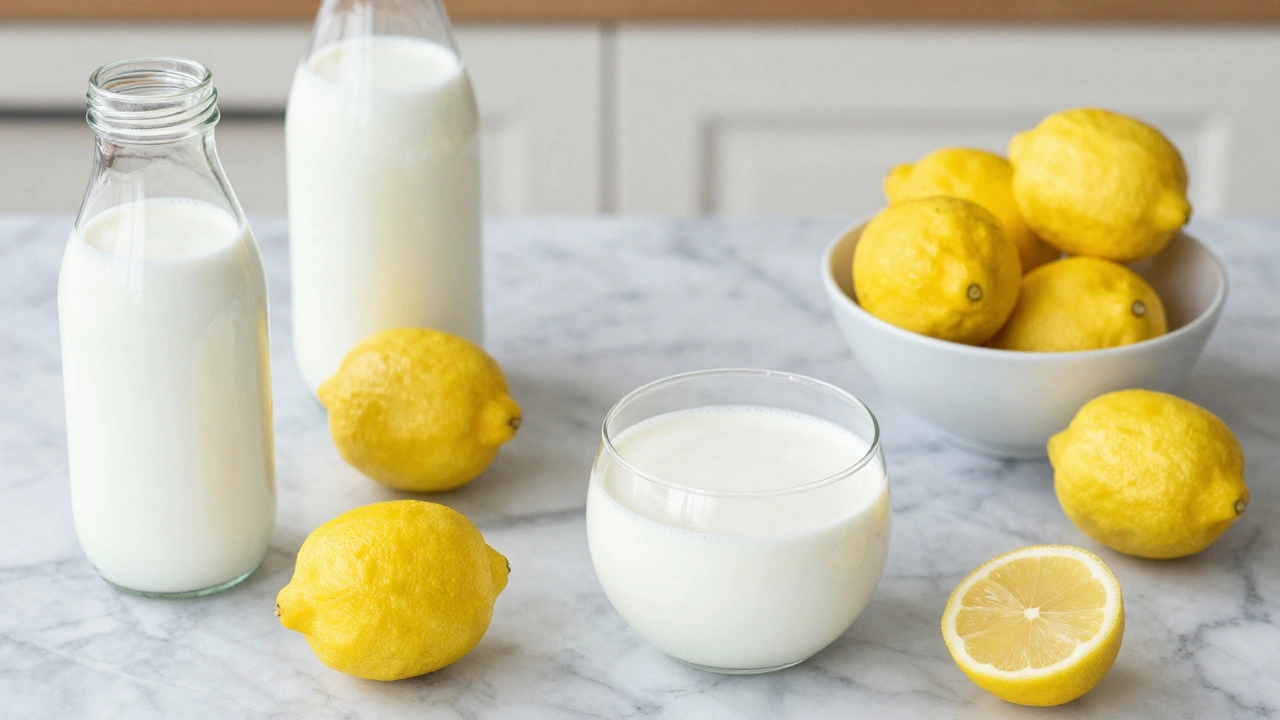
Not all milk is created equal when it comes to cheese making. If you use skim milk, you'll get something that looks like rubbery tofu. To get that melt-in-your-mouth quality, you need Full Cream Milk. This is milk with a fat content usually around 3.5% to 4.5%.
The fat doesn't just add flavor; it protects the protein structures from tightening too much during the curdling process. If you're in a pinch and only have 2% milk, you can stir in a tablespoon of heavy cream to mimic the fat profile of whole milk. This small tweak can prevent the paneer from becoming grainy.
| Milk Type | Estimated Yield | Texture Result |
|---|---|---|
| Full Cream (Whole) | 180g - 220g | Soft, creamy, rich |
| Semi-Skimmed (2%) | 120g - 150g | Firm, slightly dry |
| Skimmed (0%) | 80g - 100g | Rubbery, crumbly |
| Buffalo Milk | 250g - 300g | Very dense and creamy |
The Chemistry of Curdling: Acids and Ratios
Once you have your milk, the next question is: how much acid is enough to break it? You'll typically use Lemon Juice or White Vinegar. The goal is to reach the isoelectric point of the casein protein, where the proteins stop repelling each other and clump together.
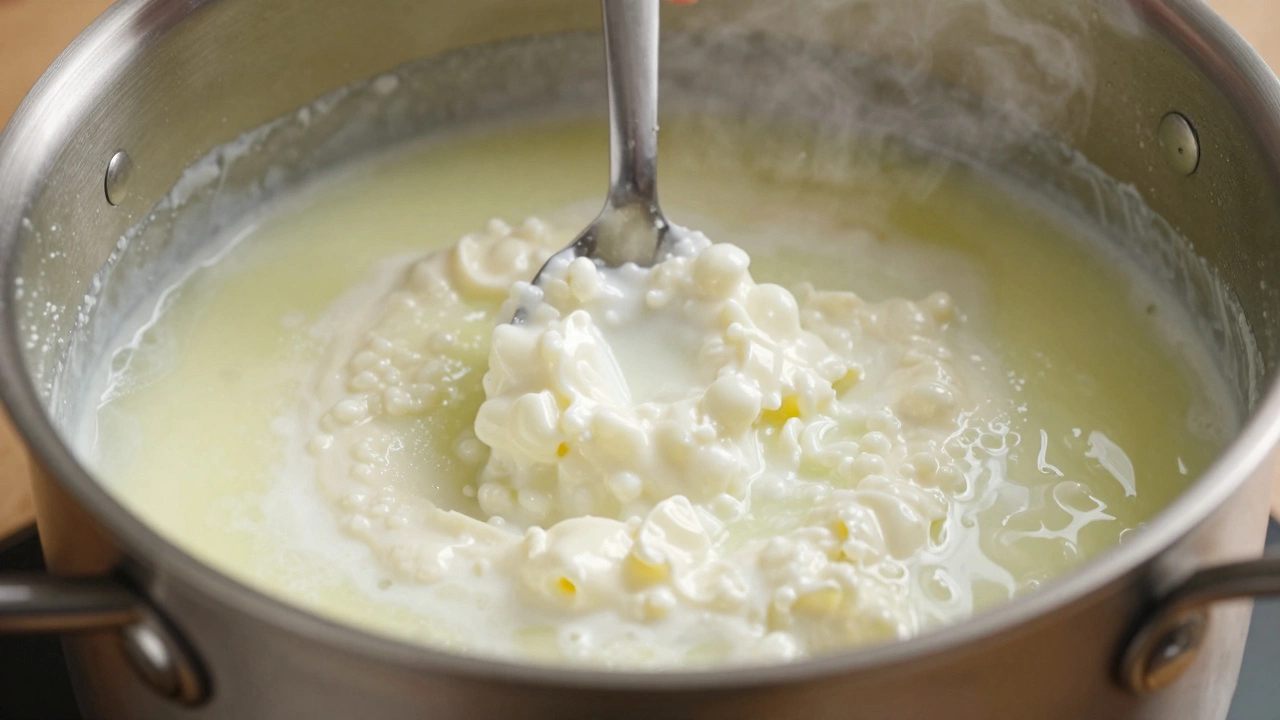
For every liter of milk, start with 2 tablespoons of lemon juice or vinegar. But here is the pro tip: don't dump it all in at once. If you over-acidify the milk, the paneer will taste sour and become tough. Add the acid one tablespoon at a time, stirring gently, until the greenish whey (the liquid) completely separates from the white curds.
If you're using 5 liters of milk to make a large batch, you might think you need 10 tablespoons. However, the chemistry doesn't always scale linearly. You might find that the 4th or 5th liter needs slightly less acid than the first. Always trust your eyes over the measuring spoon-once the whey is clear, stop adding acid.
Step-by-Step: Making Paneer at Home
Since you've now calculated your milk needs, here is the exact process to ensure you don't waste a single drop of those expensive liters.
- Heat the Milk: Pour your measured milk into a heavy-bottomed pot. Heat it on medium until it almost reaches a boil. You'll see small bubbles forming around the edges. Avoid a rolling boil, as this can scorch the milk and give your cheese a burnt taste.
- Introduce the Acid: Turn the heat to low. Slowly stir in your lemon juice or vinegar. Stir in a circular motion, but don't whisk aggressively. You want to encourage the curds to stay in larger clumps rather than breaking them into tiny grains.
- The Separation: Once the whey is a translucent yellowish-green, turn off the heat immediately. Let it sit for 2-3 minutes to finish the reaction.
- Straining: Line a colander with a Muslin Cloth or cheesecloth. Pour the mixture through. The cloth acts as a filter, keeping the solids while letting the whey escape.
- Rinsing: This is a step many people skip. Rinse the curds under cold tap water for 30 seconds. This removes the excess acid (lemon/vinegar taste) and stops the cooking process, keeping the paneer soft.
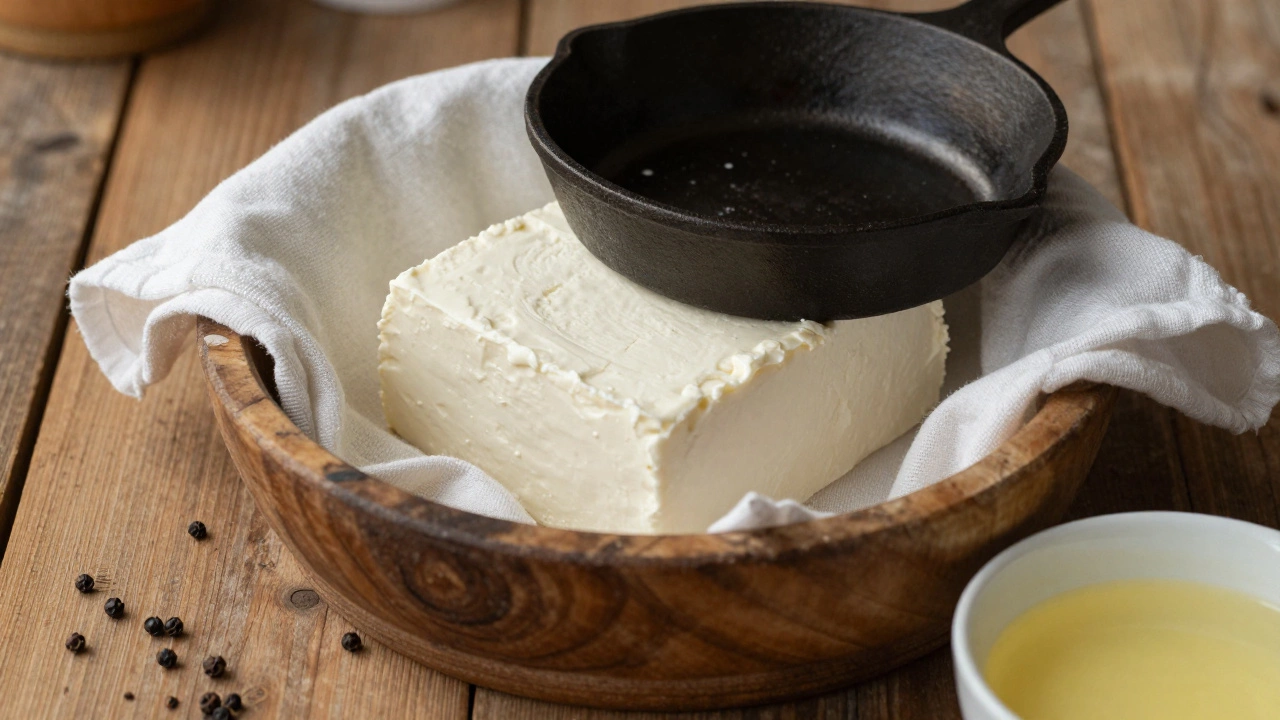
- Pressing: Wrap the paneer tightly in the cloth and place a heavy weight on top-like a cast iron skillet or a heavy pot of water. Leave it for 30 minutes for a soft texture, or 2 hours for a firm block suitable for grilling.
Common Pitfalls and How to Fix Them
If your paneer came out too hard, you likely overheated the milk or added too much acid too quickly. To avoid this, use a kitchen thermometer; aim for about 90°C (194°F) before adding the acid. If the cheese is too crumbly, it's usually a sign that the milk lacked enough fat. Next time, try mixing in a bit of cream.
Another common issue is the "grainy" texture. This happens when the milk is curdled too fast. The trick is to add the acid slowly and maintain a low temperature. Think of it as a gentle nudge to the proteins, not a violent shock.
What to Do With the Leftover Whey
Don't pour that yellowish water down the drain! Whey is packed with protein and minerals. Since you've used several liters of milk, you probably have a significant amount of it. Instead of tossing it, use it as a substitute for water when kneading dough for roti or naan. It makes the bread softer and adds a nutritional boost.
You can also add whey to smoothies or use it as a base for vegetable soups. It's basically a natural protein supplement that you've created as a byproduct of your make paneer at home project.
Can I use powdered milk to make paneer?
Yes, but the results aren't as good. You'll need to reconstitute the powder with water to create a milk-like consistency. However, because powdered milk lacks the natural emulsion of fresh cream, the paneer often turns out grainier and less creamy. For the best result, use fresh whole milk.
Why is my paneer rubbery?
Rubbery paneer usually happens for two reasons: using low-fat milk or over-cooking the curds after adding the acid. If you keep boiling the milk after it has curdled, the proteins tighten up too much, squeezing out all the moisture and leaving you with a rubbery texture.
How long does homemade paneer last in the fridge?
Homemade paneer doesn't have preservatives, so it spoils faster than store-bought versions. Store it in an airtight container submerged in filtered water, changing the water every two days. It will generally stay fresh for 4 to 7 days.
Can I use vinegar instead of lemon juice?
Absolutely. White vinegar is actually a bit more consistent than lemon juice because its acidity level doesn't vary by fruit. Use the same ratio: about 2 tablespoons per liter of milk. Just be sure to rinse the curds well to remove the vinegar scent.
Does the type of milk change the amount of acid needed?
Yes. Buffalo milk is denser and has more solids, which sometimes requires slightly more acid to fully separate the whey. Conversely, very old milk (still within its expiry date) may have a naturally lower pH and require less acid to curdle than fresh-from-the-farm milk.
Next Steps for Your Paneer Journey
Now that you've mastered the milk-to-cheese ratio, you can experiment with different textures. If you want a spreadable cheese, don't press the paneer at all-just strain it and blend it with a pinch of salt and a splash of milk. If you're planning a Palak Paneer or Shahi Paneer, a firm, pressed block is your best bet so the cubes don't break apart in the gravy.
If you find yourself making this weekly, consider buying milk in bulk or looking for organic grass-fed options, which often have a higher fat content and result in a richer, more flavorful paneer.