29 Sep 2026
- 0 Comments
Curry Onion Prep Advisor
Select your goal to get the best onion prep advice.
Make your selections and click "Get Advice" to see the recommended onion preparation method.
Why this works
Cooking Tip
You’ve got your spices ready, the chicken is marinated, and you’re staring at a pile of raw onions. Then it hits you: should I blend these into a smooth paste, or chop them up? It’s a debate that splits home cooks right down the middle. Some swear by the silky, restaurant-style gravy that comes from blending. Others argue that chopped onions give the curry a rustic, authentic bite. So, who’s right? Spoiler alert: it depends entirely on what kind of chicken curry you are trying to make.
| Feature | Blended Onions (Paste) | Chopped Onions |
|---|---|---|
| Texture | Silky, thick, uniform | Rustic, chunky, distinct pieces |
| Cooking Time | Faster to integrate flavor | Longer sauté time required |
| Flavor Profile | Mellow, sweet, integrated | Sharp, pungent, layered |
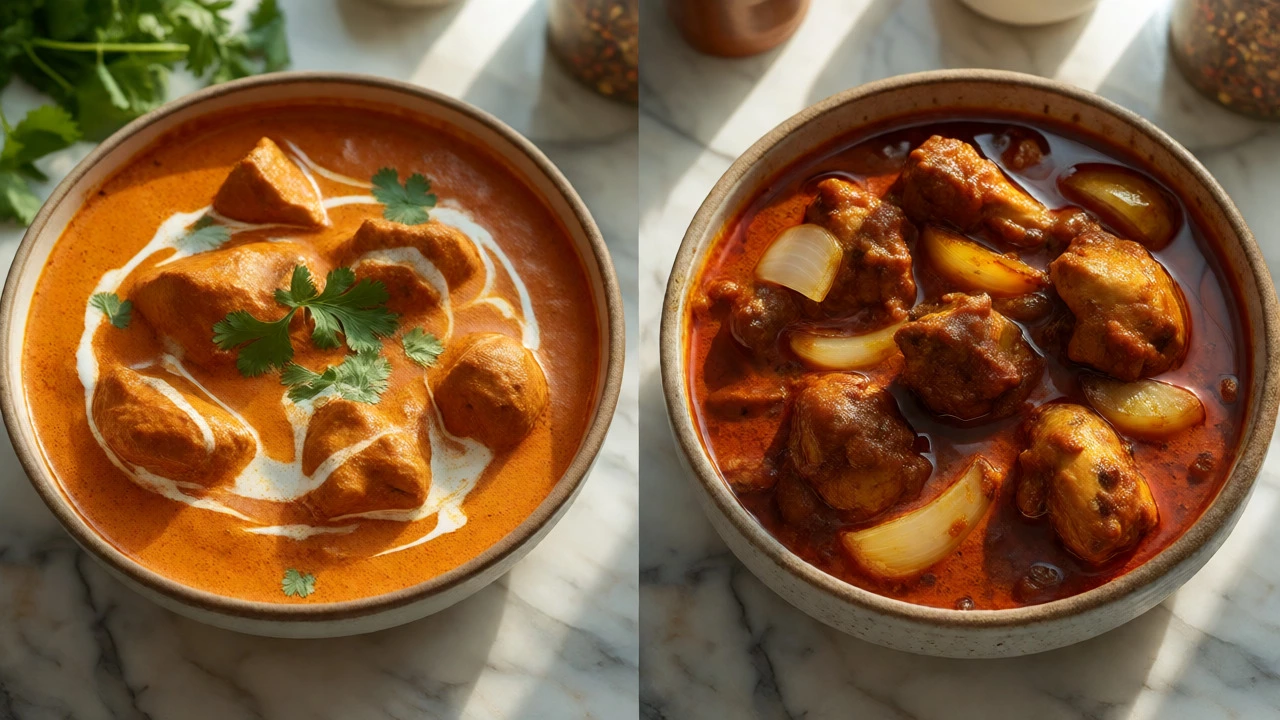
| Best For | Korma, Butter Chicken, creamy gravies | Vindaloo, Rogan Josh, dry curries |
| Burning Risk | High (sticks easily) | Low (easier to manage) |
The Case for Blending: Creating the Silky Gravy
If you want that rich, orange-hued gravy that coats every piece of meat without any visible chunks of onion, blending is your best friend. When you puree onions, you break down their cellular structure completely. This releases all the sugars and juices instantly. As soon as this paste hits hot oil, it caramelizes rapidly. Because there are no solid pieces left, the mixture emulsifies with the tomatoes and yogurt (if you use them) much faster. This creates a base that feels luxurious in the mouth.
This method is non-negotiable for dishes like Butter Chicken or Korma. In these recipes, the sauce is the star. You don’t want to bite into a hard piece of undercooked onion when you’re expecting smooth creaminess. Blending also helps thicken the gravy naturally. The starches in the onion act as a binder, so you often need less flour or cornstarch. Just be careful-blended onion paste burns way faster than chopped onions. You need to keep the heat medium-low and stir constantly until the raw smell disappears and the color turns golden brown. If you rush this step, your curry will taste bitter instead of sweet.
The Case for Chopping: Building Depth and Texture
Now, let’s look at the other side. Chopping onions preserves texture. When you slice an onion, you create layers that soften gradually during cooking. This process builds complexity. First, they turn translucent, then they caramelize slowly over ten to fifteen minutes. This slow browning develops deep, savory notes that blended paste can sometimes miss because it cooks too quickly. The result is a curry with character. You can see the bits of onion, and they add a slight crunch or soft chewiness that contrasts nicely with tender meat.
Dishes like Vindaloo, Rogan Josh, or most North Indian dhaba-style curries rely on this method. These dishes aren’t about a smooth sauce; they’re about bold flavors and robust textures. The visible onion pieces signal authenticity to many diners. It looks homemade and hearty. Plus, chopping is more forgiving. If you get distracted and leave the pan unattended for a minute, sliced onions won’t burn as catastrophically as a thin layer of paste. They just get darker, which actually adds flavor. If you prefer a curry where you can taste individual ingredients rather than a homogenized mix, stick to the knife.
The Hybrid Approach: Best of Both Worlds
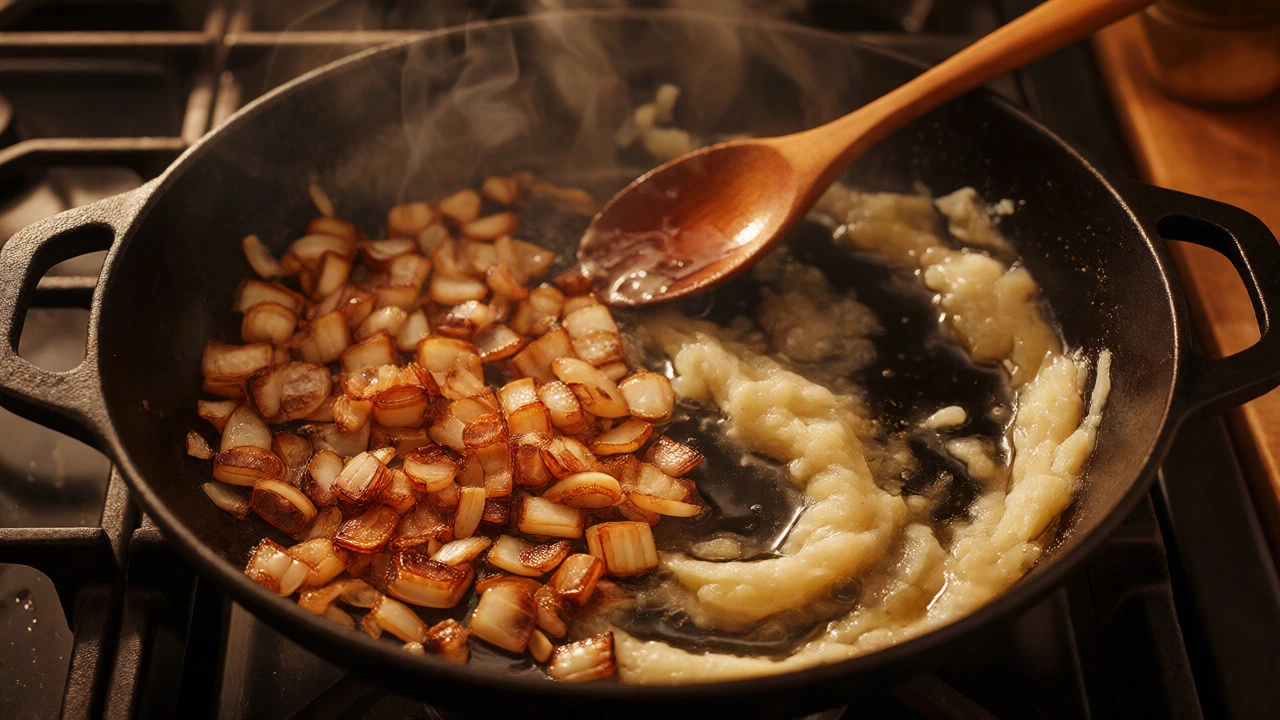
Here is a trick professional chefs often use but rarely talk about: do both. Seriously. Half the onions go into the blender, and the other half gets finely chopped. Why? Because you get the best of both worlds. The blended portion dissolves into the gravy, creating body, thickness, and sweetness. The chopped portion remains intact, providing visual appeal and textural contrast. This technique works wonders for Chicken Tikka Masala or a standard Home-Style Chicken Curry.
To execute this, start by frying the chopped onions first. Let them brown properly. Once they are golden, add the blended paste. The chopped onions protect the paste slightly from sticking directly to the pan bottom while adding bulk. Stir well and cook until the oil separates from the masala. This usually takes about 10-12 minutes. The result is a gravy that has depth, body, and interesting little bits to bite into. It satisfies the craving for richness without losing the soul of the dish.
Practical Tips for Perfect Onion Prep
Whichever method you choose, how you handle the onions matters. Here are some quick rules to save you from tears and burnt pans:
- Temperature Control: Never blast high heat with blended onion paste. It sticks and burns in seconds. Medium heat is your safe zone.
- Add Water Early: If you are blending, add a splash of water to the blender. It makes the paste smoother and prevents your blender motor from overheating.
- Salt Timing: Add salt to chopped onions early in the cooking process. Salt draws out moisture, helping them soften and caramelize faster.
- Oil Quantity: Blended pastes need more oil than chopped onions. The fat carries the flavor and prevents sticking. Don’t skimp here.
- Resting Time: After making your onion base, let it sit for five minutes before adding liquids. This allows the flavors to meld and the solids to settle.
What About Other Ingredients?
Onions are just one part of the equation. Think about your ginger-garlic paste. Should that be blended too? Usually, yes. Ginger and garlic fibers can be tough if not broken down properly. A fine paste ensures even distribution of those strong aromatics. However, if you are making a rustic stir-fry style curry, minced garlic might work better. Always consider the final texture you want. If the goal is smoothness, blend everything. If the goal is rustic charm, chop everything. Consistency is key. Don’t blend the onions but leave huge chunks of ginger unless you specifically want that surprise element.
Troubleshooting Common Issues
If your blended onion curry tastes flat, you likely didn’t cook the paste long enough. Raw onion paste tastes sharp and sulfurous. It needs time to turn sweet and mellow. Look for the color change-it should go from white/pale yellow to a deep gold or light brown. If your chopped onion curry is watery, you probably added tomatoes too soon. Wait until the onions are fully browned before adding wet ingredients. This ensures the base is concentrated, not diluted.
Does blending onions make curry sweeter?
Yes, generally speaking. Blending breaks down cell walls, releasing more sugars that caramelize quickly. Chopped onions release sugars slower, resulting in a more savory, less sweet profile unless cooked for a very long time.
Can I use frozen onions for blending?
You can, but they will be watery. Thaw them completely and squeeze out excess liquid before blending. Otherwise, your paste will be too thin and take longer to cook down.
Why does my blended onion paste stick to the pan?
Because it lacks structural integrity compared to chopped onions. Ensure you have enough oil in the pan and use a non-stick surface or cast iron. Keep the heat moderate and stir frequently.
Which method is healthier?
Both are healthy. Blended onions might require slightly more oil to prevent burning, which adds calories. Chopped onions can be cooked with less oil but take longer. Choose based on taste preference rather than health metrics.
Do restaurants always blend onions?
Many high-end restaurants do for creamy dishes like Korma or Malai Kofta. However, traditional Dhabas and street food stalls often use chopped or roughly crushed onions for speed and rustic texture. There is no single "restaurant rule."