30 Jan 2026
- 0 Comments
Lentil Cooking Time Calculator
Find out how soaking saves time, energy, and improves your lentil dish. Select your lentil type and soaking method to see estimates.
Estimated Cooking Time
Nutritional Tip
Soaking for 8-12 hours reduces phytic acid by up to 40%, improving nutrient absorption.
Ever skipped soaking your lentils because you were in a hurry? You’re not alone. Most people think it’s just an extra step-something your grandma insisted on, but maybe not necessary. But skipping that soak? It changes everything. Not just the texture, not just the cooking time-but how your body handles it too.
They Take Longer to Cook
Unsoaked lentils can take 45 to 60 minutes to become tender. Soaked ones? Often done in 20 to 25 minutes. That’s a huge difference when you’re making dal after a long day. If you skip soaking, you’re not just waiting longer-you’re using more gas or electricity. And if you’re using a pressure cooker, you might end up needing an extra whistle or two. That’s more energy, more time, more patience.
Here’s what actually happens: lentils have a tough outer skin and dense starch structure. Soaking softens that skin, letting water penetrate before heat even hits. Without it, the heat has to do all the work from the outside in. That means the outside can turn mushy before the inside is even warm. You end up with uneven texture-some pieces falling apart, others still gritty.
The Digestive Toll
Ever felt bloated after eating dal? It’s not always the spices. Lentils contain oligosaccharides-complex sugars your body can’t break down. These pass into your gut, where bacteria ferment them. That’s what causes gas. Soaking helps break down some of these sugars. It also activates enzymes that reduce phytic acid, a compound that binds to minerals like iron and zinc, making them harder for your body to absorb.
Studies show soaking lentils for 8-12 hours can reduce phytic acid by up to 40%. That means more nutrients actually make it into your bloodstream. Skip the soak, and you’re not just eating lentils-you’re eating less of their nutritional value.
They Can Taste Earthy or Bitter
Unsoaked lentils often carry a slightly bitter or muddy flavor. Why? Because they haven’t had a chance to rinse off surface dust, tannins, or residual soil particles. Even if you rinse them quickly under the tap, it’s not the same as soaking. Soaking lets those compounds dissolve into the water, which you then pour away. It’s like washing your hands before cooking-you’re not just cleaning, you’re improving the experience.
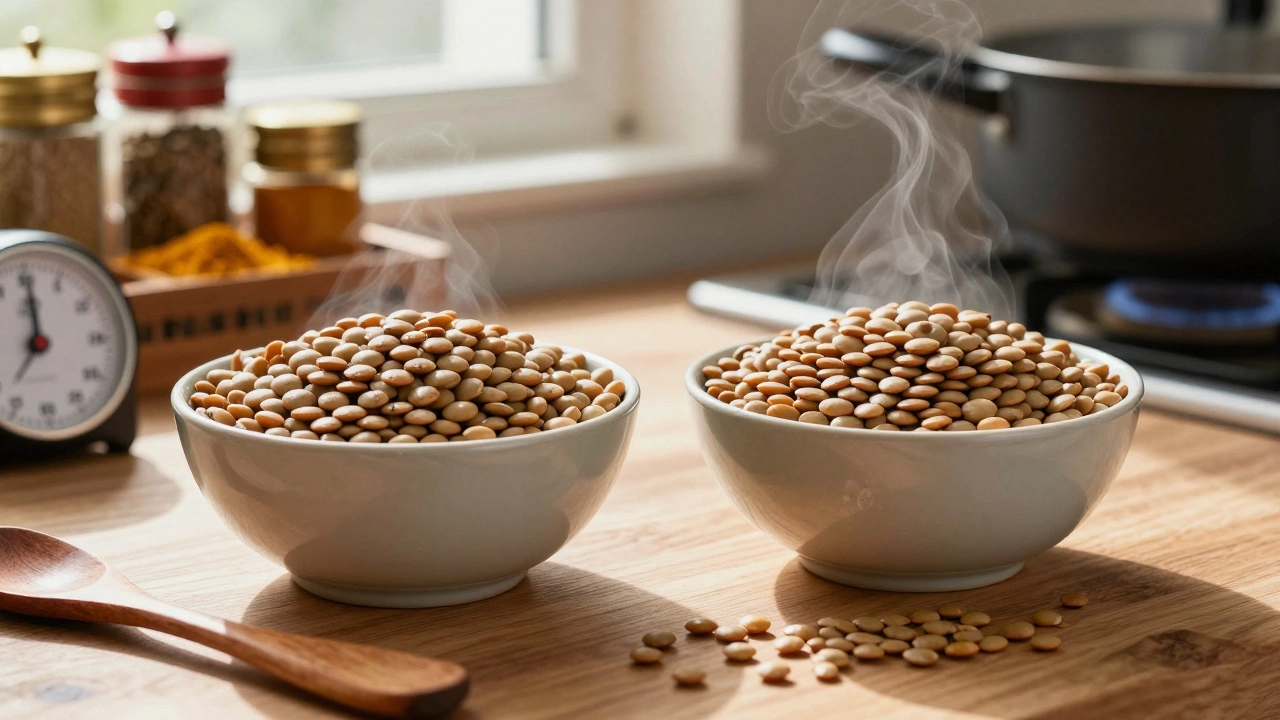
Try this: cook two batches. One soaked overnight, one rinsed only. Taste them side by side. The soaked one will taste cleaner, sweeter, more like the dal you remember from childhood. The unsoaked one? It’ll taste flat, almost dusty. It’s subtle, but it’s there.
They Might Not Break Down Properly
Traditional dal recipes rely on lentils breaking down into a creamy, smooth consistency. That’s the magic of a good dal-thick, rich, clinging to the rice. Unsoaked lentils don’t break down as easily. Even after long cooking, they can stay intact, giving you a grainy texture instead of velvety smoothness. You might end up stirring and stirring, thinking you’re not cooking long enough, when the real issue is the lack of pre-soak.
Red lentils (masoor dal) are more forgiving-they cook faster and break down easier even unsoaked. But yellow lentils (toor dal), brown lentils (masoor), and green lentils (moong dal)? They need that soak. If you’re making a classic South Indian toor dal or a Punjabi yellow dal, skipping soak means you’re not getting the right mouthfeel. It’s like trying to make a roux without flour-technically possible, but not what you’re aiming for.
Soaking Isn’t Always Mandatory-But It’s Smart
Let’s be real: sometimes you don’t have time. You forgot. You’re hungry. You’re in a rental kitchen with no counter space. That’s okay. You can still cook unsoaked lentils. Just adjust your expectations.
- Use a pressure cooker-it cuts cooking time by half.
- Add a pinch of baking soda (1/8 tsp per cup of lentils) to help soften them faster.
- Stir occasionally to prevent sticking and encourage even cooking.
- Don’t rush the simmer. Let it bubble gently for at least 40 minutes.
But here’s the thing: soaking takes 8 hours. That’s not a lot if you do it the night before. Put your lentils in a bowl, cover with water, and leave them on the counter. In the morning, drain, rinse, and start cooking. It’s one less thing to do during your busy day.
What About Sprouting?
If you really want to boost nutrition, try sprouting. Soak lentils for 8 hours, then drain and leave them in a jar covered with a cloth for 12-24 hours. Tiny tails will appear. Sprouted lentils digest even better, have more vitamin C, and taste fresher. You can cook them just like soaked ones-no extra time needed. It’s the next step up from soaking, and it’s easy to do in a Sydney kitchen with a jar and a rubber band.
Quick Soak Trick for Busy Days
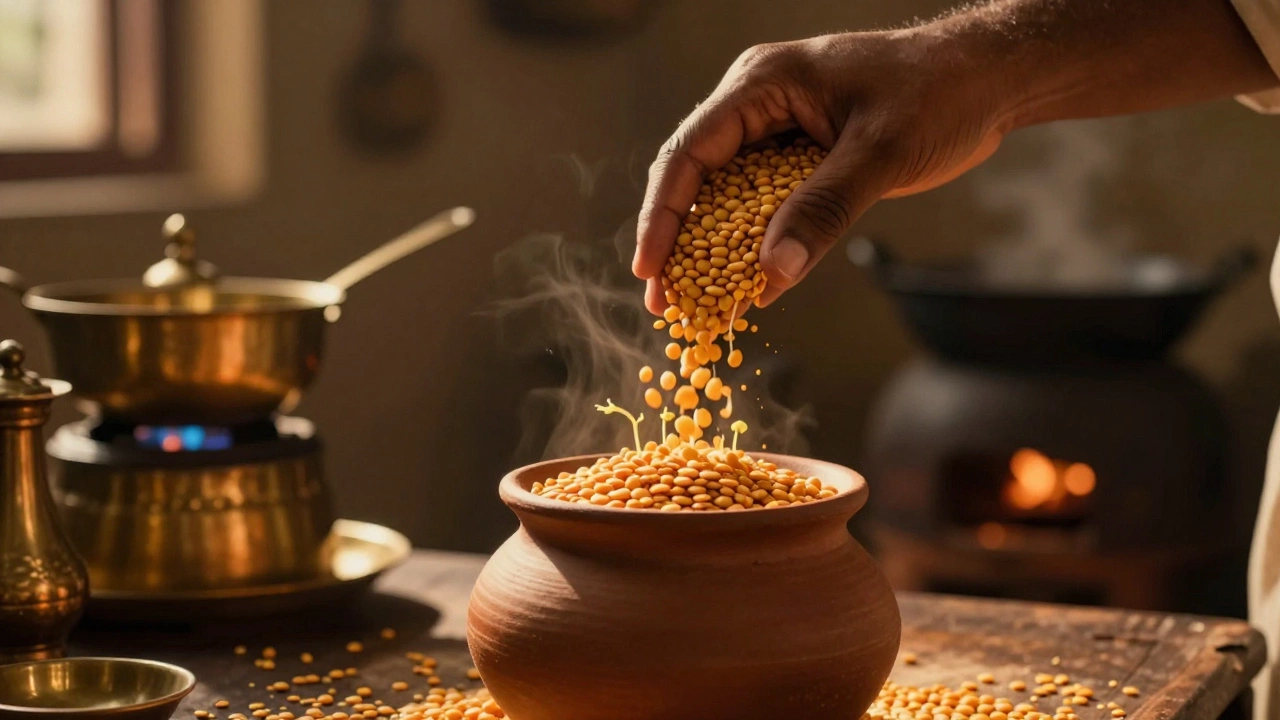
Don’t have 8 hours? Use the hot soak method. Bring water to a boil, pour it over the lentils, cover, and let sit for 1 hour. Drain and rinse. It’s not as effective as overnight, but it’s 80% of the benefit in 1/8 of the time. Works great for moong dal or chana dal when you’re cooking dinner after work.
What to Do If You Already Cooked Them Unsoaked
You already cooked your dal and it’s gritty? Don’t toss it. Blend it. Use an immersion blender right in the pot. You’ll get a smoother texture in seconds. Add a splash of water or coconut milk to thin it out if needed. It won’t be the same as properly soaked dal, but it’ll still be delicious-and way better than wasting food.
Final Thought: It’s About Respect for the Ingredient
Soaking lentils isn’t a chore. It’s a small act of respect. These tiny seeds have been feeding people for thousands of years. They’re packed with protein, fiber, and minerals. Treating them with a little patience-just a few hours of soaking-makes them more digestible, more nutritious, and more flavorful. You’re not just cooking food. You’re honoring a tradition that’s stood the test of time.
Next time you make dal, try soaking just one batch. Compare it to the one you didn’t soak. You might be surprised how much difference a simple step makes.