20 Mar 2026
- 0 Comments
Curry Base Builder
Test your curry base against the article's professional standards. Enter your cooking parameters to see if you've built the foundation that makes all the difference.
Ask anyone who’s ever made chicken curry why theirs doesn’t taste like the restaurant version, and you’ll hear the same thing: curry isn’t just one thing. It’s a system. A chain of flavors. And if you’re missing the core piece, no amount of garlic, ginger, or cumin will fix it.
People think the key ingredient is turmeric. Or cumin. Or garam masala. Even coconut milk, if they’re going for a creamy version. But here’s the truth: the real foundation of any great chicken curry isn’t a single spice. It’s the curry base - the cooked-down mixture of onions, tomatoes, and garlic that forms the soul of the dish. Everything else builds on top of it. Skip this step, and you’re just cooking chicken in spiced water.
Why the Curry Base Is Non-Negotiable
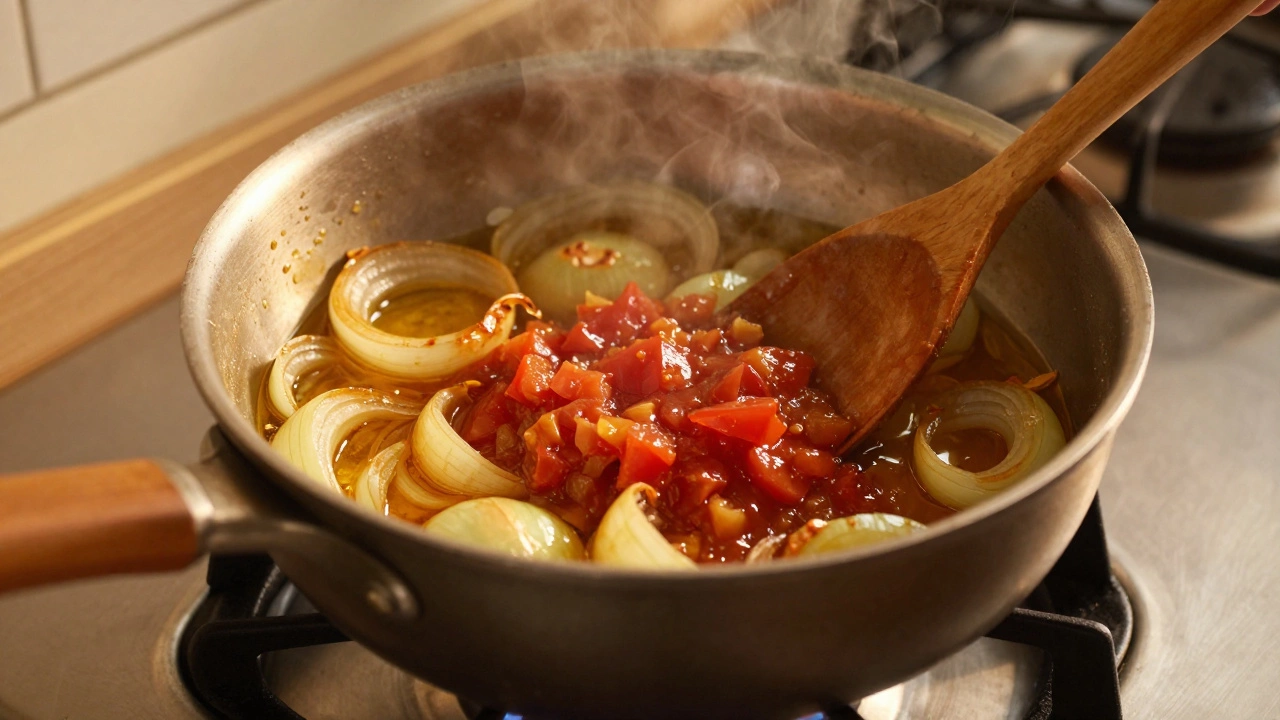
In home kitchens across India, Pakistan, Bangladesh, and even in Australian homes like mine in Sydney, the process starts the same: low heat, a heavy-bottomed pot, and patience. You don’t rush onions. You don’t brown them. You let them soften, sweat, and then slowly caramelize into a deep golden paste. This takes 15 to 20 minutes. No shortcuts.
Then come the tomatoes - usually ripe, chopped, and added in batches. As they break down, they release their natural sugars and acids. The onions and tomatoes start to meld, forming a thick, sticky paste that clings to the spoon. That’s when you add the garlic, ginger, and a pinch of salt. The salt pulls out moisture, helping everything collapse into a cohesive base.
This isn’t just a flavor layer. It’s the carrier. Every spice you add after this - turmeric, coriander, cumin, chili powder - sticks to this paste. It doesn’t float on top. It sinks in. And when you add the chicken, the base clings to it like a second skin. That’s what gives each bite depth.
What Happens When You Skip It
I’ve seen it too many times. Someone follows a recipe that says "add spices to oil," then throws in chicken and water. The result? A soup with spice floating on top. The chicken tastes like boiled meat with a dusting of powder. No richness. No body. No connection between ingredients.
Compare that to a curry where the base was properly built. The sauce clings to the rice. It coats the chicken in a glossy, velvety layer. You taste the onion sweetness, the tomato tang, the warmth of the spices - all woven together. That’s the difference between a meal and a memory.
The Role of Spices - They’re Supporting Actors
Turmeric? Yes, it gives color and earthiness. But if you add it dry to hot oil without the base, it turns bitter. Coriander powder? Adds citrusy depth. But without the moisture from the onions and tomatoes, it just tastes dusty.
Cumin seeds? They’re great toasted and popped in oil at the start. But they’re not the star. They’re the first note in a symphony. Garam masala? Added at the end for fragrance. It’s the finale, not the foundation.
Even the most famous spice blends in Indian cooking - like the one used in Butter Chicken or Rogan Josh - rely on this base. The difference between those dishes isn’t the spice mix. It’s how long the base was cooked, how much oil was used, and whether the tomatoes were fresh or dried.
Regional Variations - Same Base, Different Twists
In South India, they might use coconut paste instead of tomatoes. In Punjab, they use yogurt and cream to thicken the base. In Bangladesh, they add a touch of jaggery for balance. But they all start with slow-cooked aromatics.
Even in my kitchen here in Sydney, I’ve experimented. Sometimes I use canned crushed tomatoes when fresh ones aren’t ripe. Sometimes I roast the onions first for a smoky note. But I never skip the long, quiet simmer. That’s where the magic happens.
How to Build the Perfect Curry Base
Here’s the exact method I use every time:
- Heat 3 tablespoons of oil or ghee over medium-low heat.
- Add 2 large chopped onions (about 300g). Cook, stirring occasionally, for 15-20 minutes until deep golden brown. No rushing.
- Add 2 cups of chopped ripe tomatoes (or 400g canned). Cook until they break down into a thick paste - another 10-15 minutes.
- Add 1 tablespoon grated ginger and 3 minced garlic cloves. Cook for 2 minutes until the raw smell disappears.
- Now add your spices: 1 tsp turmeric, 2 tsp coriander powder, 1 tsp cumin powder, 1/2 tsp chili powder. Stir constantly for 30 seconds to toast them into the base.
- Add the chicken pieces. Brown them on all sides before adding liquid.
- Finally, add water or broth - just enough to cover the chicken. Simmer for 25-30 minutes.
That’s it. No fancy gadgets. No pre-made paste. Just time, heat, and attention.
Common Mistakes That Ruin the Base
- Using too little oil - the base needs fat to carry flavor.
- Cooking onions on high heat - they burn before they sweeten.
- Adding spices too early - they scorch and turn bitter.
- Adding liquid before the base thickens - it dilutes everything.
- Not tasting as you go - salt levels change as the base reduces.
What About Store-Bought Curry Pastes?
They’re convenient. But they’re not the same. Most commercial pastes skip the slow-cooked base entirely. They’re made with powdered spices, oil, and preservatives. The texture is uniform, the flavor flat. You can’t replicate the complexity of caramelized onions and slow-cooked tomatoes in a jar.
Think of it like buying tomato sauce versus making it from scratch. One’s functional. The other tells a story.
Final Thought: It’s Not the Spice - It’s the Time
The key ingredient in chicken curry isn’t turmeric. It’s not cumin. It’s not even the chicken.
It’s the time you spend waiting. The patience to let onions turn golden. The quiet moments where the kitchen fills with the smell of something slowly coming together. That’s what turns a recipe into a dish with soul.
Next time you make chicken curry, don’t just follow the steps. Watch the pot. Smell the change. Taste the difference. That’s where the real ingredient lives.
Is turmeric the key ingredient in chicken curry?
Turmeric gives chicken curry its yellow color and earthy flavor, but it’s not the key ingredient. Without a properly cooked base of onions and tomatoes, turmeric alone won’t create depth. It’s a supporting spice, not the foundation.
Can I use canned tomatoes instead of fresh ones?
Yes, canned crushed tomatoes work perfectly - especially out of season. Look for ones with no added salt or sugar. The key is to cook them down until they turn into a thick paste, just like you would with fresh tomatoes.
Why does my curry taste bland even with lots of spices?
If your curry tastes flat, you likely skipped or rushed the base. Spices need moisture and fat to release their flavor. Without a slow-cooked onion-tomato paste, they just sit on top of the food. Build the base first - everything else will follow.
Should I fry the spices before adding the chicken?
No - fry them into the base, not before. Add your ground spices after the onions and tomatoes have turned into a thick paste. Stir them in for 30 seconds to toast them. This activates their oils and prevents a raw, dusty taste.
What’s the difference between curry powder and curry base?
Curry powder is a dry blend of ground spices, often used in Westernized versions. Curry base is a cooked mixture of onions, tomatoes, garlic, and spices that forms the sauce foundation. One is a seasoning; the other is the entire structure of the dish.