27 Mar 2026
- 0 Comments
Biryani Aroma Optimization Tool
Test your knowledge of the 'Science of Aroma'. Select your cooking habits below to see if you are creating a professional-grade fragrance or just steamed rice.
Predicted Aroma Score:
(Max 100)Result Title Here
Description goes here.
Analysis:
There is a specific scent that stops you in your tracks. You walk past a restaurant or a neighborhood gathering, and suddenly your nose catches it. It is nutty, floral, and savory all at once. That smell belongs to Biryani, which is a mixed rice dish made with meat, vegetables, or legumes, cooked together with aromatic spices. Many people ask what gives this dish its signature fragrance. It is not just one thing. It is a complex mix of science, technique, and specific ingredients working together.
The Foundation of the Aroma
You cannot build a house without a strong base, and you cannot make smelly biryani without the right oil or ghee. Fat carries flavor molecules better than water does. In the kitchen, we call this lipophilicity. When you fry spices in hot oil, they release their essential oils. If you use less oil, those aromas stay locked inside the seeds. So, the secret starts with enough fat. Most home cooks skimp here because they fear the grease, but professional chefs use ample ghee or mustard oil depending on the region. This ensures every grain of rice soaks up the scent.
The choice of rice also plays a huge role in the final bouquet. You cannot use just any long-grain rice. Basmati Rice is an extra-long, thin variety of rice grown primarily in India and Pakistan, known for its natural fragrance and non-sticky texture when cooked. Specifically, aged basmati. New harvest rice smells like soil and plants. Old rice, harvested months ago, smells like nuts and hay. Chefs often buy rice that is at least one year old. During the cooking process, the heat transforms the starches into sugars. These sugars caramelize slightly in the bottom layer, creating a smell similar to toasted bread. This crusty layer at the bottom is called 'khao'. It contributes a deep, earthy note that cuts through the sweetness of the meat.
The Spice Trinity
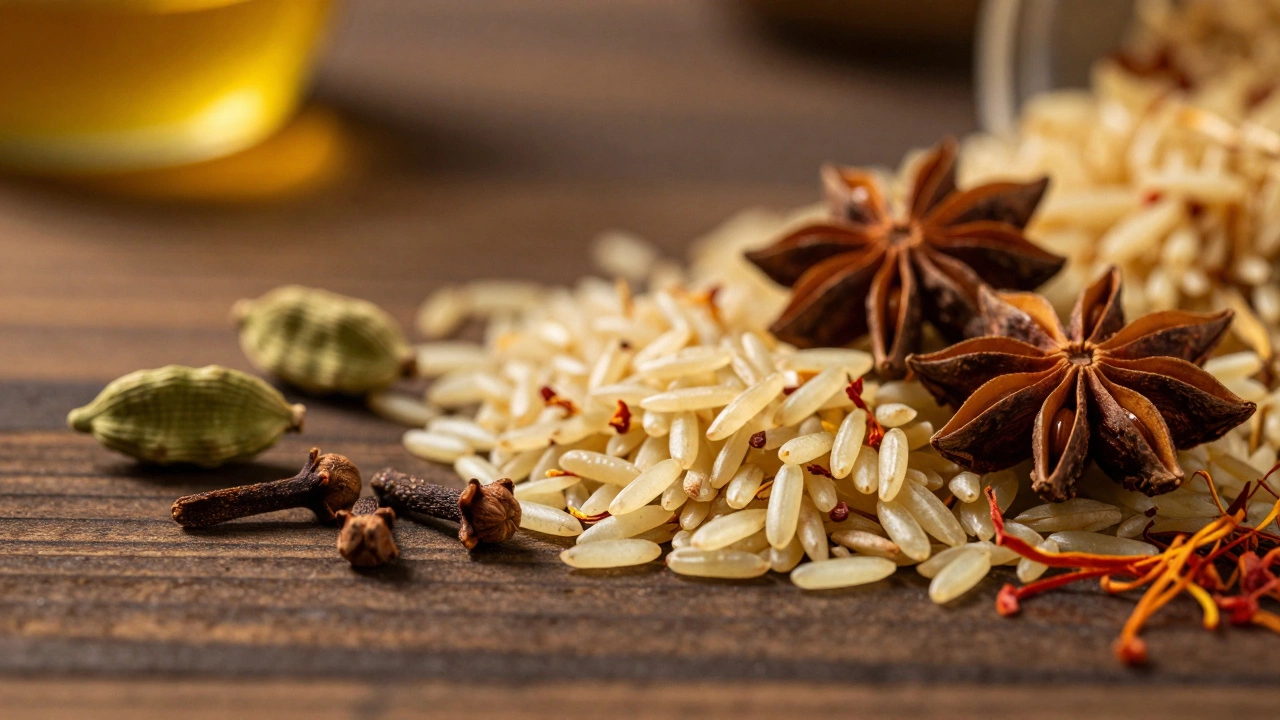
If you open a jar of ready-made biryani masala powder, you might find something different from a scratch cook. Ground spices lose their volatile compounds quickly once exposed to air. To get that intense nose-puckering smell, you must use whole spices. Three ingredients stand out above the rest. First, cardamom. Green cardamom pods are small but potent. They smell sweet, camphoraceous, and citrusy. One pod crushed releases oils that permeate the whole pot. Second, cloves. These are dried flower buds that taste bitter but smell woody and warm. Third, star anise. Its licorice-like scent adds a distinct top note that defines North Indian styles.
| Ingredient | Primary Scent Profile | Form Used |
|---|---|---|
| Cardamom | Sweet, Floral, Citrus | Whole Pods or Crushed |
| Cloves | Woody, Warm, Bitter | Whole Stems |
| Saffron | Honey, Earthy, Hay | Soaked Threads |
| Fried Onions | Savory, Sweet, Crunchy | Sliced and Deep Fried |
A fourth player often gets overlooked: saffron. Saffron is the most expensive spice in the world, derived from the stigma of the Crocus sativus flower, adding color and a unique metallic-floral aroma. You soak these red threads in warm milk before pouring them over the rice. The liquid carries the scent up through the layers. Without this step, the aroma stays trapped at the bottom. The steam rises with the saffron milk during the cooking phase, perfuming the upper grains.

The Magic of Fried Onions
Ever wondered why biryani smells different from plain pulao? It comes down to the onions. Raw onions smell sharp and pungent. Boiled onions taste bland. But Onion Birista is thinly sliced onions deep-fried until they turn golden brown and crisp, forming a key flavor base. When onions hit hot oil, two things happen. Their moisture evaporates rapidly, concentrating sugars. Then, the Maillard reaction takes over. Amino acids and sugars react to create hundreds of new flavor compounds. This results in that deep, rich, caramelized smell. Some recipes layer these fried onions between the rice and meat. As the steaming happens, the onions soften slightly again, releasing their concentrated essence back into the environment.
This is where many go wrong. They slice onions thinly but boil them in the marinade. While this makes a curry base good, it dilutes the specific biryani punch. The ideal method requires two types of onions. One batch goes into the meat marinade, simmered until soft. The second batch is fried separately until dark brown. Mixing these two textures gives a complexity that pure sauce lacks.
The Dum Method Explained
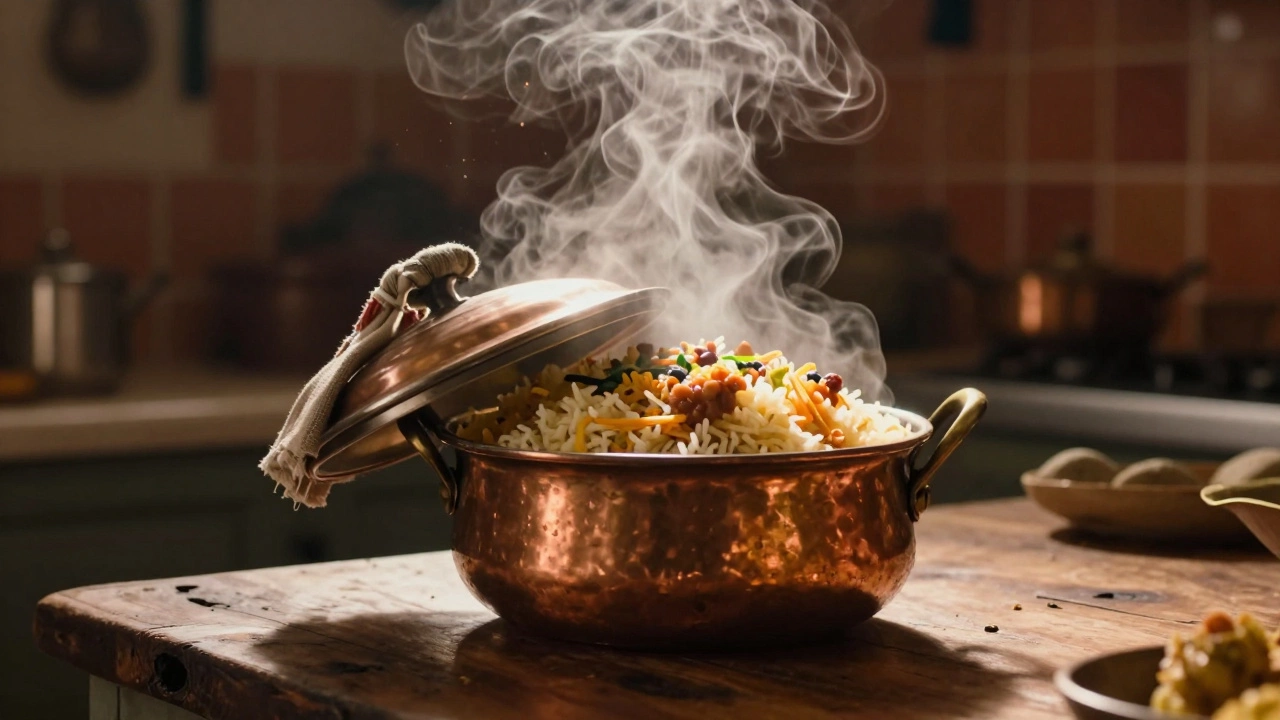
Dum means sealed. It is not just covering the pot. It involves sealing the lid tightly with dough or foil so that no steam escapes. Why does this matter? When you cook rice normally, steam leaves the pot taking aromatic volatiles with it. In the dum method, the steam circulates inside the vessel. The vapor condenses on the underside of the lid and drips back down. This means the moisture recycles the flavors continuously. The heat distributes slowly and evenly across the entire pot. This slow cook allows the fats and spices to merge completely into the rice grains rather than sitting on top.
Temperature control is vital here. You place a thick cloth under the heavy lid. This cushions the heat and prevents direct flame damage. Traditionally, charcoal bricks were placed on top of the vessel. The charcoal radiates gentle heat from above while the burner heats from below. This creates a convection current inside. In modern kitchens, an oven works well for this purpose. Preheat your oven to roughly 180 degrees Celsius. Place the sealed pot in there for twenty minutes. This mimics the traditional tandoor heat source without needing actual coals.
Freshness and Regional Variations
Not all biryanis smell the same. A Hyderabadi style will smell sharper and zestier due to green chilies and lime. A Lucknowi version smells sweeter and more subtle because of the influence of royal kitchens. There is a reason for this diversity. The local availability of ingredients dictated history. Hyderabadi Biryani is a spicy South Indian rice dish characterized by marinated meat and parboiled rice layered and cooked via the dum method. They often use tomatoes and potatoes in the Kolkata variation to stretch the meal, adding a vinegary tang to the aroma.
In Sydney kitchens today, we adapt these traditions. Sometimes we substitute hard-to-find rose petals with a drop of rosewater. Sometimes we swap ghee for high-quality vegetable oil for health reasons. However, the core principle remains. Fresh herbs are non-negotiable. Coriander leaves and mint leaves added at the very end provide a fresh green note that contrasts the heavy spices. If you chop them too early, they burn and taste grassy. Toss them in just before breaking the seal. The residual heat wilts them gently without killing the fresh scent.
Troubleshooting Common Smells
Sometimes the outcome isn't right. If the biryani smells burnt, you likely applied too much direct heat during the sealing stage. The bottom layer burns before the top layer cooks. Reduce the flame to the minimum setting. Always use a diffuser plate between the burner and the pot. Another issue is a sour smell. This happens when yogurt marinades curdle in high heat. Mix the yogurt with ice-cold water before adding it to the meat. This stabilizes the protein and prevents splitting. Finally, a lack of smell usually means insufficient frying of the onions or using fresh instead of aged basmati. These fixes address ninety percent of aroma issues in the home kitchen.
Mastering the scent is about respecting the timeline. Rushing the frying of onions ruins the flavor. Rushing the dum process leaves the rice hard and unperfumed. Patience yields the best reward. When you lift the lid, the explosion of steam should carry the notes of saffron, roasted garlic, and fried cumin instantly. This is the hallmark of success.
Why does store-bought biryani masala smell weaker than homemade?
Store-bought powders lose potency after grinding. Whole spices retain their essential oils until you crush them fresh during cooking.
Can I replace saffron with anything else for the color and smell?
Turmeric provides yellow color but lacks the floral scent. You can mix saffron strands with a drop of lemon juice to intensify the aroma without wasting much saffron.
How do I stop my biryani from smelling like boiled rice?
Parboil the rice separately until it is 70% cooked before layering. This ensures the grains absorb the spices later rather than absorbing plain water.
Is it normal for biryani to smell like raw onions?
No, it should smell sweet and savory. If it smells sharp, your fried onions were not cooked long enough or used raw in the layers.
Does the type of cooking oil change the smell?
Yes, mustard oil gives a pungent kick suitable for East Indian styles. Neutral oils work better for delicate saffron-focused recipes.