9 Jan 2026
- 0 Comments
Biryani Taste Preference Quiz
Find Your Perfect Biryani Match
Answer 5 quick questions about your taste preferences to discover which biryani style suits you best. Based on Hyderabadi, Lucknowi, and Kolkata traditions.
Question 1: How do you prefer your spices?
Question 2: What's your ideal meat texture?
Question 3: How do you feel about sweet notes?
Question 4: What's your favorite biryani texture?
Question 5: What's most important to you?
There’s no debate in Indian kitchens: biryani isn’t just a dish. It’s a story. A smell that fills a house before anyone even sits down. A dish that gets passed down, fought over, and remembered for decades. But when someone asks, which type of biryani is most tasty? - they’re not looking for a list. They’re asking for the truth behind the spice, the rice, the layers, and the soul in each version.
Hyderabadi Biryani: The Bold One
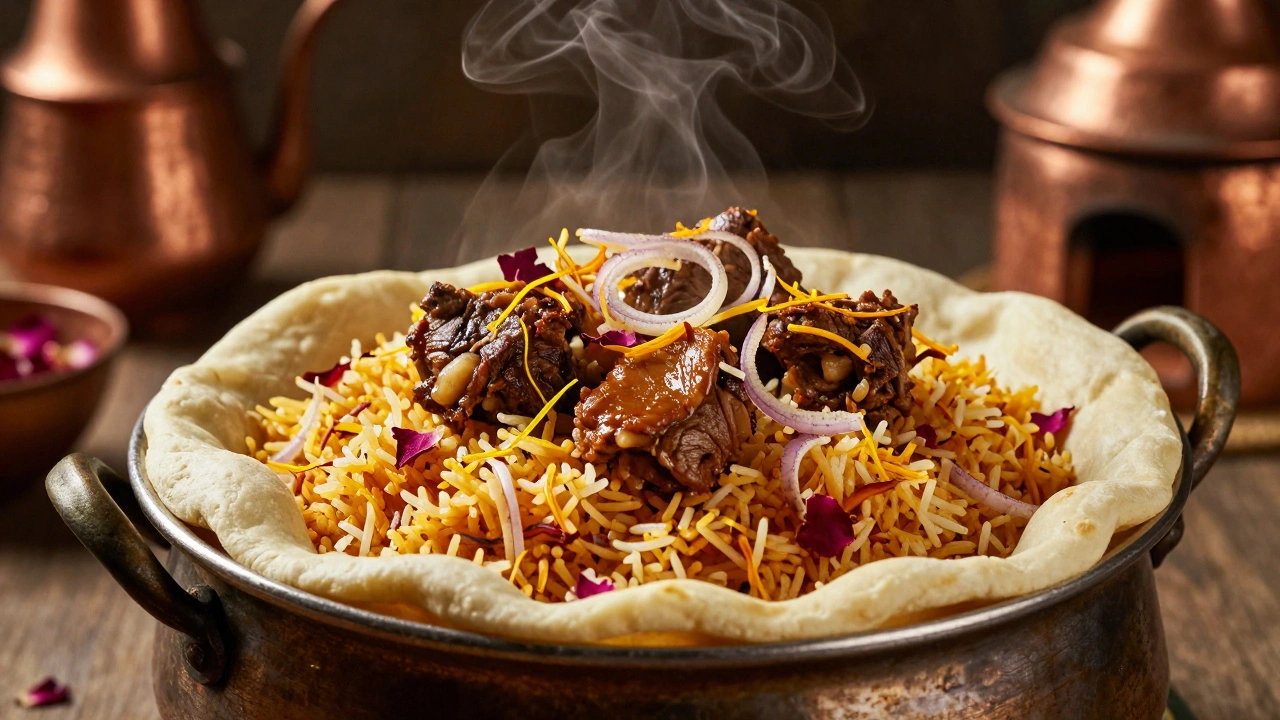
If you’ve ever had Hyderabadi biryani, you won’t forget it. It’s layered, not mixed. The rice and meat are cooked separately, then stacked in a heavy pot with saffron, fried onions, and a punch of rose water or kewra. The dum cooking - slow steam sealed with dough - locks in flavor like nothing else. The meat? Usually goat or chicken, marinated for hours in yogurt, garlic, ginger, and whole spices like star anise and green cardamom. The rice? Basmati, soaked, parboiled, and cooked until each grain stands tall.
This isn’t mild. It’s spicy, rich, and deeply aromatic. In Hyderabad, families argue over whether the Hyderabadi version should use kachchi gosht (raw meat layered with rice) or pakki gosht (pre-cooked meat). The kachchi version wins most hearts because the meat cooks in its own juices and the rice absorbs every drop. It’s messy, it’s intense, and for many, it’s the only biryani that counts.
Lucknowi Biryani: The Gentle Art
Step into Lucknow, and you’ll find biryani that doesn’t shout - it whispers. Lucknowi, or Awadhi biryani, is all about balance. The spices are subtle: cinnamon, cloves, nutmeg, and mace, not chili heat. The meat is slow-cooked in a rich gravy until it falls off the bone, then gently folded into fragrant rice. No layering with dough here. Instead, it’s steamed in a pot with a tight lid, often with a few drops of kewra water sprayed on top.
The rice stays separate, light, and fragrant. The meat is tender, not spicy. It’s the kind of biryani you eat slowly, savoring each bite. If Hyderabadi biryani is a rock concert, Lucknowi is a sitar solo. It’s elegant. It’s refined. And if you’re someone who finds other biryanis too heavy, this one might be your favorite.
Kolkata Biryani: The Sweet Surprise
Here’s where things get unexpected. Kolkata biryani is the only major version that includes boiled potatoes. Yes, potatoes. And it’s sweet - not sugary, but subtly sweet from fried onions, dried fruits, and a touch of saffron milk. The meat? Usually chicken or mutton, but often with a lighter hand on the spices. The rice is cooked with a little turmeric, giving it a soft golden hue.
This version came from the Nawabs of Awadh who moved to Kolkata in the 1800s. They missed their biryani but couldn’t afford expensive meat. So they stretched it with potatoes - and added a touch of sweetness to make it feel luxurious. Today, it’s served with a side of boiled egg and a raita. It’s not the spiciest. It’s not the most aromatic. But it’s comforting. It’s nostalgic. And for many Bengalis, it’s the only biryani they grew up with.
Other Notable Versions
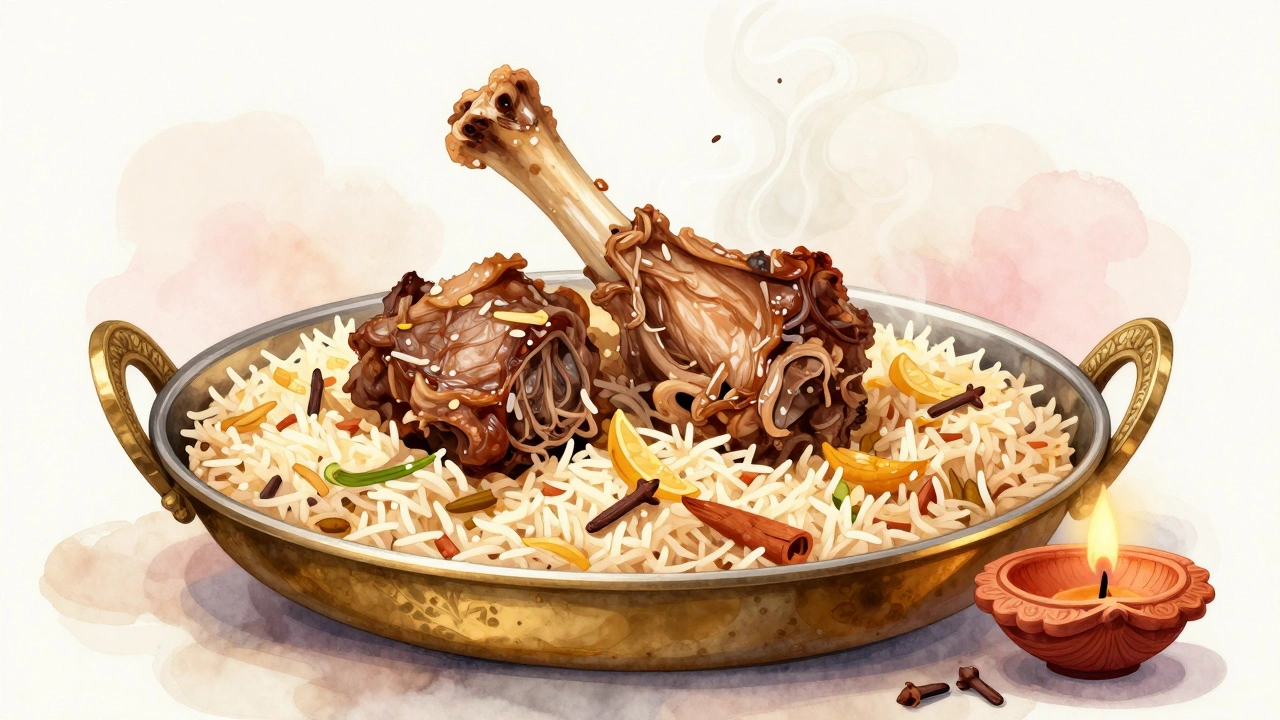
Don’t forget the others. Sindhi biryani packs in dried fruits, tomatoes, and a tangy kick. Tamil Nadu’s Ambur biryani uses shorter-grain rice and a curry-like gravy. The Malabar version from Kerala is coconut milk-infused, with a touch of curry leaves and black pepper. Each has its fans. Each has its history.
But here’s what most people don’t say: the best biryani isn’t the one with the most spices. It’s the one made with care. The one where the cook knows how long to soak the rice. The one where the meat isn’t rushed. The one where the onions are fried until they’re caramelized, not burnt. The one where the spices are toasted fresh, not pulled from a jar that’s been sitting since 2020.
What Makes Biryani Taste Good? The Real Rules
Let’s cut through the noise. No matter the region, every great biryani follows three non-negotiable rules:
- Rice matters. Basmati is the only choice. Short-grain rice turns mushy. Soak it for 30 minutes, parboil it until 70% cooked, then drain. It should still have a bite.
- Spices must be fresh. Ground spices lose flavor fast. Whole spices, toasted in ghee, then ground just before use - that’s the difference between good and unforgettable.
- Layering is sacred. Mixing everything together? That’s a stir-fry. Biryani is built in layers: meat, rice, fried onions, herbs, saffron milk. Each layer adds its own voice.
And don’t skip the dum. That final steam is what turns ingredients into magic. Seal the pot with dough or a tight lid. Cook low and slow. At least 45 minutes. No shortcuts.
So, Which Type Is Most Tasty?
Here’s the truth: there’s no single answer. It depends on your palate, your memories, and your mood.
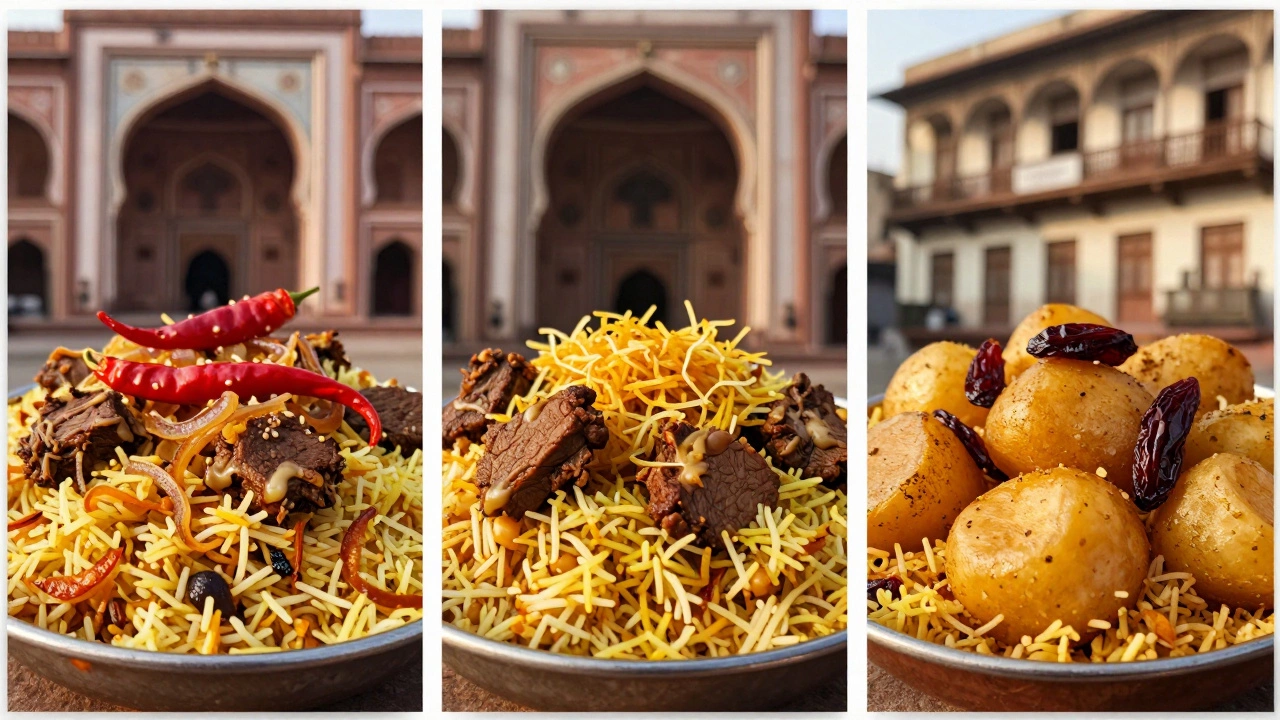
If you love bold, spicy, meaty flavors - go Hyderabadi. If you prefer elegance and subtlety - Lucknowi wins. If you crave comfort with a hint of sweetness - Kolkata is your pick.
But here’s what most people miss: the best biryani you’ll ever eat isn’t the one from a fancy restaurant. It’s the one your grandma made. Or your aunt. Or the street vendor who’s been doing it for 30 years. It’s the one where the rice smells like the kitchen after a long day. Where the onions are just a little charred. Where the meat melts because someone cared enough to cook it slow.
So try them all. Taste them side by side. Cook one yourself. And then - when someone asks you which is the most tasty - you won’t just name a region. You’ll tell them the story of the one that made you pause, close your eyes, and say, yes. This one.
Is Hyderabadi biryani always the spiciest?
Not always. While Hyderabadi biryani is known for its heat, the spice level depends on the cook. Some families use mild chilies and focus on aroma instead. The real difference is the depth of flavor from slow cooking and layering, not just chili powder.
Can I make biryani without meat?
Absolutely. Vegetable biryani is common across India, especially in South India and among vegetarian families. Use potatoes, carrots, peas, cauliflower, and paneer. The same layering rules apply - just swap the meat for roasted or sautéed veggies. Add a splash of cashew paste for richness.
Why do some biryanis have potatoes?
Potatoes were added in Kolkata during the 19th century when meat was expensive. The Nawabs wanted to stretch their rations without losing the luxury feel. The potatoes soak up the spices and add a soft, starchy texture. It’s now a signature of Kolkata biryani, not a mistake.
What’s the best rice for biryani?
Long-grain basmati rice is the only choice. It has a natural aroma, stays separate when cooked, and absorbs flavors without turning sticky. Look for aged basmati - it’s drier and cooks better. Avoid jasmine or short-grain rice; they’ll turn mushy.
Can I use pre-ground spices for biryani?
You can, but you’ll lose the depth. Freshly toasted whole spices - like cumin seeds, cardamom pods, cloves - release oils and aromas that ground spices can’t match. If you must use pre-ground, add them early in cooking so they don’t taste raw. But for the best biryani, toast and grind your own.
Next Steps: How to Pick Your Favorite
Try this: make three versions - one Hyderabadi, one Lucknowi, one Kolkata - over three weekends. Taste them blind. Write down what you feel: Was it the heat? The sweetness? The texture? The smell?
Then, make your own version. Use your favorite spices. Add a twist - maybe a pinch of smoked paprika, or swap chicken for lamb. Biryani isn’t about rules. It’s about connection. The best biryani isn’t the one everyone agrees on. It’s the one that tastes like home to you.