
24 Feb 2026
- 0 Comments
Roti Oil Calculator
Calculate exactly how much oil your roti dough needs based on flour quantity. Follow the article's recommended ratio for perfectly soft, fluffy rotis.
Note: 1 cup whole wheat flour = 125g. Use neutral oils like sunflower or canola.
0.0 tsp ( 0.0 ml )
For 1 cup flour
Ever made roti that turned out tough, dry, or cracked when you tried to roll it out? You’re not alone. Many home cooks skip the oil in roti dough, thinking it’s unnecessary-or worse, that it’ll make the roti greasy. But here’s the truth: oil is one of the most important, yet overlooked, ingredients in making soft, pliable rotis that stay fresh for hours.
What Oil Actually Does in Roti Dough
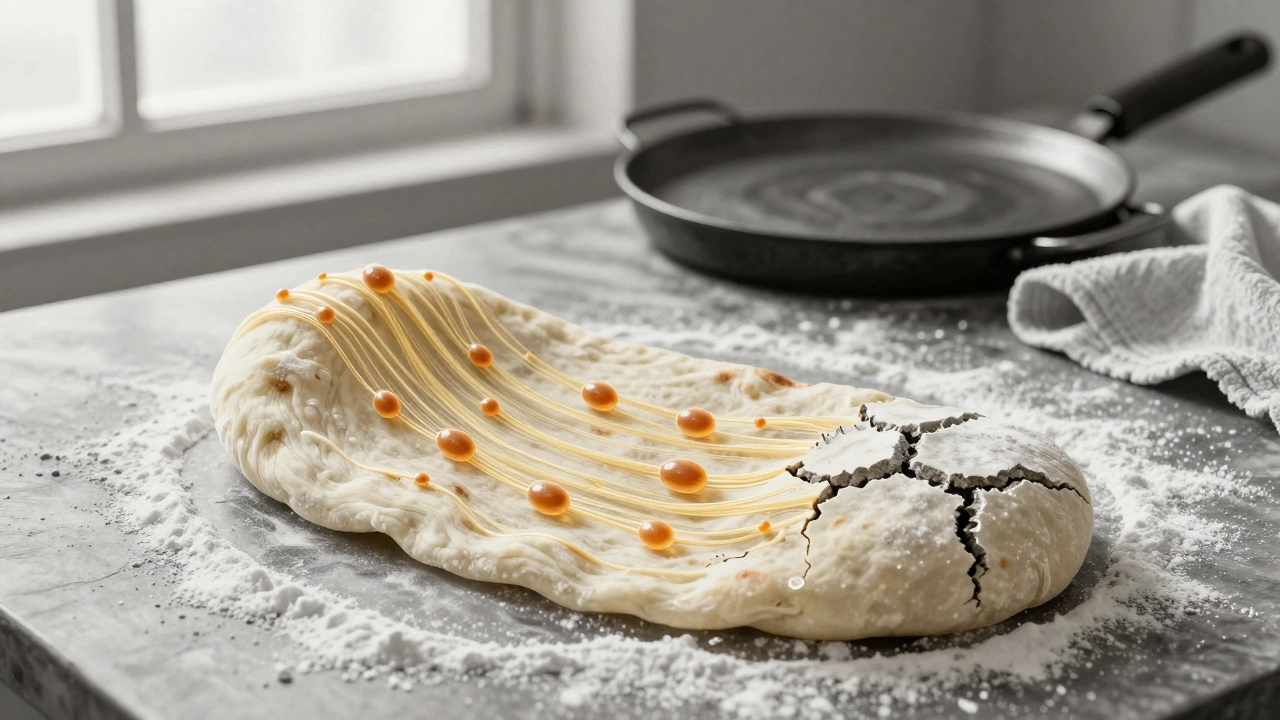
Oil isn’t just a flavor booster. It changes the physical structure of the dough at a molecular level. When you mix oil into wheat flour and water, the fat molecules coat the gluten strands. This prevents them from forming tight, rigid networks. Less gluten tension means the dough stretches easily without snapping back. That’s why roti dough with oil rolls out smoothly-even if you’re a beginner.
Without oil, the dough becomes stiff and brittle. You’ve probably seen it: the dough cracks at the edges, the roti puffs unevenly, or it turns rubbery after cooling. That’s gluten overworking. Oil acts like a lubricant, giving the dough flexibility. It’s the same reason bakers use butter in pie crusts or olive oil in pizza dough.
The Right Type and Amount of Oil
Not all oils work the same. For roti, you want a neutral-flavored oil that won’t overpower the wheat. Mustard oil? Too strong. Coconut oil? Solid at room temperature-can make dough greasy. The best choices are sunflower oil, canola oil, or even ghee if you’re going traditional.
How much? One teaspoon per cup of whole wheat flour is the sweet spot. That’s about 5 ml for 125 g of atta. More than that? Your rotis will feel oily and won’t puff properly. Less than that? You won’t notice the difference. Stick to that ratio. It’s been tested in home kitchens across India, Pakistan, and Bangladesh for generations.
When to Add the Oil
Timing matters. Add the oil after you’ve mixed the flour and water into a shaggy mass. Don’t add it dry with the flour-that leads to uneven distribution. Don’t add it at the very end-that won’t let it absorb properly. The ideal moment is after kneading for 2-3 minutes, when the dough starts coming together. Then drizzle the oil over the top and keep kneading for another 3-4 minutes. You’ll know it’s ready when the dough feels smooth, slightly tacky, but not sticky. It should bounce back gently when you press it.
How Oil Affects Cooking and Storage
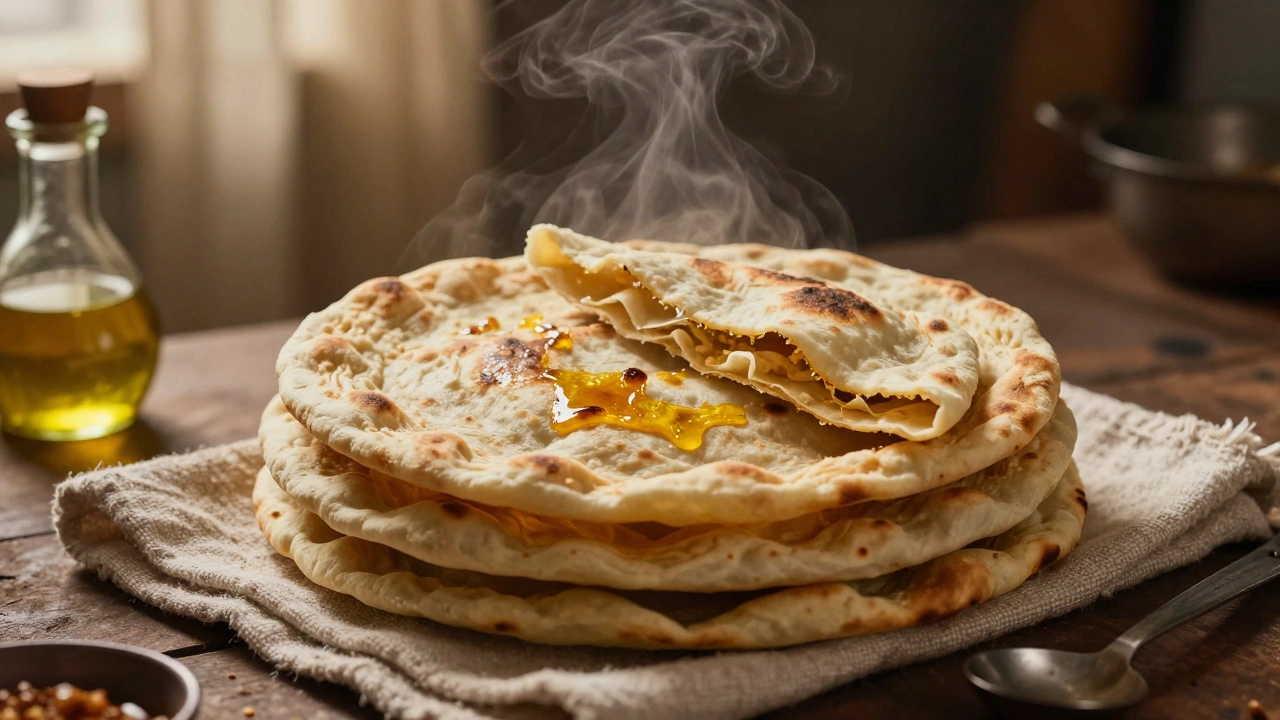
Rotis made with oil don’t just roll out better-they cook better. The fat helps conduct heat more evenly across the surface. That means consistent puffing. No more half-puffed rotis with hard spots. The oil also slows down moisture loss. A roti without oil starts drying out within 30 minutes. One with oil stays soft for 2-3 hours at room temperature. That’s why restaurants add oil to their dough: it’s practical. You can make a batch in the morning and serve them warm at lunch without reheating.
And if you store them? Oil makes a huge difference. Stack them with a clean cloth between each one, and they won’t stick together. Without oil, they fuse into one big, unpeelable lump.
Myth Busting: Does Oil Make Roti Unhealthy?
Some people avoid oil because they think it adds unnecessary fat. But one teaspoon per roti adds less than 4 grams of fat-roughly the same as half a teaspoon of butter. That’s not a lot. And since roti is a whole grain food, the fiber helps balance the fat. Plus, the oil helps your body absorb fat-soluble vitamins from vegetables you eat with it.
There’s no evidence that adding a small amount of oil to roti dough causes weight gain. What causes weight gain? Eating too many rotis, not the oil in them. If you’re watching fat intake, use a spray bottle to lightly mist the dough instead of pouring oil. It’s easier to control.
What Happens If You Skip Oil?
You’ll get rotis that are:
- Hard to roll out without tearing
- Unevenly puffed-some parts crisp, others doughy
- Dry and crumbly after cooling
- Sticky when stacked
- Shorter shelf life-gone stale in under an hour
Some traditional recipes, especially in rural areas, skip oil. But those rotis are usually eaten immediately, hot off the tawa. In modern kitchens, where rotis are made ahead or stored, oil isn’t optional-it’s essential.
Pro Tip: The Double-Dough Method
If you want extra-soft rotis, try this trick: make two batches of dough. One with oil, one without. Mix them together just before kneading. The oil-free dough gives structure. The oiled dough gives softness. The result? Rotis that puff like clouds and stay tender for hours. This is a technique used by many North Indian home cooks who serve rotis for large family meals.
Final Thought: It’s Not Just About Taste
Adding oil to roti dough isn’t a fancy trick. It’s a practical solution to a real problem: rotis that don’t hold up. In a busy household, you want rotis that are easy to make, easy to roll, easy to store, and still soft at dinnertime. Oil delivers all of that. It’s not about luxury. It’s about reliability.
Try it once. Use a teaspoon of oil in your next batch. Roll it out. Cook it. Feel how it stretches. Taste it later, cold from the fridge. You’ll wonder why you ever made roti without it.
Do I need oil if I’m using ghee instead?
Yes, but you can use ghee instead of oil. Melted ghee works just like oil in roti dough. It gives the same softness and puffing benefits. Many North Indian families prefer ghee because of flavor. Use the same amount-one teaspoon per cup of flour. Just make sure it’s cooled slightly before adding, or it might cook the flour.
Can I use butter instead of oil?
Not really. Solid butter doesn’t mix evenly into dough. It can create greasy patches and uneven texture. If you must use butter, melt it first and let it cool to room temperature. But even then, oil or ghee still performs better. Stick to neutral oils or ghee for consistent results.
Why do my rotis still crack even with oil?
Cracking usually means the dough is too dry. Oil helps, but it can’t fix a dough that lacks moisture. Try adding one extra tablespoon of water while kneading. Let the dough rest for at least 20 minutes before rolling. Resting lets the flour absorb water fully, making the dough more elastic. Oil + proper hydration = no cracks.
Is oil necessary for chapati too?
Yes. Chapati is just another name for roti. The terms are used interchangeably in most places. Whether you call it chapati, roti, or phulka, the dough needs oil for softness and puffing. Some people skip it for religious or dietary reasons-but they usually eat it immediately. For everyday use, oil makes a noticeable difference.
Can I add oil to whole wheat flour dough?
Absolutely. In fact, whole wheat dough benefits even more from oil because it’s naturally coarser and drier than refined flour. The oil softens the bran particles and helps the dough hold together. Many health-focused households now add oil to whole wheat roti specifically to improve texture. You won’t lose nutrition-you’ll just get better rotis.