31 Mar 2026
- 0 Comments
If you have ever opened your kitchen cupboard to find a clumpy, grey-looking mass instead of fluffy dough, you know the heartbreak of bad batter. The culprit is almost always the leavening agent. Too much baking soda is a chemical compound commonly used to raise baked goods by reacting with acids to produce carbon dioxide gas, and it ruins the taste. Too little, and your breakfast looks like a dense hockey puck. You are likely wondering exactly what measurement fits your specific bowl of ground dal and rice. There is a standard baseline, but your local environment plays a huge role in the final number.
The Exact Measurements You Need
Before we get into the variables, let’s look at the rule of thumb that works for 80% of home cooks. When you are preparing the batter, measure your dry ingredients before soaking. For every 500 grams of mixed grains (typically one cup of urad dal and two cups of rice), you should aim for roughly half a teaspoon of sodium bicarbonate. This small amount helps lift the structure without making it soapy. If you prefer a more scientific approach, use a digital scale. Approximately 2 to 3 grams of leavening powder per kilogram of dry weight yields consistent results in standard climates. Adding this directly into the grinder while wetting the lentils helps distribute it evenly throughout the slurry.
| Batch Size (Dry Weight) | Baking Soda Amount | Expected Result |
|---|---|---|
| 250g Grains | 1/4 teaspoon | Slight rise, delicate texture |
| 500g Grains | 1/2 teaspoon | Standard fluffy porosity |
| 1kg Grains | 1 teaspoon | High rise, very crisp exterior |
| 1.5kg Grains | 1 1/2 teaspoons | Extra puffy, good for cold weather |
Notice something interesting here? As the volume increases, the ratio remains relatively linear. However, do not simply double the powder if you cut the batch in half. Smaller batches tend to retain heat better during the short cooking window, meaning they rely slightly less on artificial lift if they ferment well. This table serves as your safety net when scaling up recipes for weekend parties. Precision here saves you from having to discard a bucket of sour-tasting mixtures.
When Timing Changes Everything
You might have seen conflicting advice online. Some sources tell you to toss the leavening agent in with the water before grinding, while others insist on stirring it in the day before serving. The timing dictates the chemical reaction path. If you add the alkali immediately upon grinding, you are starting the clock early. This consumes some of the potential air bubbles before the natural yeasts even wake up to do their work. Ideally, keep the powder out until the night before you plan to eat.
Here is the workflow that guarantees the best texture:
- Grind the soaked dal and rice with fresh water to a fine paste.
- Add salt to the ground mixture immediately.
- Cover the container tightly with a lid to trap moisture.
- Place it in a warm corner of the room (around 28-30 degrees Celsius).
- Wait 10 to 14 hours for the Fermentation is the process where microorganisms transform carbohydrates into alcohol or organic acids.
- Only then, stir in the measured soda right before you take the first spoonful.
This delayed addition allows the natural wild yeast present on the rice hulls to build pressure first. Then, when you add the powder, it reacts with the newly formed lactic acid. The combination of biological lift and chemical lift creates those signature holes in the middle of the crepe. Stirring vigorously after adding the powder creates tiny streams of bubbles which makes the texture lighter.
Why Your Results Might Vary
Ever tried a recipe in Sydney that worked perfectly in Chennai? It is not just your technique; it is the invisible factors of your environment. Water chemistry is the biggest hidden variable. Tap water in many parts of Australia is considered "hard" due to high mineral content like calcium and magnesium. These minerals react with the sodium in the bicarbonate, neutralizing some of its lifting power. If your water has a lot of sediment or tastes metallic, you likely need to increase the amount slightly, perhaps by a quarter teaspoon. Conversely, if you are using filtered or boiled water that has been softened, stick strictly to the lower end of the recommended ratio.
Temperature is another silent killer of rising batter. During summer months in Australia, ambient temperatures soar above 35 degrees. In this heat, the batter ferments aggressively fast. If you leave it for too long, it turns overly sour, requiring more leavening to balance the flavor profile. However, because the bacteria are already hyper-active, adding too much powder will make it rise and collapse within hours. For winter mornings, when the temperature drops below 15 degrees, the bacteria sleep. You might need to add a pinch more than usual to force the expansion, otherwise, you end up with rubbery, uncooked centres.

The Telltale Signs of Mistakes
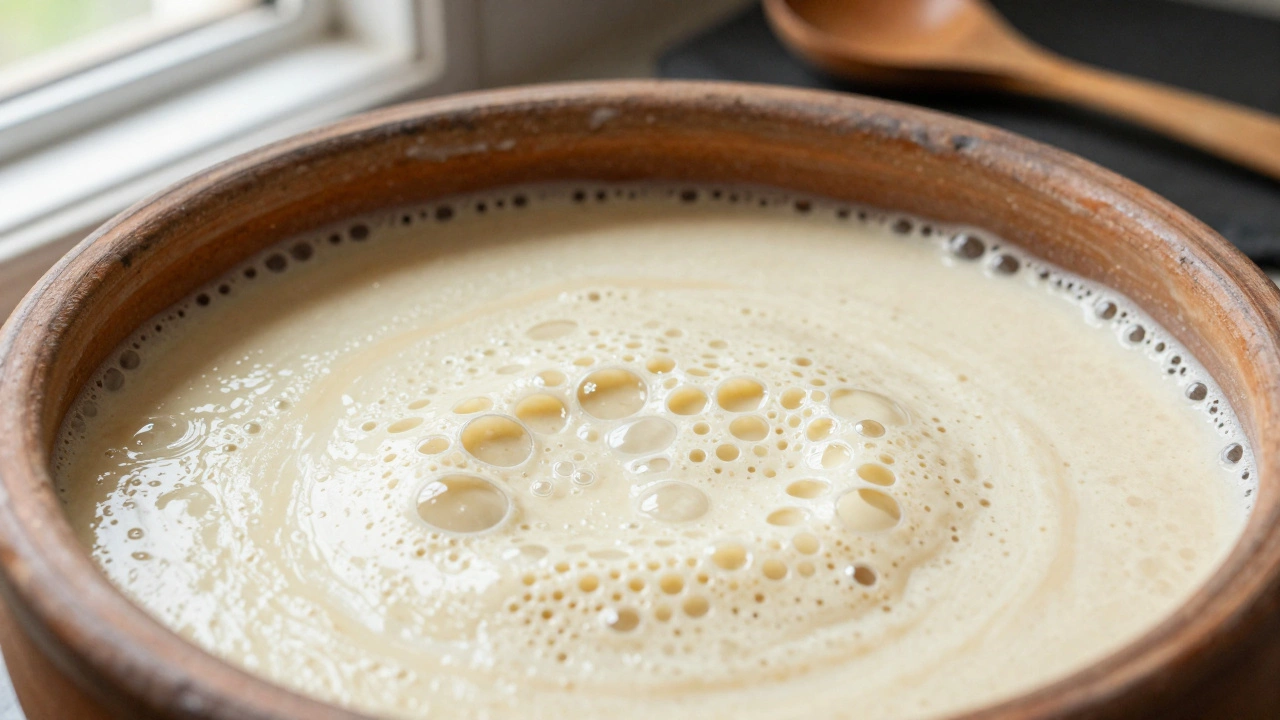
How can you tell you messed up before you even flip the tortilla onto the pan? Look closely at the batter consistency. Healthy batter smells slightly tangy, like yogurt. If it smells sharp or medicinal, you overdid the alkali. Visually, the bubbles should be distinct and separate, looking like honeycomb cells. If the batter looks uniform and milky with no separation between liquid and solids, the gas isn’t holding in place. On the stove, the test is immediate. Place a ladle full of batter into hot oil. If it sizzles instantly and spreads out thin, the texture is right. If it stays in a lump, it hasn’t risen enough.
Taste is the ultimate litmus test. The classic mistake is adding too much powder, thinking more equals fluffier. While this might create height initially, it leaves behind sodium salts that have no other place to go. Once the water evaporates during frying, those residues stay on your tongue. The result is a distinctively soapy flavour that kills the sweetness of the chutney. If you notice a greyish hue on the cooked surface instead of a golden brown, you have definitely gone overboard. Adjusting down to the next batch is the best cure.
Alternatives When You Run Dry
We all forget ingredients sometimes. What happens if you open the pantry and the box is empty? You can turn to Eno Salt is an effervescent powder containing sodium bicarbonate and citric acid. While baking soda is pure base, Enos contains acid too. Because Enos does both sides of the reaction, you need less of it. Typically, one tablet per standard batch (500g grains) suffices. Dissolve the tablet in a little warm water and stir that solution into your batter. It works faster than plain powder, giving you a quick boost without the risk of bitterness.
For a completely traditional route without any chemicals, you can use fenugreek seeds. Grinding a teaspoon of methi seeds with the urad dal releases enzymes that encourage natural fermentation. This takes longer to show results, often requiring a 24-hour sit, but the aroma is superior to anything created by commercial powders. Another option is using old bread. Mixing torn pieces of stale bread into the grinding jar adds starch and gluten. The breakdown creates a sponge-like matrix that traps air naturally. While this won’t give the same level of puff as the chemical method, it ensures zero aftertaste and excellent digestibility for sensitive stomachs.

Storing Your Mix Without Losing Volume
Once you have achieved the perfect consistency, handling becomes critical. Moving the pot around jostles the trapped gas bubbles. To store the batter overnight without deflating the lift, place the heavy lid on tight and ensure the container sits flat. Do not tilt the bowl to pour it out, as this encourages the liquid to settle away from the solids. Always use a ladle to dip down gently and scoop from the bottom, bringing everything up in a single motion. If you wait too long before cooking after mixing the powder, the chemical reaction completes itself, and the batter loses its spring. Ideally, you should cook the entire batch within four hours of adding the agent.
Consider the seasonality of your storage. If you live in a humid area near the coast, you might notice the top layer of your batter developing a scum film. This is harmless but indicates bacterial growth. Skim this off before stirring in the soda. The soda acts as a preservative in moderation, slightly inhibiting the growth of bad microbes. However, relying on it solely for shelf-life is dangerous. Always refrigerate the remaining mixture immediately after breakfast to stop the biological processes.
Frequently Asked Questions
Can I use baking powder instead of baking soda?
Yes, but you need twice as much. Baking powder is already diluted with cornstarch and an acid. For every 1/2 teaspoon of soda, substitute with 1 teaspoon of baking powder. Note that powder may result in slightly less crispiness compared to pure soda.
Does my water affect how much I should use?
Absolutely. Hard tap water requires a bit more baking soda (add 25% extra) to overcome the mineral interference. Soft or filtered water follows the standard ratios precisely to avoid soapy flavors.
When is the best time to add the ingredient?
Add it just before you start cooking, about 30 minutes after removing the batter from fermentation. This ensures maximum lift while keeping the flavor balanced and mild.
My dosas turned yellow. Did I use too much?
Yellowing is a common sign of excess base reaction with the spices or oil. Stick closer to the lower end of the measurement guide (half teaspoon per kg) to fix this issue.
Is it safe for children to consume?
Using the recommended quantities is perfectly safe for kids. It aids digestion by breaking down complex carbs. Excessive intake is the only concern, which manifests as nausea.