14 Jul 2026
- 0 Comments
Indian Sweetener Guide & Converter
Find the Right Term
Result
Walk into any kitchen in India, and you will hear a variety of words when someone asks for sugar. You might hear Shaktar is the common Hindi word for refined white sugar, derived from the Sanskrit root 'sharkara' meaning granules or crystals. In other regions, it is called Chini is a widely used term for sugar in North India, originating from the Chinese trade routes where sugar processing techniques were historically exchanged. If you are looking at a recipe for Indian sweets, understanding these terms is crucial because they often dictate not just the ingredient, but the texture and tradition of the dish.
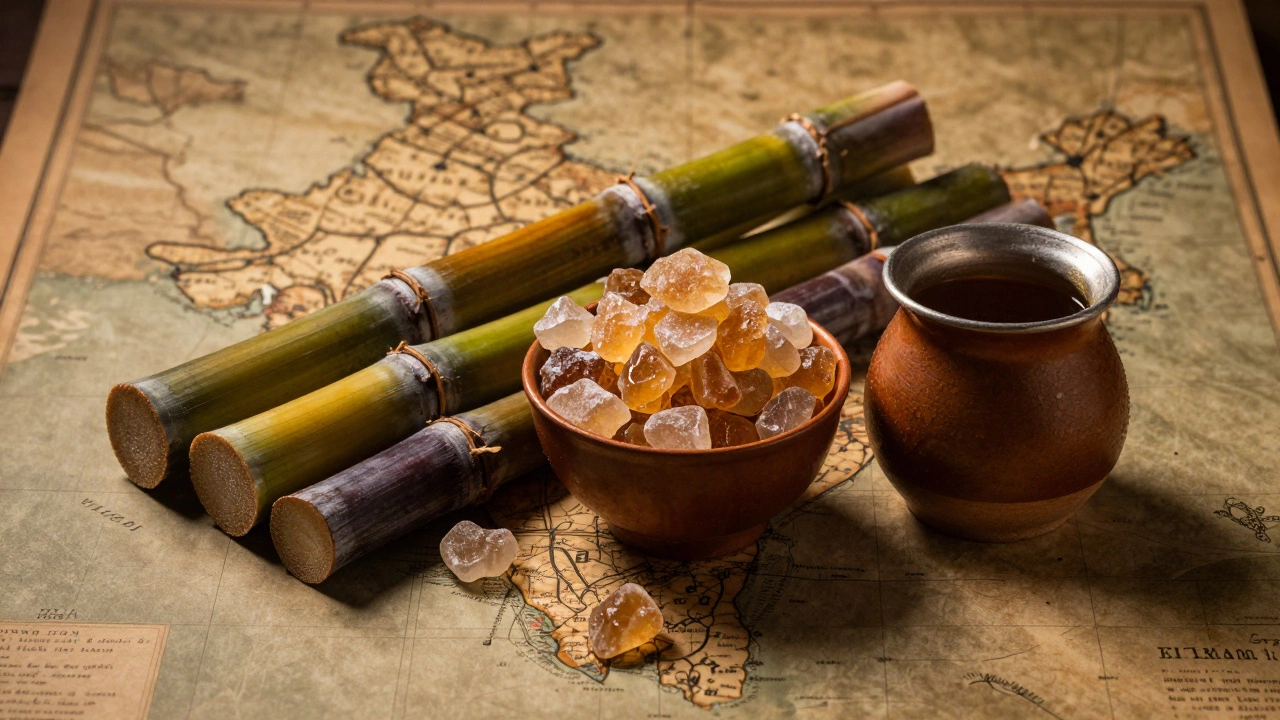
The question "What is the Indian word for sugar?" seems simple, but the answer reveals a deep cultural history. India is the birthplace of sugarcane cultivation and the first civilization to crystallize sugar. Because of this ancient heritage, there isn't just one word. There are regional variations, linguistic roots, and even distinctions between refined white sugar and unrefined natural sweeteners like jaggery. Knowing the right word helps you communicate better with local vendors, understand authentic recipes, and appreciate the culinary diversity of the subcontinent.
The Linguistic Roots: From Sanskrit to Modern Dialects
To truly understand the terminology, we have to look back at the origins. The word for sugar in India traces back to the Sanskrit word Sharkara. This word traveled west through Persian as Shakar, then into Arabic as Sukkar, and eventually evolved into the English word "Sugar." So, when you use the word sugar, you are actually using a very old Indian loanword that has circled the globe.
In modern Hindi and Urdu, the most direct translation for white, refined sugar is Shaktar. You will see this on labels in supermarkets across Delhi, Mumbai, and Kolkata. It refers specifically to the crystallized product extracted from sugarcane juice. However, language in India is incredibly fluid. In many parts of Northern India, including Punjab and Haryana, people commonly say Chini. This term is so prevalent that even if you ask for "sugar" in a rural market in Uttar Pradesh, saying "Chini" might get you a more immediate response than "Shaktar."
As you move south, the vocabulary shifts again. In Tamil, sugar is known as Karuppu (which literally means black, referring to the color of raw cane juice) or Chakkari for the processed form. In Telugu, it is Gudam (though this often refers to jaggery) or Chakkarai. In Malayalam, it is Chatti. These variations highlight how deeply embedded the concept of sweetness is in each regional identity. When reading an Indian sweets recipe, paying attention to these specific terms can tell you whether the recipe calls for refined white sugar or a coarser, more traditional variant.
Refined vs. Unrefined: Shaktar, Khandsari, and Gud
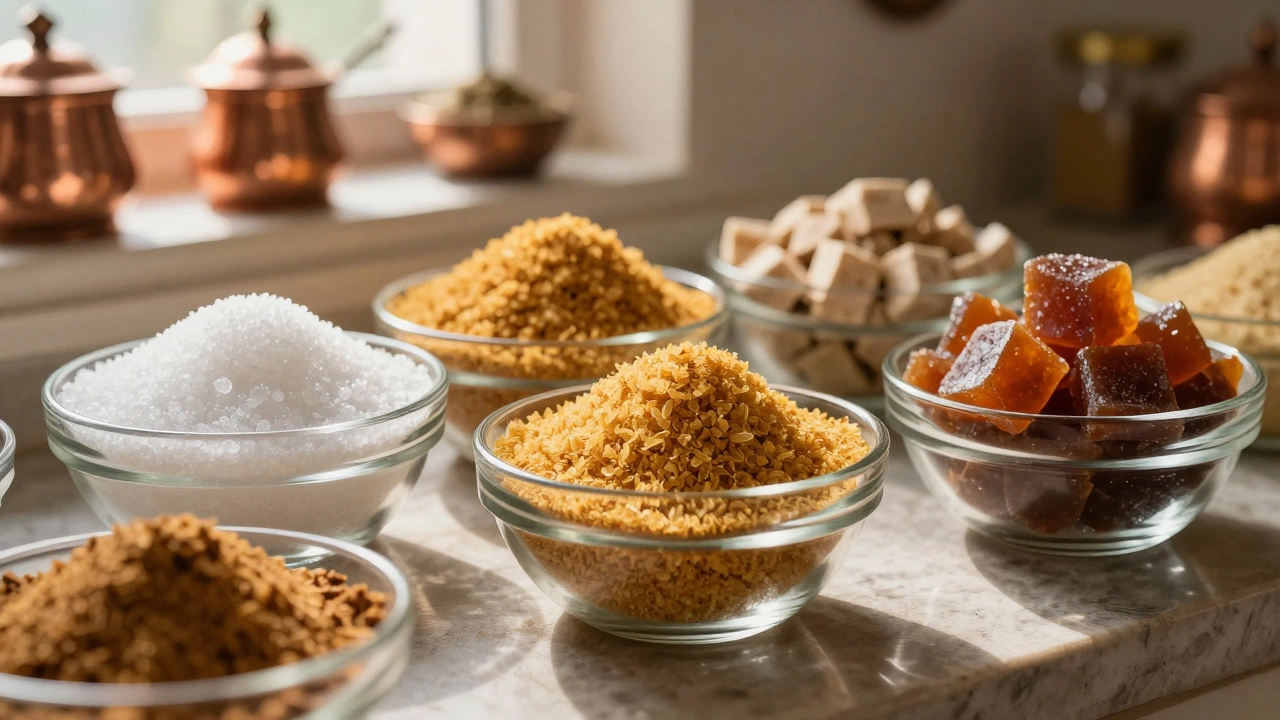
In Indian cooking, not all sweeteners are created equal. While "Shaktar" usually implies refined white sugar, there are other types of sugar products that are essential to Indian cuisine. Understanding the difference between them is key to mastering Indian sweets recipes.
| Type | Common Name(s) | Color & Texture | Best Used For |
|---|---|---|---|
| White Refined Sugar | Shaktar, Chini | White, fine crystals | Baking, chai, general cooking |
| Unrefined Cane Sugar | Khandsari | Light brown, coarse grains | Traditional sweets, health-conscious desserts |
| Jaggery | Gud, Nolen Gur | Dark brown, solid block or powder | Ghee-based sweets, winter tonics |
| Rock Sugar | Mishri | Translucent, large crystals | Garnishing, digestive aid after meals |
Khandsari is unrefined cane sugar that retains some molasses, giving it a light golden-brown color and a slightly caramel-like flavor compared to white sugar. Unlike Shaktar, which undergoes heavy processing to remove impurities, Khandsari is simply washed and dried. It is often preferred in Ayurvedic practices because it is considered easier to digest. If a recipe for Barfi or Ladoo calls for Khandsari, substituting white sugar will change the taste profile significantly, making it less complex and earthy.
Then there is Gud is jaggery, a non-centrifugal cane sugar consumed throughout the Indian subcontinent, known for its rich mineral content and deep molasses flavor. While technically a form of sugar, Gud is distinct from Shaktar. It is made by boiling sugarcane juice until it thickens and hardens. In Bengali cuisine, Nolen Gur (date palm jaggery) is a prized variation used exclusively for winter sweets like Pantua. Using white Shaktar in place of Gud would result in a flat, one-dimensional sweetness that lacks the characteristic depth of traditional Indian desserts.
Sugar in Regional Sweets: How Terminology Affects Recipes
When you dive into Indian sweets recipes, the type of sugar mentioned can determine the success of the dish. For example, in the preparation of Rasgulla, a spongy cheese ball soaked in syrup, the syrup is traditionally made with white Shaktar. The clarity of the syrup is important for the visual appeal of the dessert. Here, the purity of the sugar ensures the final product looks pristine white.
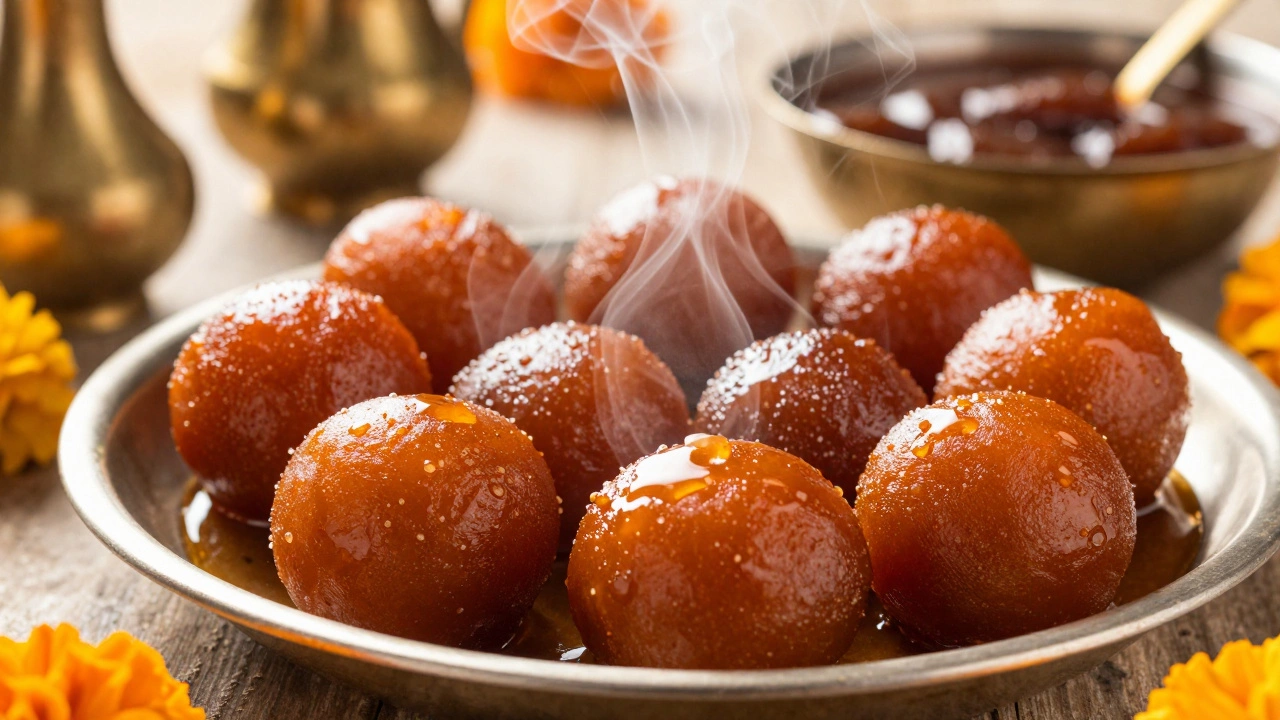
Contrast this with Gulab Jamun. While many home cooks use white sugar for the syrup, traditionalists argue that a hint of Khandsari adds a subtle aroma that complements the fried milk solids. The slight impurities in Khandsari carry floral notes from the cane that refine away in Shaktar. This nuance is why understanding the specific word matters-it’s not just about sweetness; it’s about flavor complexity.
In South Indian cuisine, sweets like Payasam (or Payasa) often use Jaggery (Gud) instead of white sugar, especially during festivals. The dark color of the jaggery gives the payasam a rich, amber hue. If you mistakenly use Shaktar, you will end up with a pale yellow dish that misses the traditional aesthetic and the robust, iron-rich taste associated with festive occasions. The instruction "add sugar" in a generic blog post might be ambiguous, but in an authentic context, knowing whether to reach for Shaktar or Gud is critical.
Cultural Significance and Etiquette
Sugar in India is not just an ingredient; it is a symbol of auspiciousness. At weddings, guests are welcomed with Mithai (sweets), and the act of feeding someone a sweet is a gesture of goodwill and blessing. In these contexts, the quality of the sugar matters. High-grade Shaktar or pure Khandsari is preferred because it signifies purity and respect for the guest.
You will also find Mishri is rock sugar, consisting of large, translucent sugar crystals formed by slow evaporation of sugarcane juice, often used as a digestive aid or garnish. Mishri is frequently offered after meals to aid digestion. It is not dissolved into the food but chewed slowly. This practice highlights the medicinal view of sugar in traditional Indian culture, where it is seen as a source of energy and warmth, particularly in winter.
Understanding these cultural cues helps when traveling or interacting with Indian communities. Asking for "Shaktar" shows a level of familiarity with the language, while requesting "Khandsari" demonstrates an appreciation for healthier, traditional options. It bridges the gap between being a tourist and becoming a participant in the culture.
Health Perspectives: Beyond White Sugar
In recent years, there has been a shift towards reducing refined sugar intake. This has led to a resurgence in the popularity of Khandsari and Gud. Many health-conscious Indians now prefer these alternatives because they retain trace minerals like iron, magnesium, and potassium, which are stripped out during the refining process of Shaktar.
If you are adapting Indian sweets recipes for a healthier diet, swapping Shaktar for Khandsari is a straightforward step. However, be aware that the moisture content can vary. Khandsari may absorb moisture differently than white sugar, so adjustments in liquid ratios might be necessary. Jaggery is another option, but it introduces a strong flavor that can overpower delicate sweets. Always consider the balance of flavors when making substitutions.
Is Shaktar the same as regular white sugar?
Yes, Shaktar is the Hindi word for refined white sugar. It is chemically identical to the sucrose found in standard white sugar packets worldwide. The term is specific to the Hindi-speaking regions of India.
Can I substitute Khandsari for white sugar in baking?
You can, but keep in mind that Khandsari has a coarser grain and a slight molasses flavor. In baking, this may affect the texture and taste. It works well in cookies and cakes where a caramel note is desirable, but may not be ideal for delicate pastries requiring neutral sweetness.
What is the difference between Chini and Shaktar?
There is no chemical difference; both refer to refined white sugar. The distinction is purely linguistic and regional. "Chini" is more common in colloquial speech in North India, while "Shaktar" is the formal term often used in written contexts and labeling.
Why is Jaggery called Gud in some places?
"Gud" is the Hindi word for jaggery. In other languages, it has different names: "Nungu" in Tamil, "Bellam" in Telugu, and "Palm Sugar" in English contexts. It is essentially unrefined cane sugar that has been boiled down into a solid block.
Is Mishri healthy?
Mishri is rock sugar. While it is still sugar and should be consumed in moderation, it is traditionally believed to aid digestion and soothe sore throats. It is less processed than white sugar but offers similar caloric content.