27 Feb 2026
- 0 Comments
Dal is one of the most common dishes in Indian homes-not because it’s fancy, but because it’s comforting, cheap, and fills you up. But if you’ve ever sat down to a bowl of plain dal and wondered, “Now what?”, you’re not alone. The truth is, dal doesn’t just sit there. It needs company. The right sides turn a simple lentil stew into a full, satisfying meal.
Why Dal Needs Partners
Dal is soft, mild, and slightly earthy. Left alone, it can feel like eating warm soup with no texture. That’s why traditional Indian meals never serve dal by itself. It’s designed to balance out stronger flavors-spicy chutneys, crunchy vegetables, chewy breads. Think of it like a canvas. The dal is the base. Everything else paints the picture.
When you pair dal with the right foods, you get contrast: heat with cool, crunch with soft, richness with lightness. It’s not just about taste. It’s about how the meal feels in your mouth and how it keeps you full for hours.
1. Steamed Rice (Plain or Jeera)
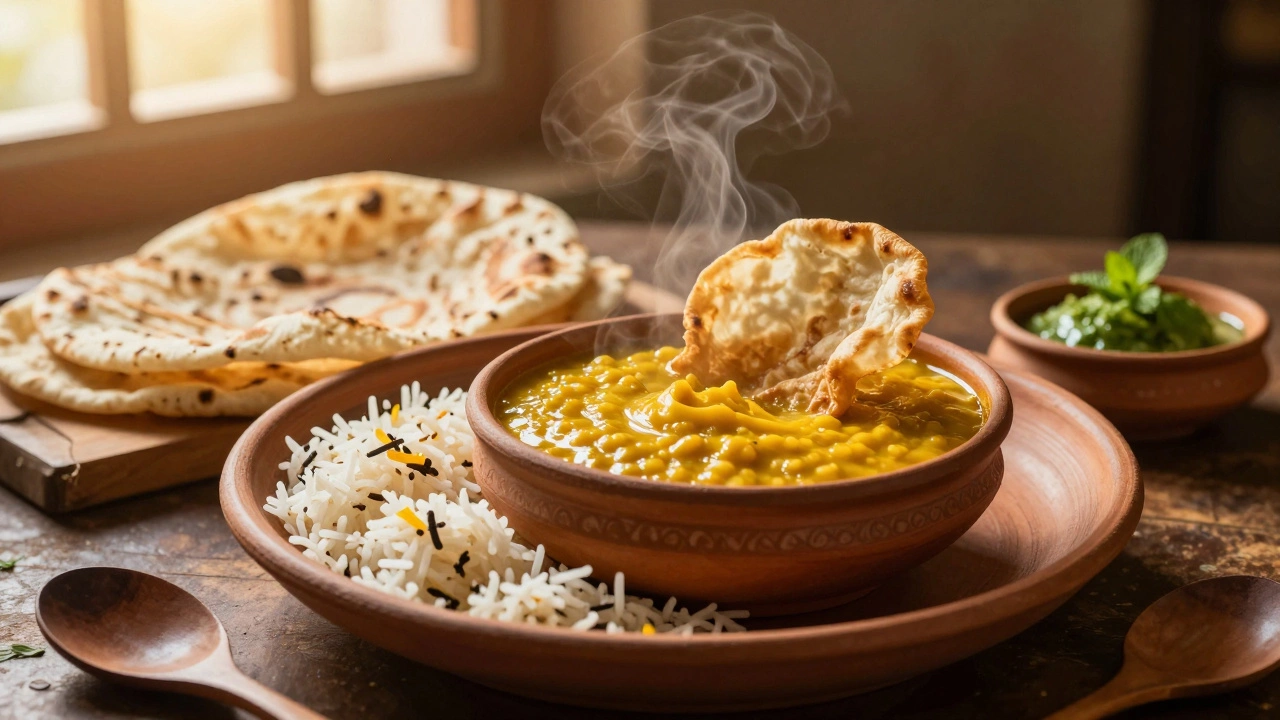
The most classic pairing is white steamed rice. It’s simple, but it works because rice soaks up the dal like a sponge. The grains stay separate, letting each bite carry flavor without turning mushy.
For extra depth, try jeera rice-rice cooked with cumin seeds, a pinch of turmeric, and a little ghee. The cumin adds a warm, nutty note that mirrors the lentils. In homes across India, this combo-dal and jeera rice-is the default lunch. It’s what you eat after a long day. It’s what your grandmother made.
2. Roti or Chapati
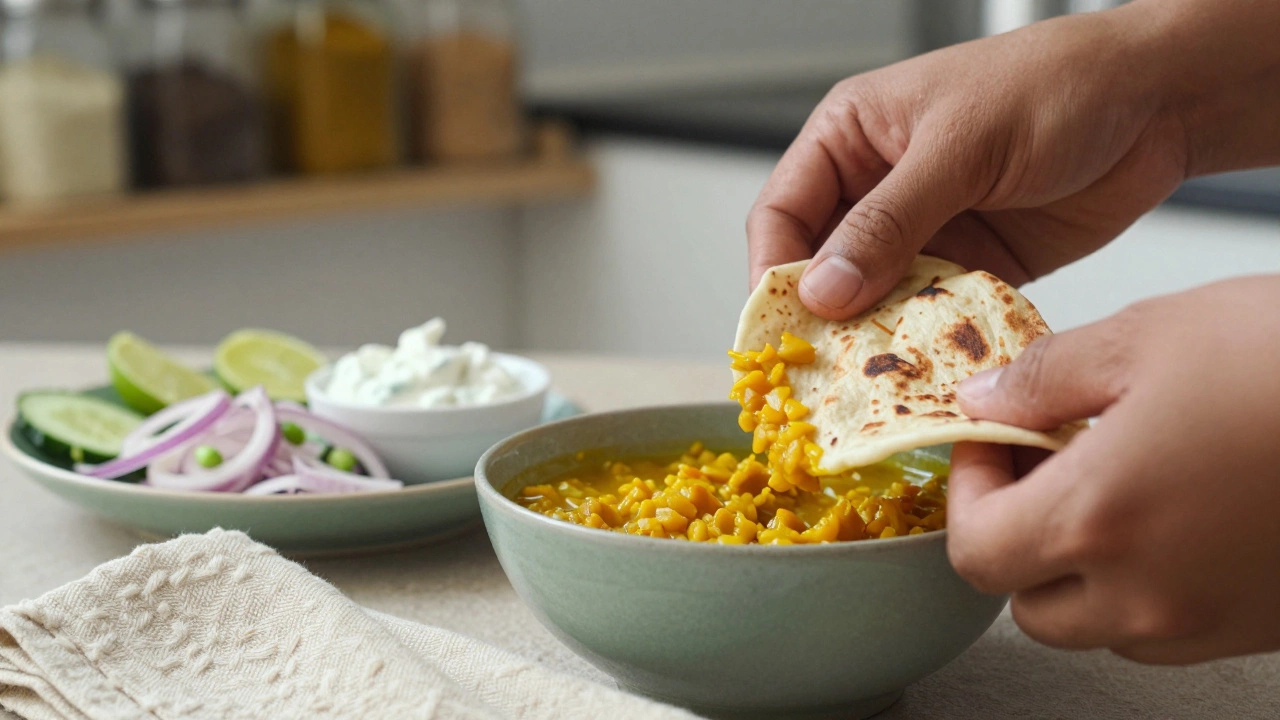
If you’re not a rice person, roti is your best friend. Freshly made, warm roti is soft enough to dip into dal, but strong enough to hold its shape. You tear off a piece, scoop up a little dal, and roll it into a little bundle. It’s tactile. It’s satisfying.
Don’t skip the ghee. A small pat of melted butter on a hot roti melts into the dough and turns it into something almost magical. Add a sprinkle of salt, and you’ve got a snack that tastes like home.
3. Papadum (Papad)
Papadum is the crunchy counterpoint to dal’s softness. Thin, crispy, and often seasoned with black pepper, cumin, or asafoetida, it’s usually fried or roasted until it puffs up. When you break it into pieces and drop them into your dal, it dissolves slowly, adding texture and a sharp, salty kick.
Many people eat papadum on the side, but the best way? Let it soak. Let it soften just a little. The contrast between the crumbling crisp and the creamy dal is what makes this pairing unforgettable.
4. Pickles and Chutneys
Dal needs a punch. That’s where pickles and chutneys come in.
- Mango pickle-tangy, spicy, oily. A teaspoon cuts through the blandness.
- Tamarind chutney-sweet and sour. Great for balancing the earthiness of lentils.
- Mint-coriander chutney-fresh, green, sharp. It wakes up the whole plate.
You don’t need much. A spoonful on the side is enough. It’s like adding a dash of lemon to soup-suddenly, everything has more life.
5. Cucumber and Onion Salad
A simple salad of thinly sliced cucumber, red onion, and a squeeze of lime is one of the most underrated sides for dal. No dressing, no oil-just salt, pepper, and citrus.
The crunch is refreshing. The coolness cools down any spice in the dal. And the onion? It adds a sharp bite that cuts through the richness. It’s the kind of side you don’t think about until you try it. Then you wonder why you ever ate dal without it.
6. Yogurt or Raita
If your dal has chili or garlic, yogurt is your natural ally. Plain, cool yogurt soothes the palate. But for more flavor, make a quick raita: grated cucumber, a pinch of cumin, a dash of salt, and a spoonful of yogurt.
It’s not just about comfort. Yogurt also helps digestion. Lentils are high in fiber. Adding yogurt makes them easier to process. It’s a smart, traditional pairing with science behind it.
7. Stir-Fried Greens (Saag or Spinach)
Stir-fried spinach, mustard greens, or fenugreek leaves-called saag-add color, nutrients, and a slightly bitter note that works beautifully with dal.
Just sauté them in mustard oil with a little garlic and dried red chili. They don’t need much. A handful of greens cooked for five minutes is enough. Serve them on the side, or mix them into your dal for a heartier bowl.
8. Bhatura or Poori
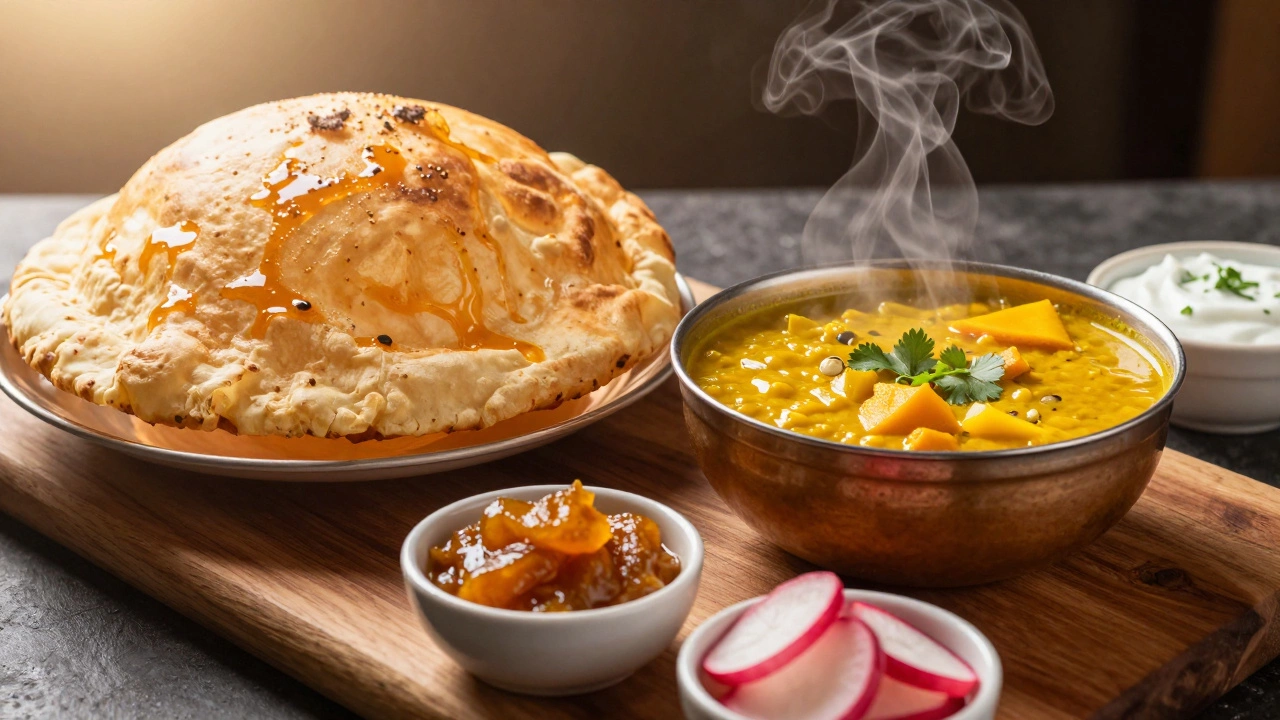
For special occasions, or if you’re feeling indulgent, go for bhatura or poori. These deep-fried breads are fluffy, airy, and rich with ghee. They’re not everyday food-but when you have them with dal, it’s a celebration.
Especially in North India, dal bhatura is a weekend classic. The poori soaks up the dal like a sponge, then breaks apart into soft, buttery pieces. It’s comfort food at its most luxurious.
9. Pickled Vegetables (Achar)
Not just mango-try pickled carrots, radishes, or green beans. These are common in households that make their own pickles. The acidity cuts through the lentils, and the sweetness balances the salt.
A small side of pickled veggies adds complexity without overwhelming. It’s like the secret ingredient no one talks about.
10. Khichdi (Dal + Rice + Spices)
Here’s a twist: why not skip the sides and combine everything? Khichdi is the ultimate one-pot meal-lentils, rice, turmeric, cumin, and ghee, all cooked together into a porridge-like dish.
It’s what people eat when they’re sick. It’s what babies eat. It’s what monks eat. It’s simple, nourishing, and deeply grounding. If you want to eat dal in its most elemental form, this is it.
What Not to Pair With Dal
Not everything works. Avoid heavy, greasy dishes like fried samosas or rich paneer curries. They compete with dal instead of complementing it. You want balance, not overload.
Also, skip sugary desserts right after. A light fruit like mango or papaya is fine. But cake or gulab jamun? Save it for later. Your stomach will thank you.
How to Build a Complete Dal Meal
Here’s a quick guide to putting together a balanced plate:
- Start with dal as the base (1 cup).
- Add rice or roti (1-2 servings).
- Include one crunchy element (papadum or salad).
- Add one tangy or spicy element (chutney or pickle).
- Finish with one cooling element (yogurt or raita).
That’s it. Five elements. No need for six dishes. No need for a feast. Just good, thoughtful pairing.
Why This Matters Outside India
In Sydney, where I live, you’ll see dal on menus-but often served alone. No rice. No chutney. Just a bowl of lentils. That’s like serving pasta without sauce. It’s not wrong. But it’s incomplete.
Dal isn’t just a side dish. It’s the heart of a meal. And when you pair it right, it becomes something deeper: a ritual. A way to slow down. To eat with intention.
Can I eat dal with bread other than roti?
Yes. While roti is traditional, you can use naan, paratha, or even whole grain toast. The key is texture-something sturdy enough to scoop but soft enough to enjoy with the lentils. Avoid overly sweet or buttery breads like brioche-they clash with the earthy flavor of dal.
Is dal healthy on its own?
Dal is packed with plant-based protein, fiber, and iron. But eaten alone, it lacks fats and carbs that help your body absorb nutrients. Pairing it with rice or roti adds energy, and a little ghee or oil helps your body absorb the iron and vitamins. A complete meal with dal includes all three: protein, carbs, and healthy fat.
How long does cooked dal last in the fridge?
Cooked dal keeps well for 4-5 days in an airtight container in the fridge. Reheat it with a splash of water to bring back its creamy texture. It also freezes well for up to 3 months. Just thaw and reheat gently.
Can I use canned lentils for dal?
Yes, but rinse them well to remove excess sodium. Canned lentils cook faster, so skip the soaking step. Simmer them with spices for 10-15 minutes to let the flavors blend. The texture won’t be as rich as home-cooked, but it’s a great shortcut for busy days.
What’s the difference between dal and lentils?
Lentils are the dried seeds you buy in a bag. Dal refers to the cooked dish made from those lentils-usually split and skinned, then simmered with spices. So all dal is made from lentils, but not all lentils are dal until they’re cooked into a stew.
Final Thought
Dal isn’t meant to be eaten alone. It’s meant to be shared-with rice, with bread, with chutney, with a crunch, with cool yogurt. It’s the quiet center of a meal that holds everything together. When you get the pairing right, you don’t just eat dinner. You feel it.