22 Sep 2026
- 0 Comments
Lentil Cooking Time Estimator
Select your lentil type and preparation method to get precise cooking instructions.
You’ve probably stood over a pot of simmering water, staring at the clock, wondering if your lentils are done or still too crunchy. It’s frustrating when you want a quick weeknight dinner but end up with undercooked pulses that taste like chalk. The truth is, there isn’t one single answer to "how long do lentils need to cook?" because it depends entirely on what kind you bought and how you prepped them.
If you’re making a classic Indian dal using red split lentils, you might be done in 15 minutes. But if you’re trying to keep whole brown lentils intact for a salad, they could take 40 minutes or more. Getting this timing right is the difference between a mushy mess and a perfectly textured dish. Let’s break down exactly what to expect so you never have to guess again.
The Short Answer: Quick Reference Guide
Before we get into the details, here is the cheat sheet most home cooks need. These times assume you are boiling lentils in unsalted water (salt can toughen skins) and starting from dry, unsoaked beans. If you soak them overnight, cut these times by half.
| Lentil Type | Unsoaked Time | Soaked Time | Best For |
|---|---|---|---|
| Red/Yellow Split Lentils | 15-20 mins | 8-10 mins | Dal, soups, purees |
| Green/Brown Lentils | 30-40 mins | 15-20 mins | Salads, stews, side dishes |
| Black Beluga Lentils | 25-30 mins | 15 mins | Gourmet sides, salads |
| French Puy Lentils | 35-45 mins | 20-25 mins | Firm salads, warm bowls |
Why Red Lentils Are Different (And Faster)
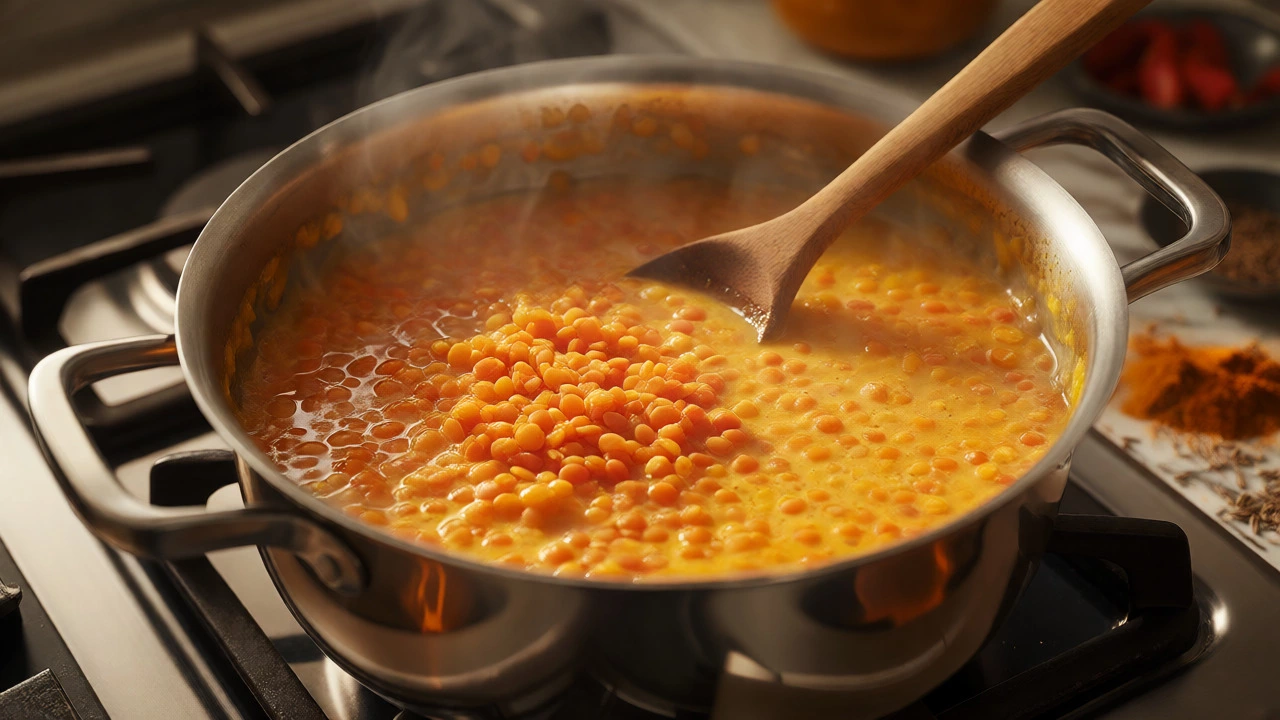
If you look at the table above, you’ll notice red and yellow lentils cook significantly faster than their whole counterparts. Why? Because they are split lentils. The outer skin has been removed, and the seed coat is broken. This exposes the starch inside directly to the hot water, allowing heat to penetrate quickly.
This makes them ideal for Indian dal. In fact, traditional recipes rarely require soaking red lentils. You just rinse them well to remove dust and any small stones, then drop them into boiling water. Within 15 minutes, they will collapse into a creamy consistency. If you try to cook them for 30 minutes, they will completely disintegrate, which is great for soup but bad if you wanted distinct grains.
Pro tip: Add a pinch of turmeric to the water when cooking red lentils. It doesn’t change the flavor much, but it gives the dal that vibrant golden color everyone associates with comfort food.
Handling Whole Lentils: Green, Brown, and Black
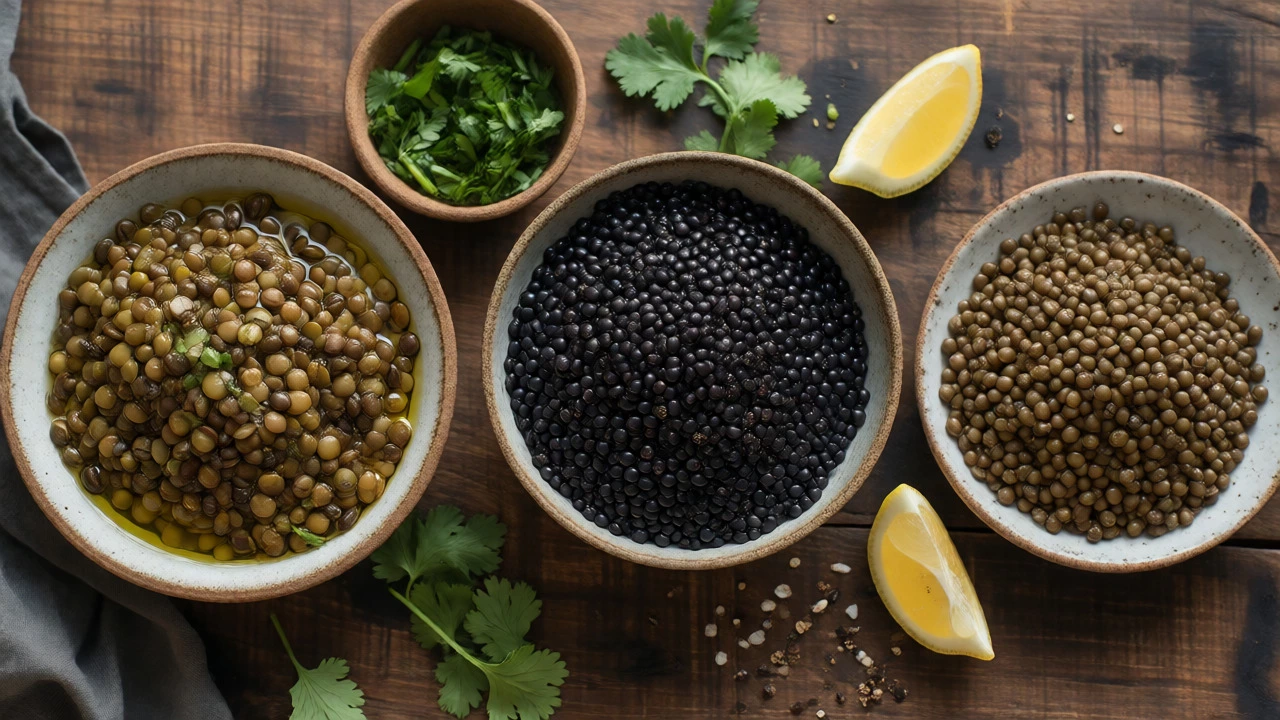
Whole lentils retain their skin. That skin acts as a barrier, slowing down water absorption. This means two things: they take longer to cook, and they hold their shape better. If you are making a lentil salad where you want each bean to remain separate, use green or brown lentils. They have an earthy, peppery flavor that pairs well with vinaigrettes.
However, whole lentils often contain phytic acid, which can cause bloating and reduce nutrient absorption. Soaking them for at least 4 hours-or ideally overnight-helps break this down. It also reduces cooking time by nearly 50%. If you forget to soak them, don’t panic. Just plan for a longer simmer. Check them every 5 minutes after the 30-minute mark. You want them tender but not falling apart.
What about black beluga lentils? They are tiny and elegant, looking like caviar when cooked. Despite their small size, they are dense. They usually take around 25 minutes unsoaked. Be careful not to overcook them; once they burst, they lose their premium appeal and turn grayish-brown.
Common Mistakes That Ruin Texture
Even with the right timer, people often mess up their lentils. Here are the biggest pitfalls:
- Adding salt too early: Salt hardens the cell walls of legumes. If you add salt at the beginning, your lentils might stay tough no matter how long you boil them. Wait until they are almost fully cooked before seasoning.
- Using old lentils: Lentils don’t spoil exactly, but they dry out over time. If your bag has been in the pantry for three years, it will take twice as long to soften. Always buy from stores with high turnover.
- Not rinsing properly: Unrinsed lentils can leave a cloudy foam in your pot due to surface starch and dust. Rinse them in a fine-mesh sieve under cold running water until the water runs clear.
- Boiling too violently: A rolling boil can cause the skins to split while the centers remain hard. Use a gentle simmer. Big bubbles agitate the beans too much.
How to Tell When They Are Done
Timers are helpful, but your senses are better. How do you know when lentils are ready?
For red lentils, press one against the roof of your mouth. It should mash instantly with zero resistance. If there’s any crunch or graininess, give them another 2-3 minutes.
For whole lentils, bite into one. It should offer slight resistance in the center but shouldn’t feel chalky. If you are making a salad, you want a bit of "bite." If you are making a stew, you want them softer. There is no universal "done," only what fits your dish.
Another visual cue: Look at the water. As lentils cook, they release starch. The water will become cloudy. For red lentils, the water will eventually thicken into a gravy-like consistency. For whole lentils, the water remains thinner unless you intentionally blend some of them.

Pressure Cooker vs. Stovetop: Which is Better?
If you live in Sydney like me, you might have both options. An Instant Pot or pressure cooker changes the game for speed.
Here is the conversion rule of thumb:
- Red Lentils: 3-5 minutes on high pressure. Natural release for 5 minutes.
- Green/Brown Lentils: 8-10 minutes on high pressure. Natural release.
- Black/Puy Lentils: 6-8 minutes on high pressure.
Pressure cooking preserves more nutrients because the exposure to heat is shorter. However, it’s easy to overcook in a pressure cooker because you can’t see what’s happening inside. I recommend using the lower end of the time range first. If they are still firm, close the lid and cook for another 2 minutes.
Flavor Tips for Your Dal
Cooking time is just the mechanics. Flavor comes from what you add. Since lentils are mild, they act as a canvas. Don’t just boil them in water. Try these upgrades:
- Start with aromatics: Sauté onions, garlic, ginger, and chilies in ghee or oil before adding the lentils and water. This infuses the base with depth.
- Use stock, not water: Vegetable or chicken broth adds savory notes that plain water lacks.
- Add acidity at the end: A squeeze of lemon juice or a splash of tamarind paste brightens up the heavy earthiness of the lentils. Add this after cooking, as acid can also toughen skins if added too early.
- Finish with fat: A dollop of butter, cream, or coconut milk stirred in at the end creates a luxurious mouthfeel.
Remember, lentils absorb flavors beautifully. If you’re making a spiced dal, add your whole spices (cumin seeds, mustard seeds) during the tempering process (tadka) after the lentils are cooked. This keeps the spices aromatic rather than bitter.
Troubleshooting: What If They’re Still Hard?
You checked the timer, but they are still crunchy. What now?
- They are old: Keep cooking. Add hot water if needed to prevent burning. Old lentils can take up to 60 minutes.
- Hard water: If your tap water is very hard (high mineral content), it inhibits softening. Add a tiny pinch of baking soda (no more than 1/4 teaspoon per cup). This raises the pH and helps break down the pectin in the skins. Note: Too much baking soda destroys Vitamin B and makes them soapy.
- Acid interference: Did you add tomatoes or vinegar early? Remove them if possible, or just accept that it will take longer.
Conversely, what if they are mushy? Don’t throw them away! Mash them up and call it a dip. Or add them to a curry as a thickener. Mushy lentils are perfect for baby food or blending into smoothies for extra protein.
Do I need to soak lentils before cooking?
No, you don't strictly need to soak lentils, especially red and yellow varieties. However, soaking whole lentils (green, brown, black) for 4-8 hours reduces cooking time by half and improves digestibility by breaking down phytic acid. If you're short on time, skip the soak for red lentils, but consider it for whole ones if you have sensitive digestion.
Can I cook lentils without soaking them?
Yes, absolutely. All lentils can be cooked straight from dry. Just remember that unsoaked whole lentils will take 30-45 minutes instead of 15-20. Red lentils cook quickly regardless, taking only 15-20 minutes unsoaked. Ensure you use plenty of water, as dry lentils absorb more liquid initially.
Why are my lentils still hard after cooking?
This is usually caused by old lentils, hard water, or adding acidic ingredients (like tomatoes or vinegar) too early. Salt can also toughen skins if added at the start. To fix it, continue simmering and add a pinch of baking soda to help soften the skins. If they've been stored for years, they may simply be too dried out to soften fully.
How much water do I use for lentils?
A general ratio is 3 cups of water to 1 cup of dry lentils for stovetop cooking. If you want them to drain like pasta, use even more water. For a one-pot dal where the water becomes the sauce, use 2.5 to 3 cups. Adjust as you go-if it looks too dry, add hot water. If it's too watery, simmer uncovered to reduce.
Are canned lentils already cooked?
Yes, canned lentils are fully cooked and ready to eat. You only need to heat them through, which takes about 2-5 minutes. Drain and rinse them first to remove the excess sodium and metallic taste from the canning liquid. They are convenient but often mushier than home-cooked lentils.