31 Jul 2026
- 0 Comments
Chicken Mouth Liquid Health & Safety Checker
Where did you encounter this chicken?
Backyard Chicken
Live bird from your flock
Store-Bought Chicken
Purchased for cooking
You’re prepping for a batch of tandoori chicken-or maybe you just bought fresh birds-and you notice something dripping from the beak. It’s not blood. It’s not vomit. So what is it? That liquid could be anything from harmless saliva to a sign of serious illness like Newcastle disease or Fowl Pox. If you’re keeping backyard chickens, this is a health alert. If you’re buying store-bought chicken for cooking, it might just be processing fluid-but you still need to know how to handle it safely.
Let’s break down exactly what that liquid is, when to worry, and how it affects your cooking plans-especially if you’re aiming for that perfect, juicy tandoori marinade.
The Quick Answer: What That Liquid Usually Is
In most cases, clear or slightly cloudy liquid coming from a chicken’s mouth is one of three things:
- Saliva or mucus: Normal secretion, especially if the bird is stressed, hot, or eating dry feed.
- Processing fluid: In commercially slaughtered chickens, water-based solutions are used during chilling. Some residue can remain near the beak or cavity.
- Pathological discharge: Thick, yellow, green, or foul-smelling fluid often signals infection (respiratory, viral, or bacterial).
If the chicken is alive and acting normal-eating, drinking, moving around-it’s likely just saliva or stress-related mucus. But if the bird is lethargic, has swollen eyes, or is coughing, you’ve got a problem.
| Appearance | Likely Cause | Action Needed |
|---|---|---|
| Clear, thin, odorless | Saliva, heat stress, or mild irritation | Monitor; provide cool water and shade |
| Cloudy white or foamy | Respiratory infection (e.g., CRD) | Isolate; consult vet |
| Yellow/green, thick, smelly | Bacterial infection (E. coli, Salmonella) | Urgent vet visit; do not cook for humans |
| Watery with bubbles | Newcastle disease or infectious laryngotracheitis | Quarantine flock; report to authorities if widespread |
| Clear, slight salt taste | Processing rinse (store-bought only) | Rinse thoroughly before marinating |
If You Keep Backyard Chickens: Health Red Flags
Backyard flocks are vulnerable. A single sick bird can spread disease fast. Here’s what to watch for beyond the mouth discharge:
- Swollen sinuses or eyes: Often paired with nasal/oral discharge in Mycoplasma infections.
- Coughing, sneezing, gasping: Signs of respiratory distress.
- Reduced egg production: Sick hens lay fewer or no eggs.
- Hooded head posture: The bird tucks its head under its wing-classic sign of feeling unwell.
If you see any of these, isolate the bird immediately. Do not use it for meat until cleared by a vet. For backyard keepers, prevention is key: clean waterers daily, avoid overcrowding, and vaccinate against common diseases like Marek’s and Newcastle where required.
If You Bought Store-Bought Chicken: Why There’s Fluid
Commercial chickens go through a wash-and-chill process after slaughter. They’re sprayed with cold water, sometimes containing antimicrobial agents like peracetic acid or chlorine dioxide, to reduce bacteria. This leaves residual moisture inside the cavity and around the beak area.
This fluid is safe-but it dilutes flavors. If you’re making tandoori chicken, that extra water can prevent your yogurt-spice marinade from sticking properly. The result? Less color, less tenderness, and a bland final dish.
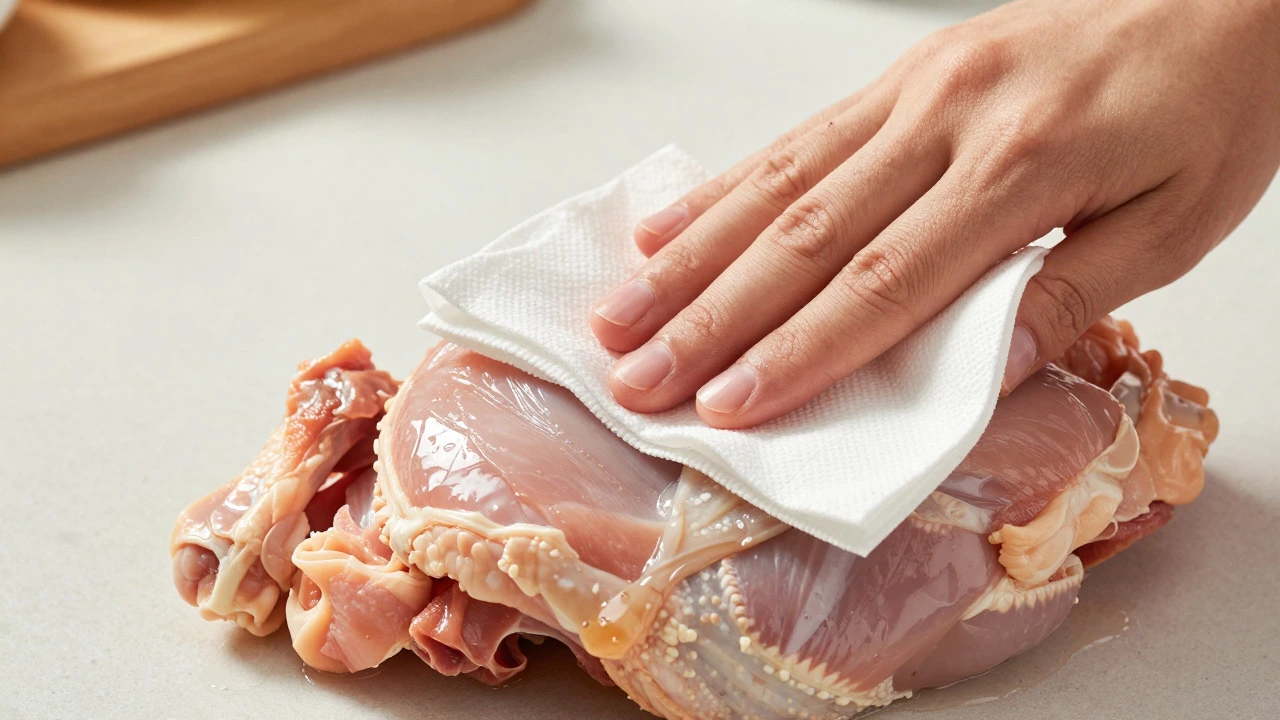
Pro tip: Pat the chicken dry with paper towels before marinating. Use a fork to poke holes in thicker cuts so the spices penetrate deeper. This step alone makes a huge difference in texture and flavor absorption.
How This Affects Your Tandoori Chicken Recipe
Tandoori chicken relies on a tight bond between meat and marinade. Excess surface moisture creates a barrier. Yogurt needs direct contact with proteins to tenderize them. Spices need oil or fat to release their aromatics. Water interferes with both.
Here’s how to adjust your prep if you encounter wet chicken:
- Drain and pat dry: Remove all visible liquid. Don’t skip this-even a little dampness matters.
- Use thicker yogurt: Strained Greek-style yogurt clings better than runny dairy yogurt.
- Add a binder: A teaspoon of cornstarch or arrowroot helps the marinade adhere without sliding off.
- Marinate longer: Minimum 4 hours, ideally overnight. Cold penetration takes time.
- Sear first: High-heat searing locks in juices and sets the spice crust before slow roasting.
Remember: authentic tandoori isn’t just about red color-it’s about smoky depth, tender bite, and balanced heat. Moisture control is part of achieving that balance.
When to Throw It Out vs. When to Cook It
Not all wet chicken is bad. But some signs mean “do not eat.”
Safe to cook: - Clear, odorless fluid - Firm, pinkish flesh - No slimy texture - Smells neutral or faintly metallic
Discard immediately: - Yellow/green discharge - Sour, rotten, or ammonia-like smell - Slimy or sticky skin - Discolored meat (gray, brown, green spots)
When in doubt, throw it out. Foodborne illness from contaminated poultry costs far more than the price of a new bird.
Preventing Future Issues: Storage & Handling Tips
Even healthy chicken can develop unwanted fluids if stored poorly. Follow these rules:
- Keep it cold: Refrigerate at ≤4°C (39°F). Never leave raw chicken out for more than 2 hours.
- Store bottom shelf: Prevents drips onto other foods. Use a tray lined with paper towels.
- Freeze promptly: If not using within 1-2 days, freeze in vacuum-sealed bags to minimize freezer burn and thaw-water buildup.
- Thaw slowly: Overnight in fridge-not on counter or in warm water. Rapid thawing releases more cellular fluid.
For backyard owners, consider building a simple drip tray under feeders and waterers. Catching runoff early keeps coops drier and reduces bacterial growth.
FAQ: Common Questions About Chicken Mouth Fluid
Is clear liquid from a chicken’s mouth dangerous?
Usually not. Clear, odorless fluid is often saliva or stress mucus. Monitor behavior-if the bird eats, drinks, and moves normally, it’s likely fine. Provide cool water and rest.
Can I cook chicken with yellow discharge from the mouth?
No. Yellow or green discharge usually indicates bacterial infection. Discard the bird. Cooking may kill surface bacteria but won’t eliminate toxins already produced.
Why does my store-bought chicken have water in the package?
That’s processing rinse water used during commercial chilling. It’s safe but dilutes flavor. Always drain and pat dry before marinating for best results.
Does mouth fluid affect tandoori chicken taste?
Yes. Excess moisture prevents marinade adhesion, leading to bland, pale results. Dry the chicken thoroughly and use thick yogurt for better spice penetration.
Should I rinse chicken before cooking?
Only if needed to remove visible debris. Avoid heavy rinsing-it spreads bacteria via splash. Patting dry with paper towels is safer and more effective.
How long should I marinate tandoori chicken?
Minimum 4 hours, ideally overnight. Longer marination allows acids in yogurt to break down connective tissue, resulting in tender, flavorful meat.
What temperature should tandoori chicken reach?
Internal temperature must hit 74°C (165°F) measured at the thickest part. Use a digital thermometer for accuracy. Undercooked chicken risks salmonella.
Can I reuse marinade after touching raw chicken?
Only if boiled first. Simmer leftover marinade for 5 minutes to kill pathogens before basting. Never pour unused raw marinade directly over cooked food.